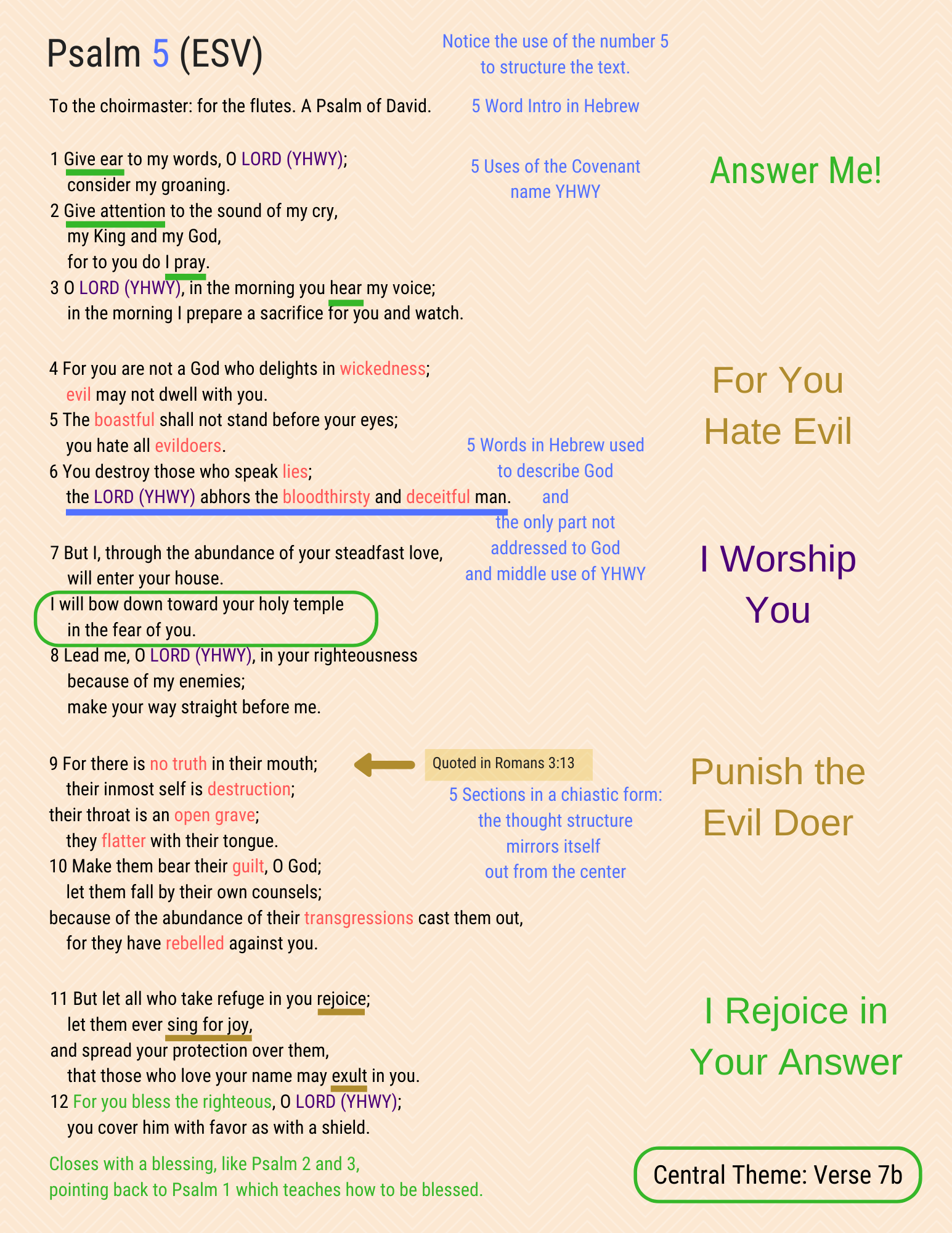
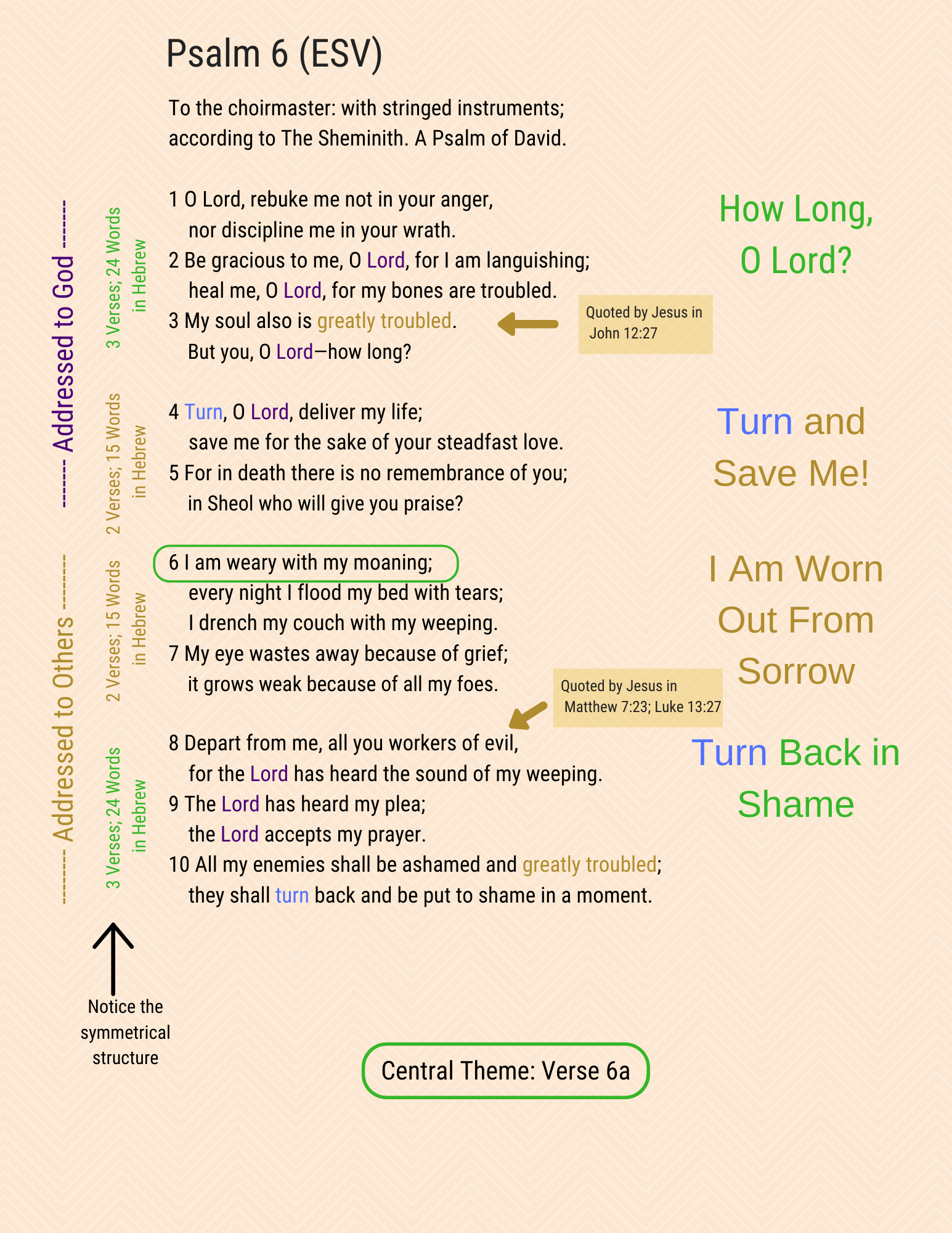
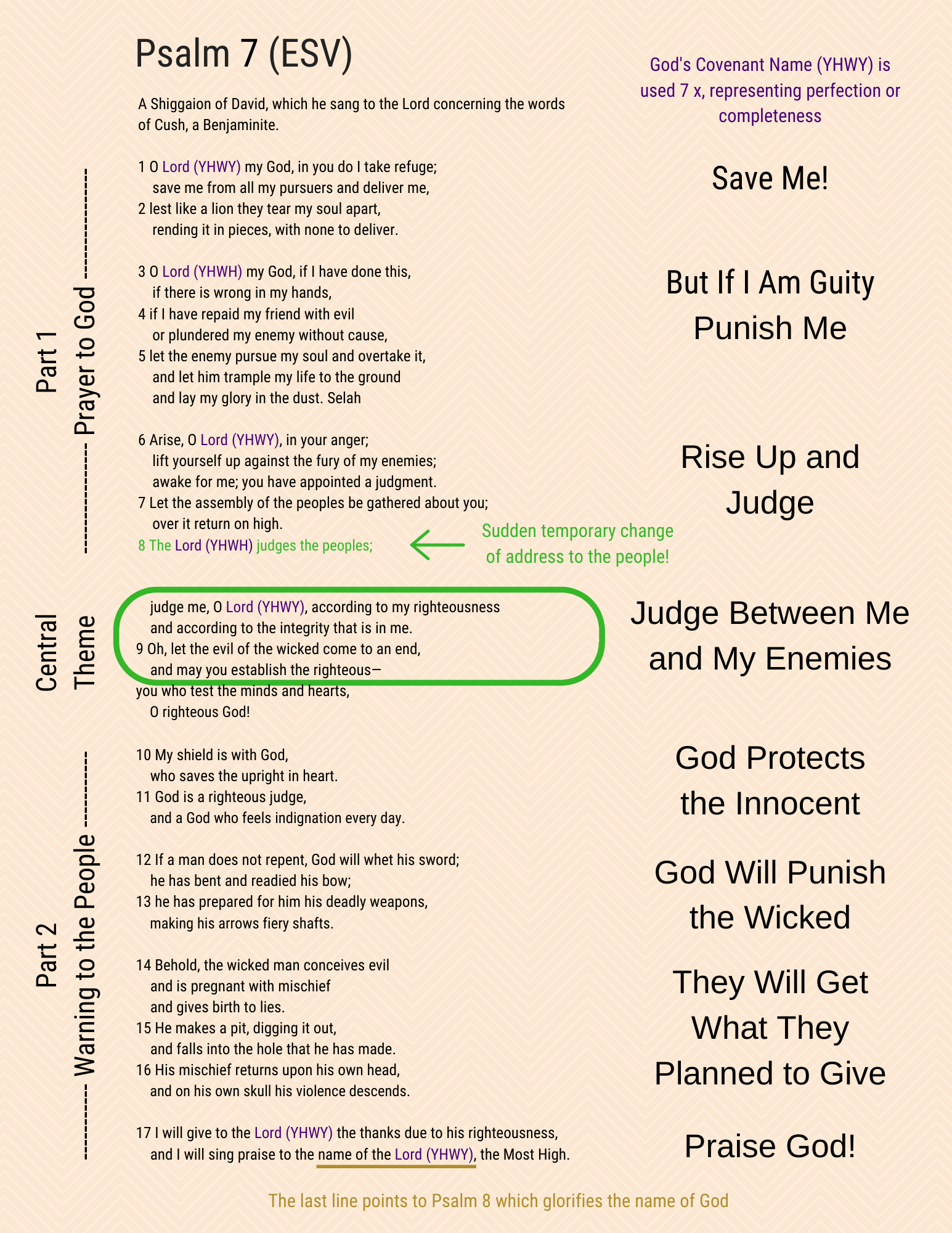
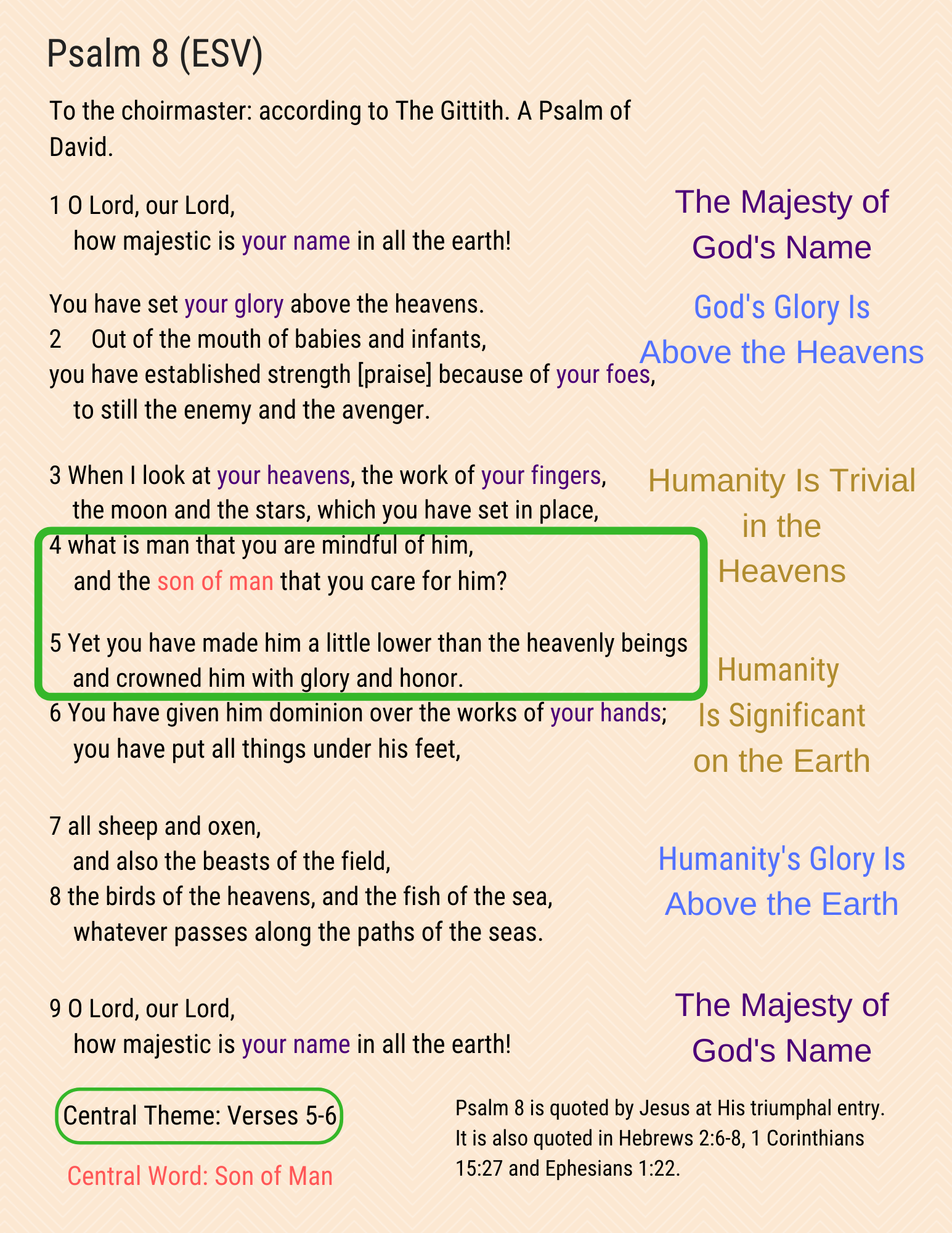
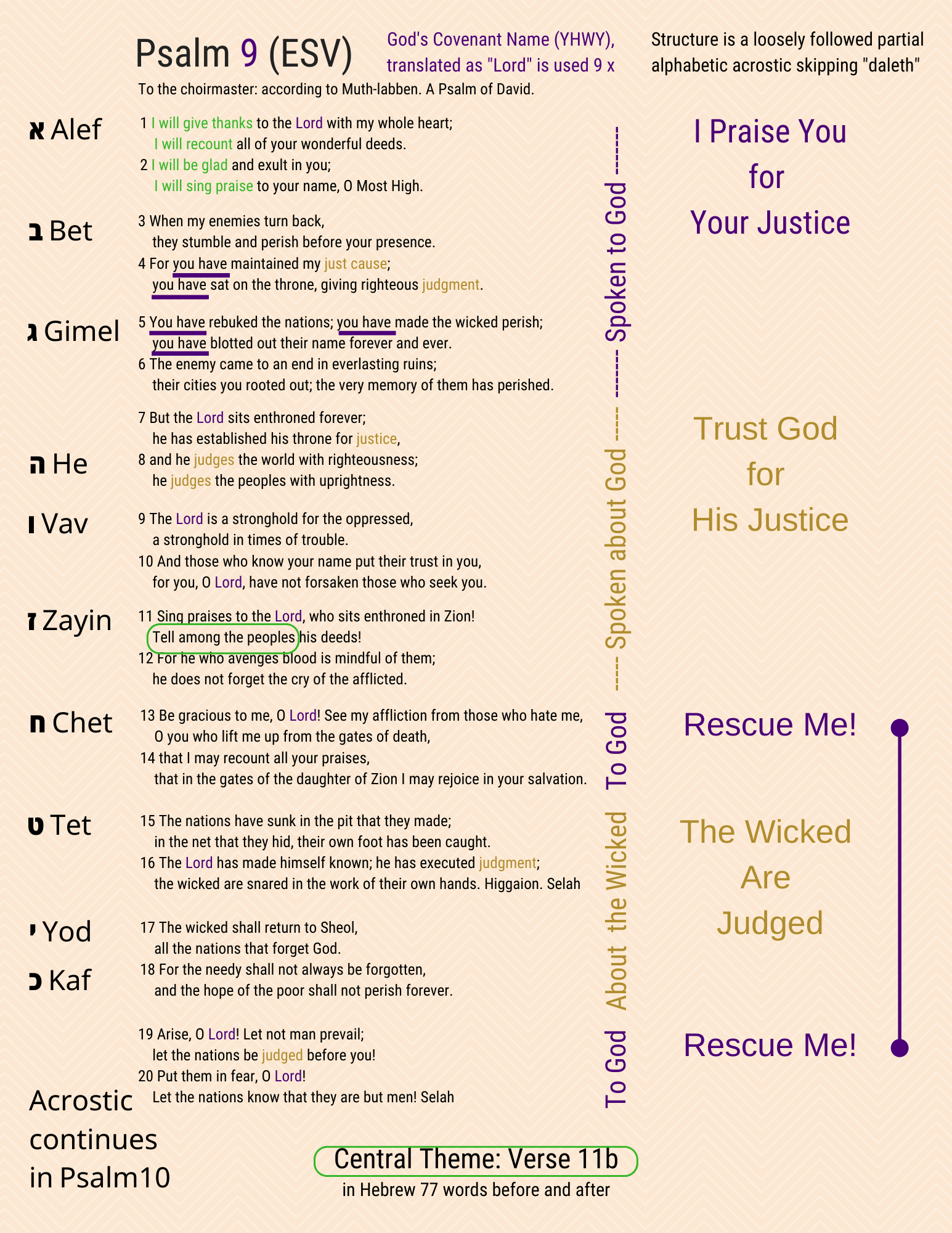
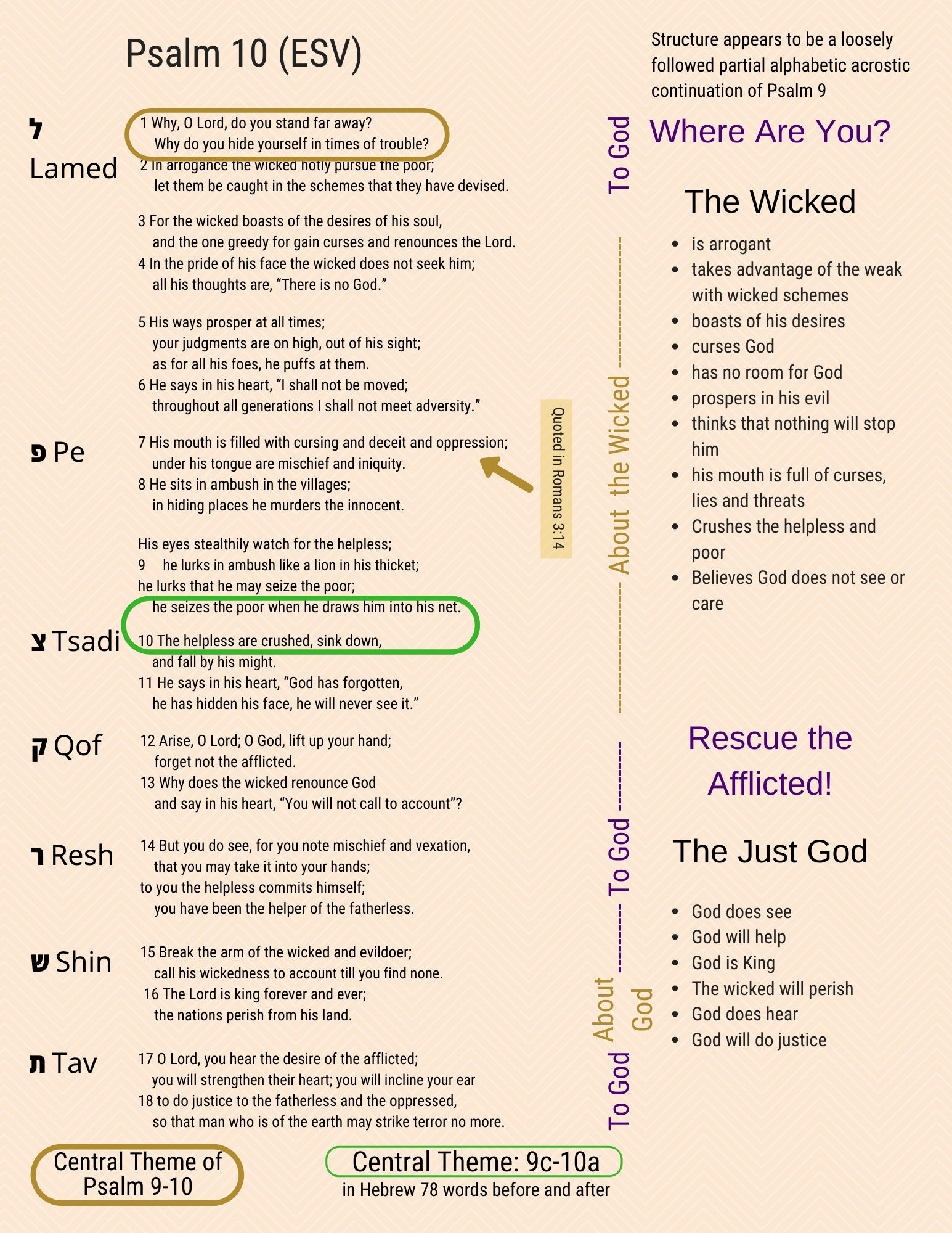
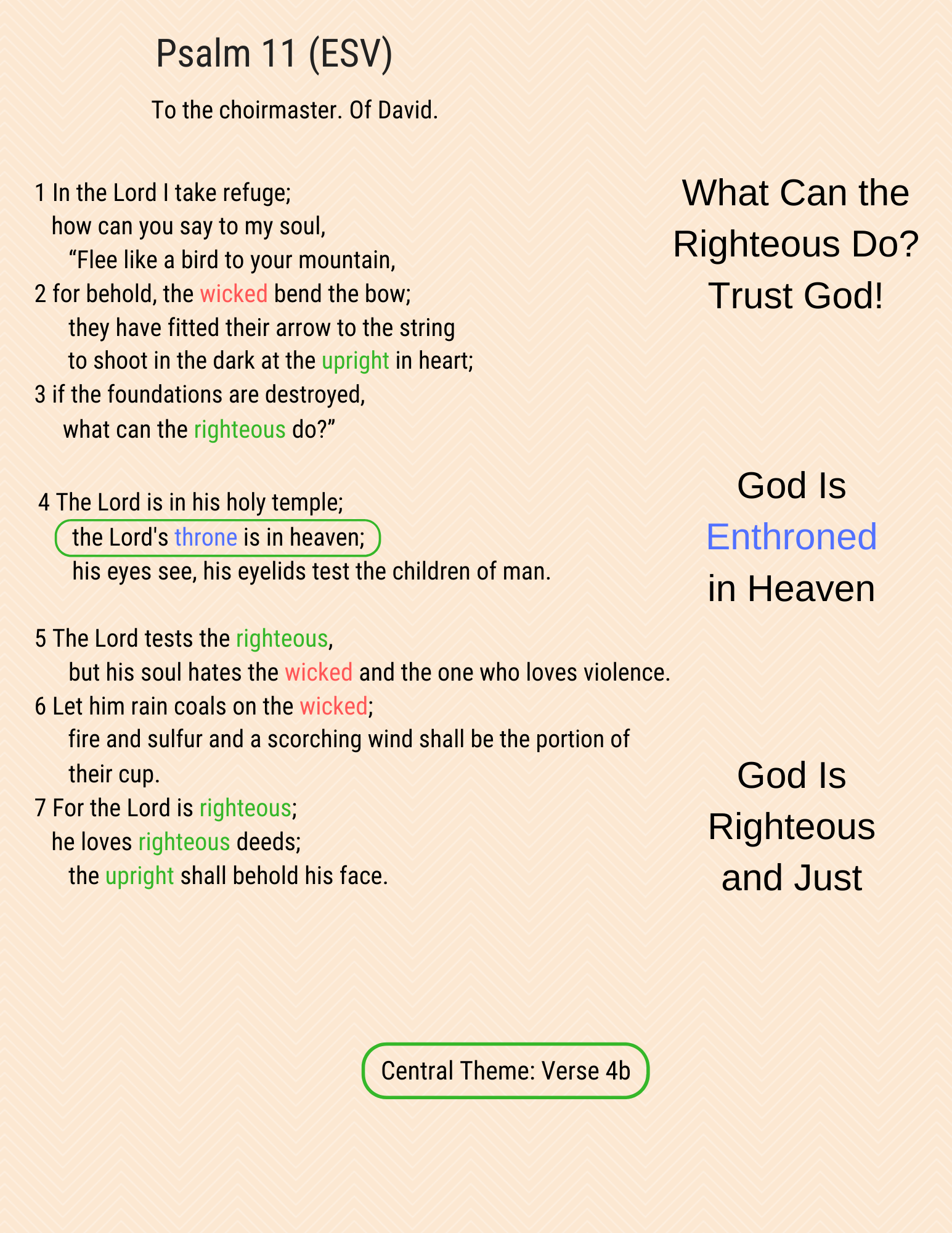
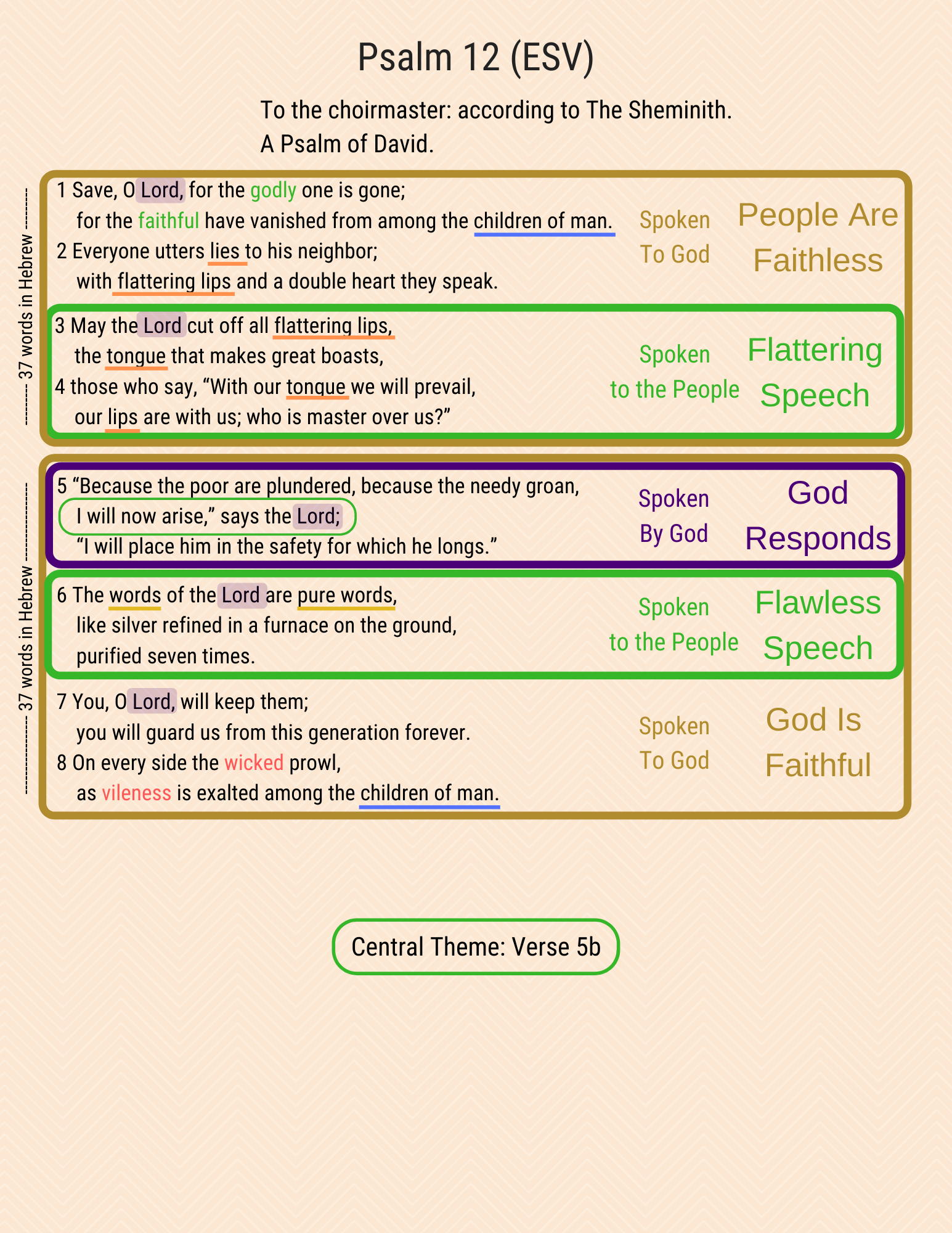
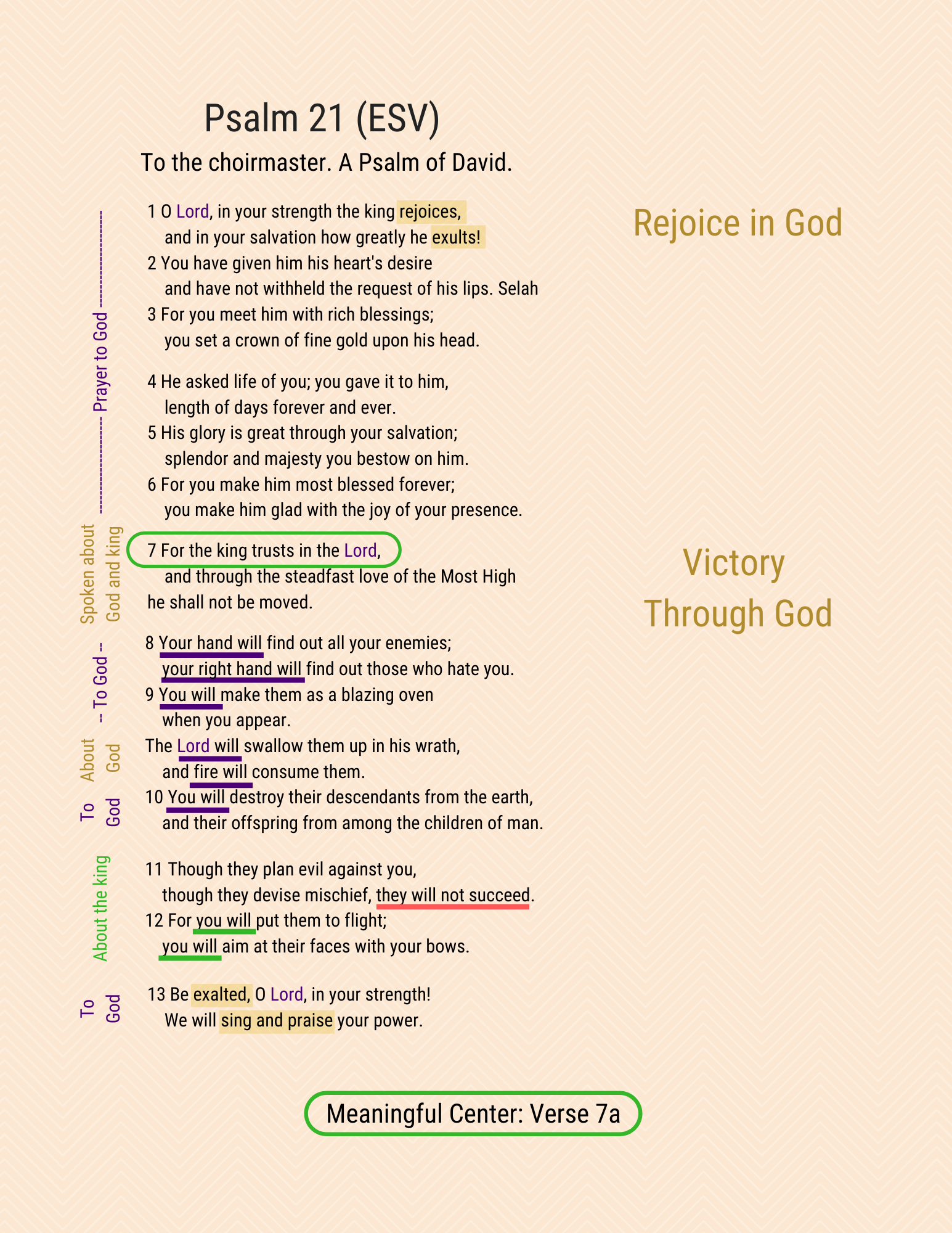
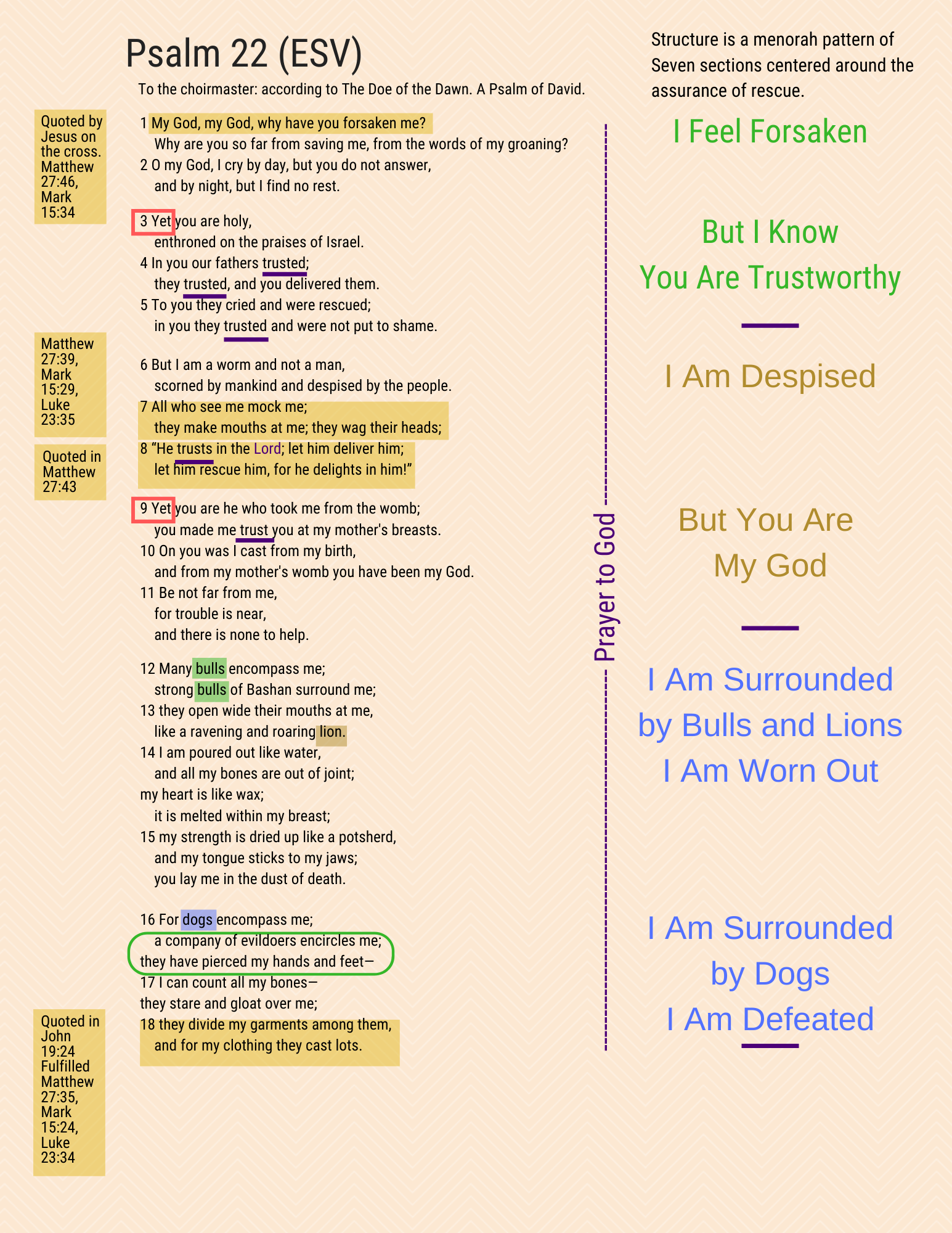
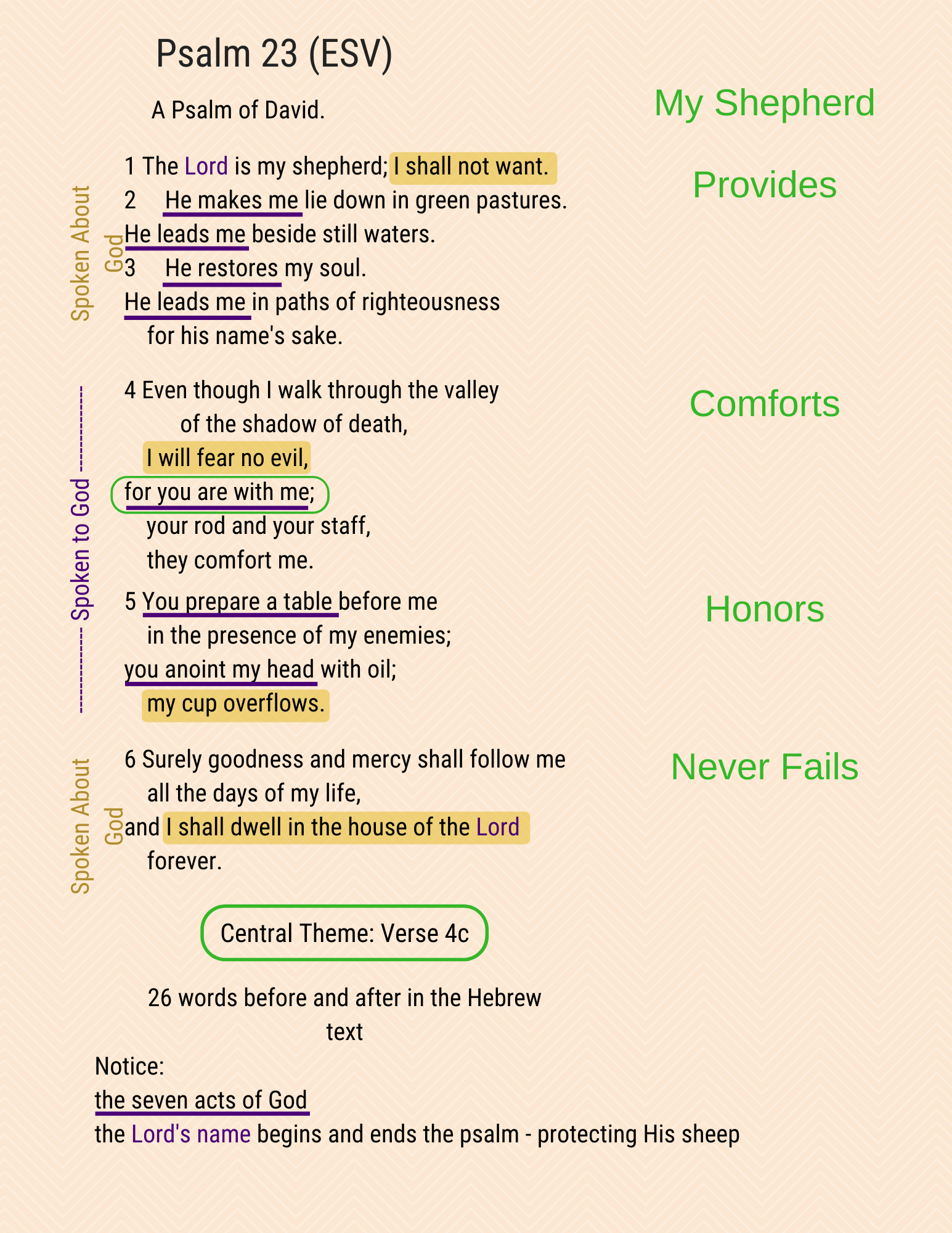
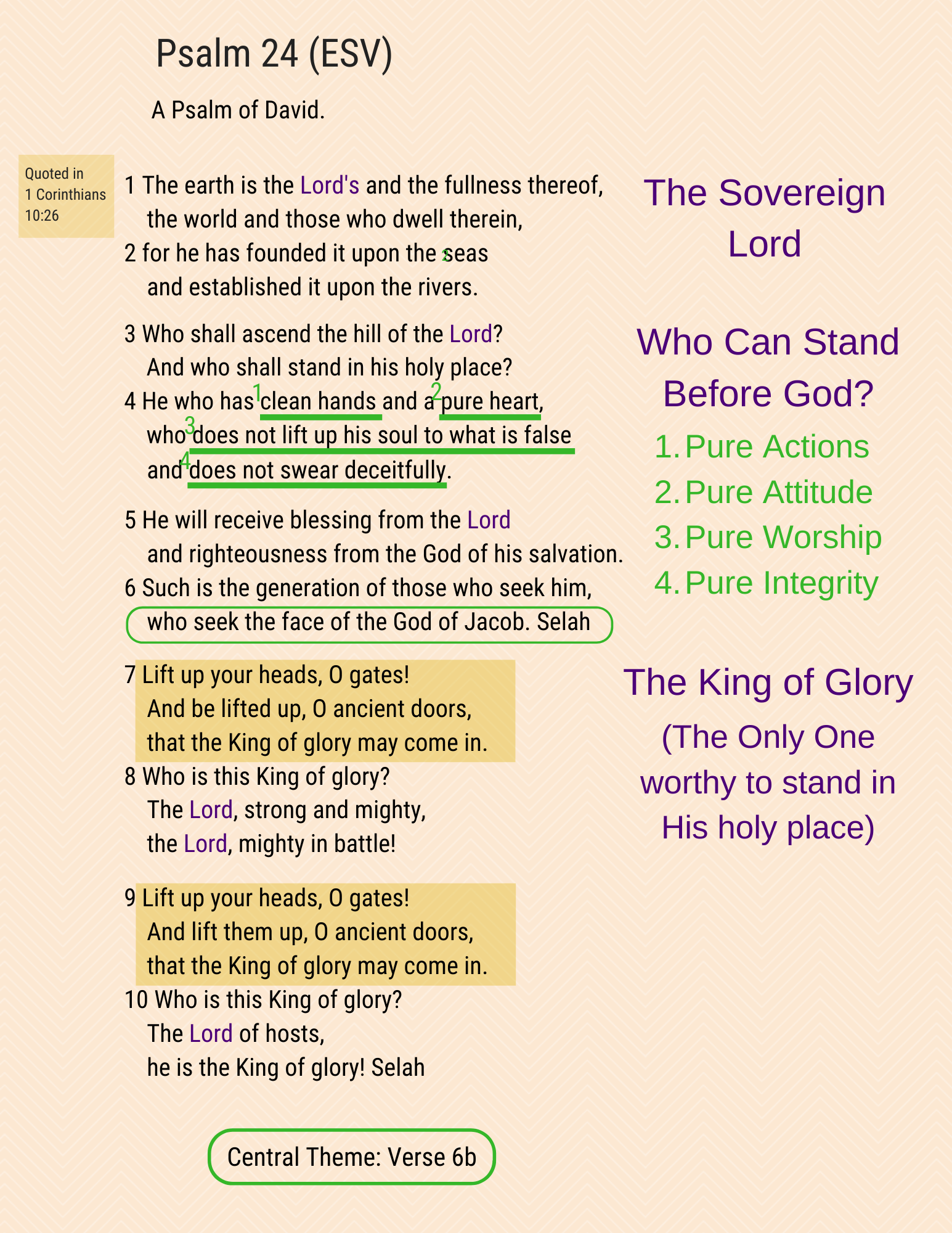
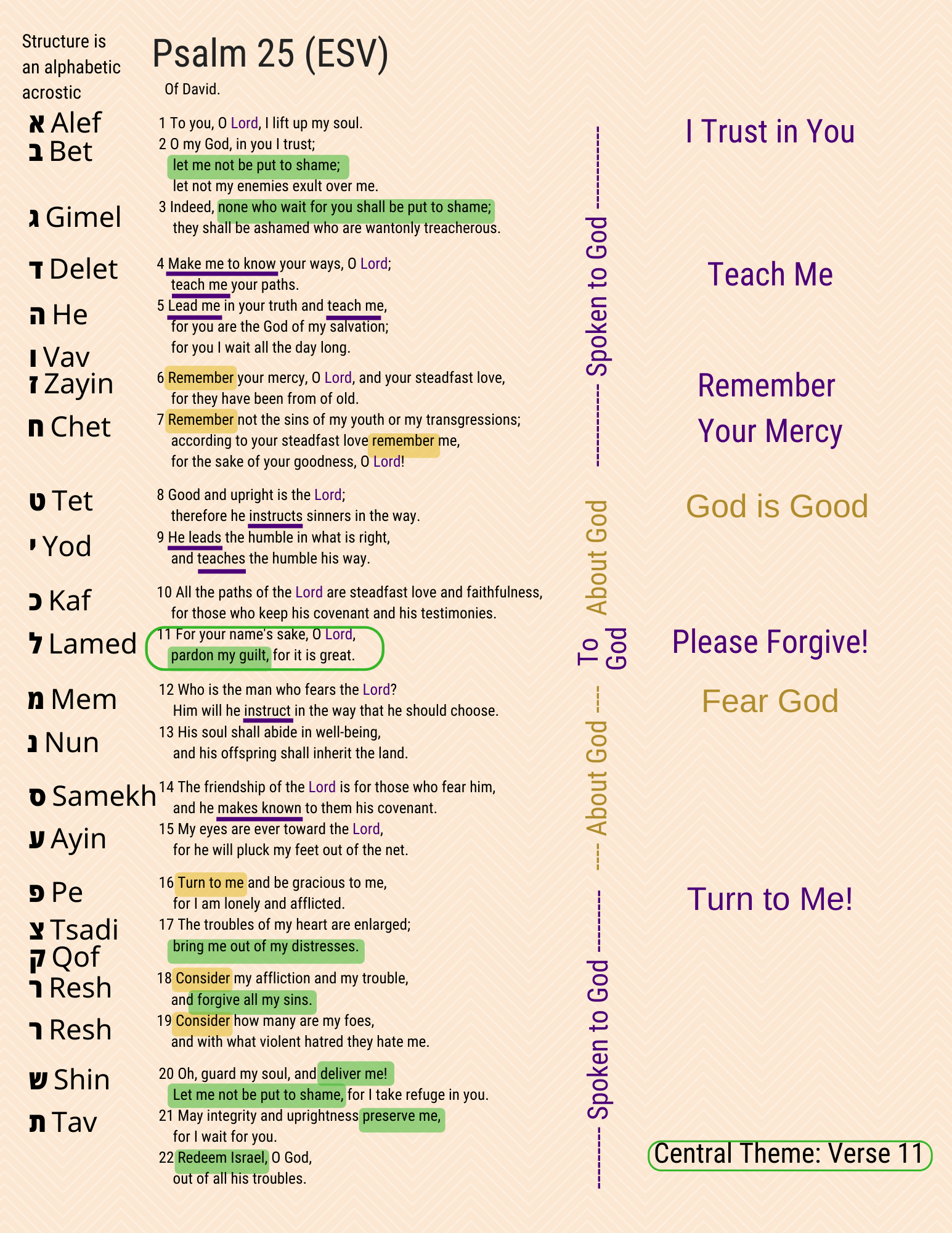
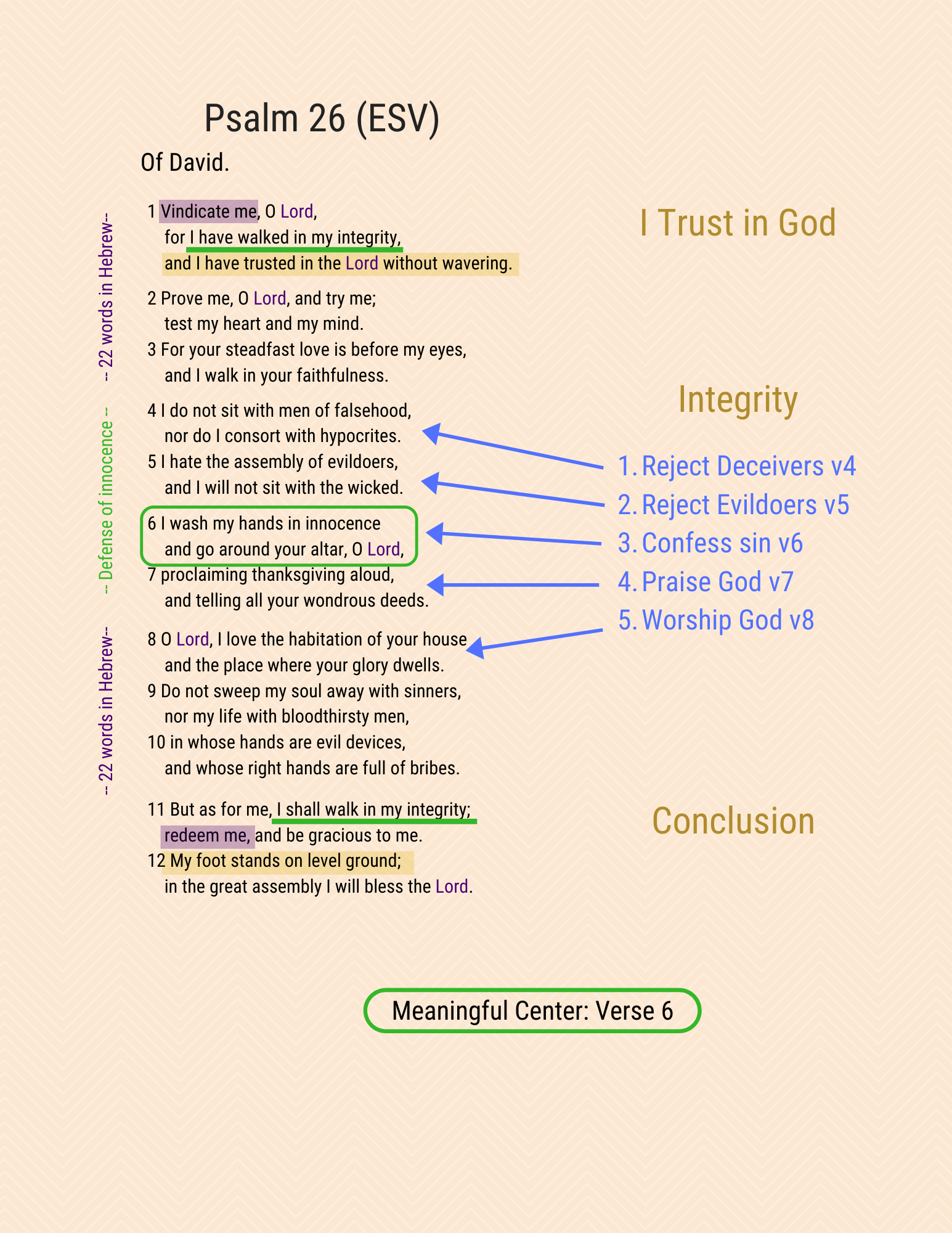
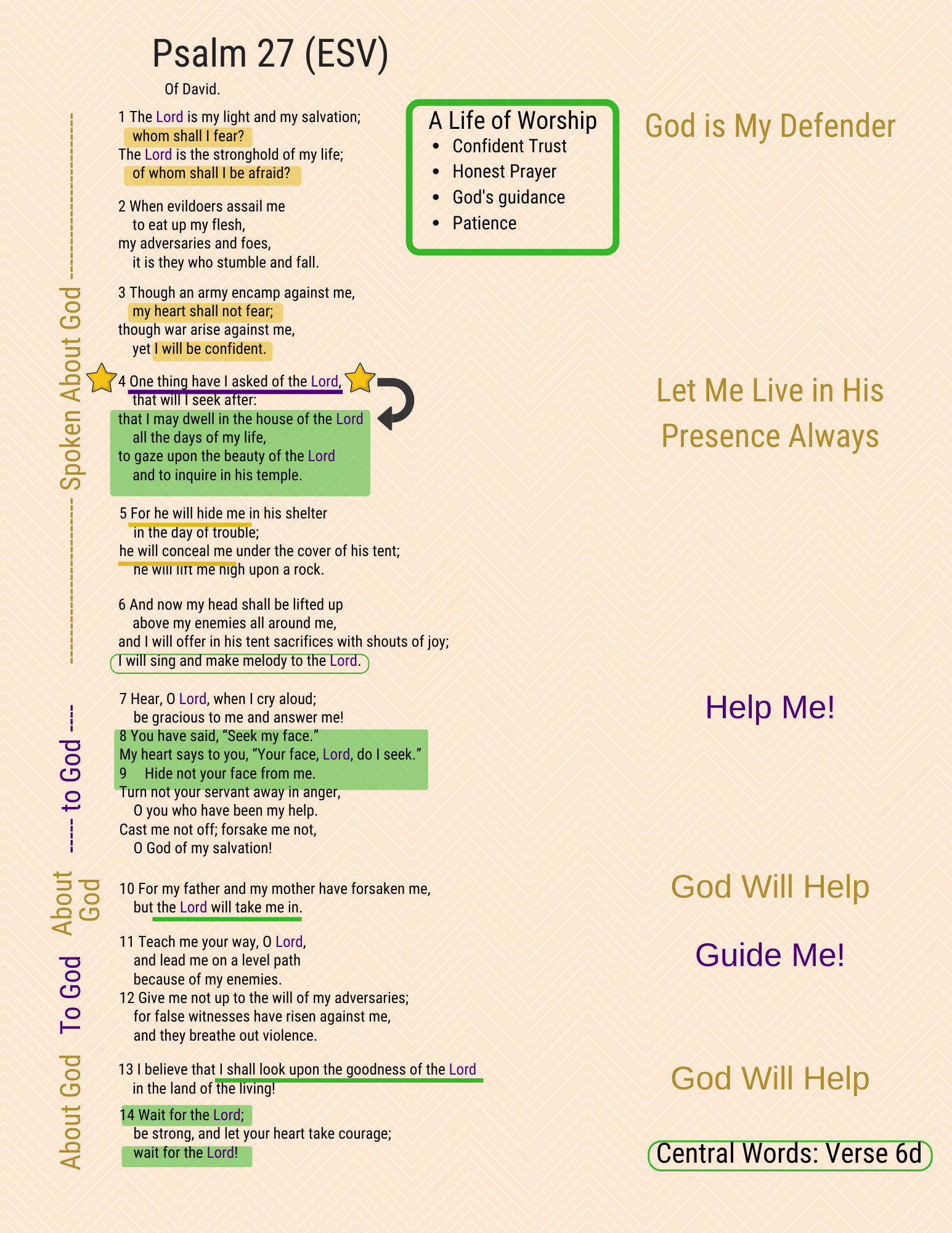
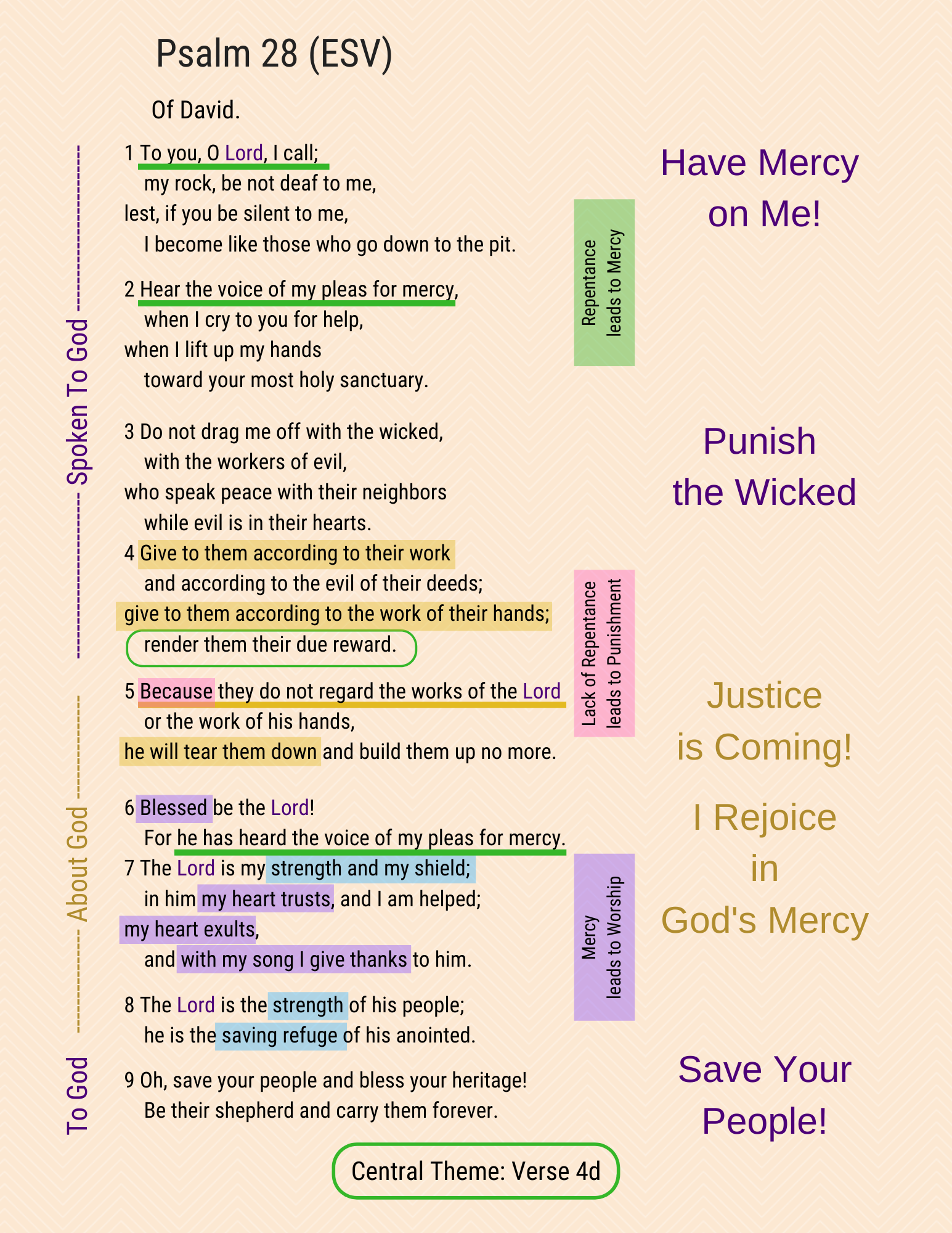
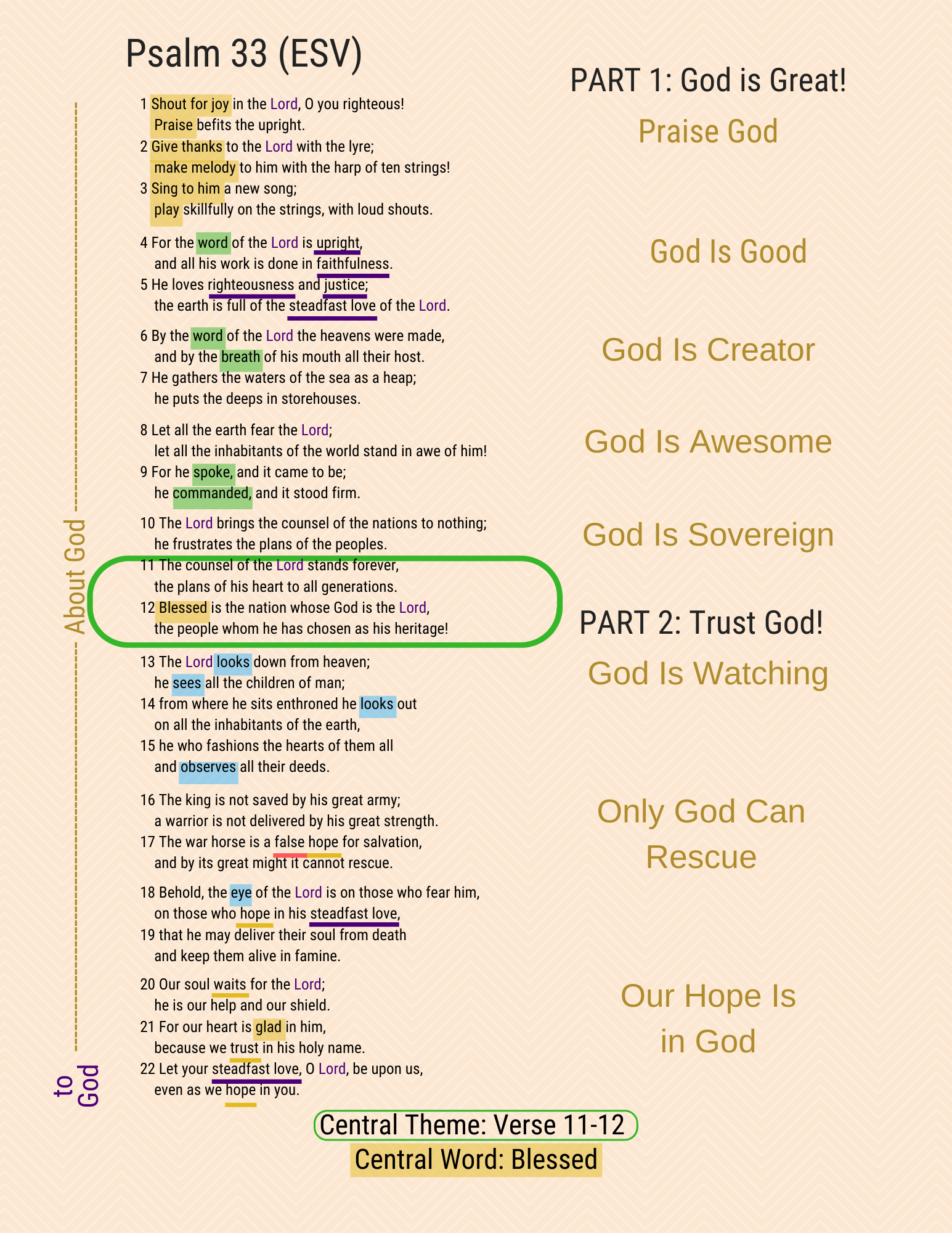
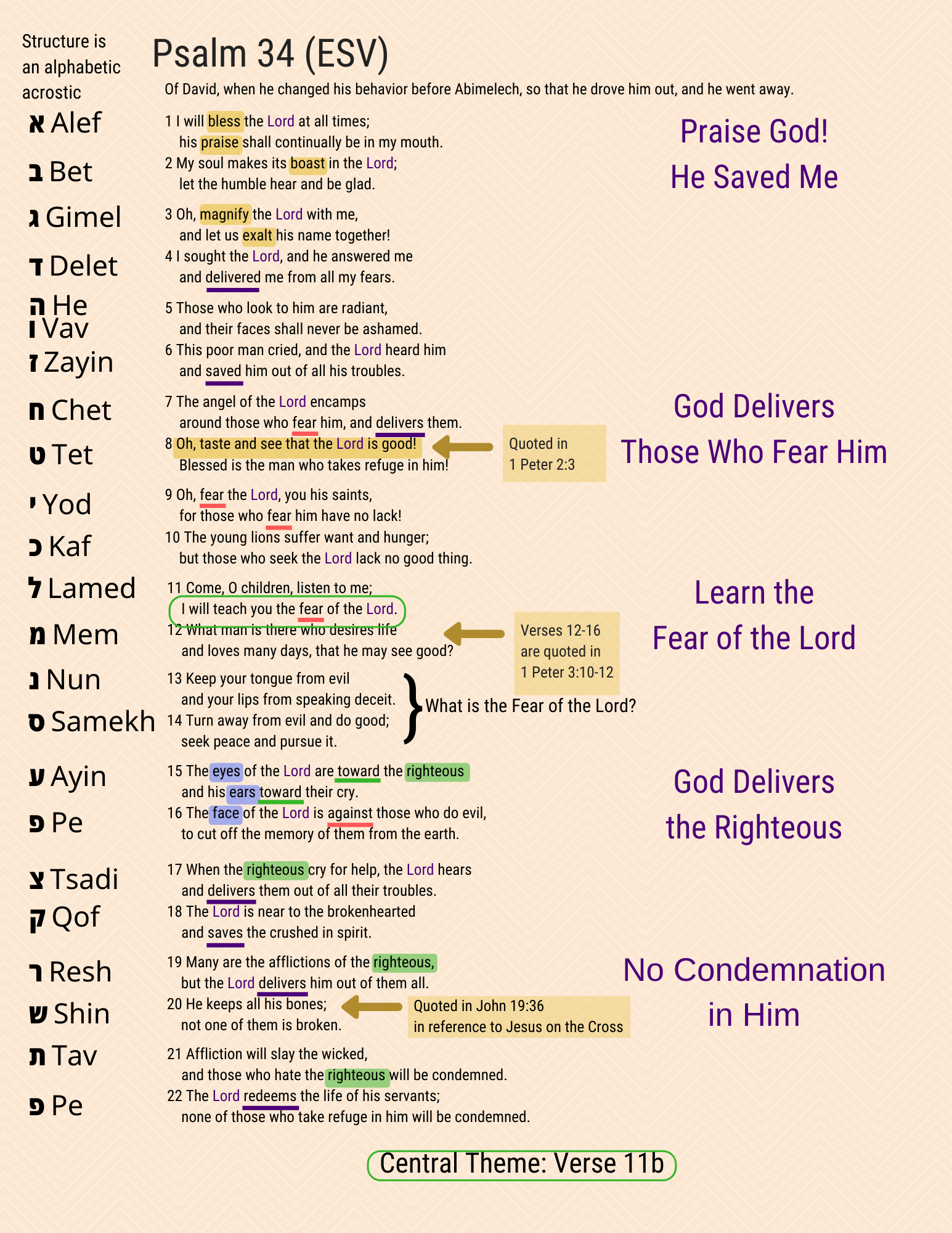
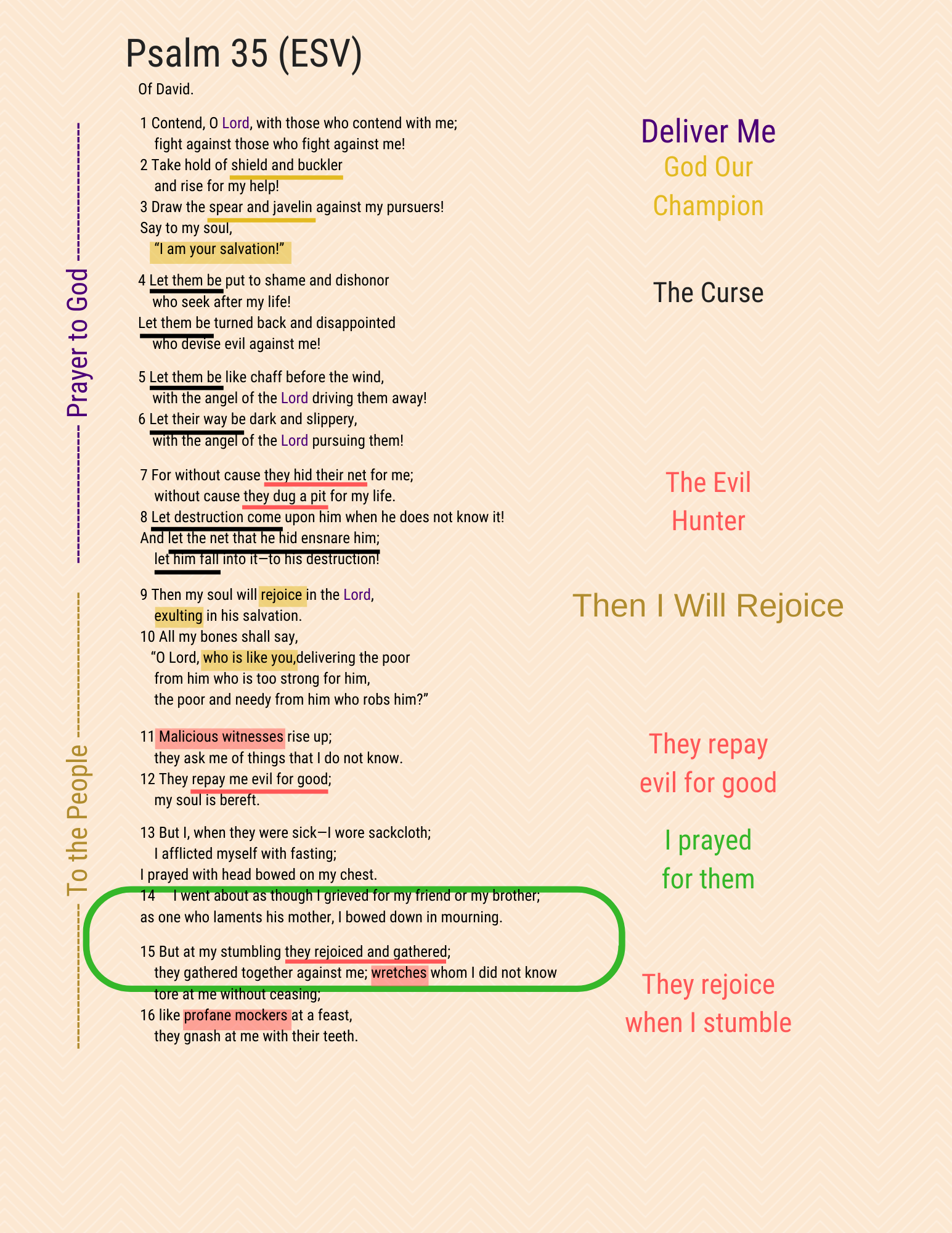
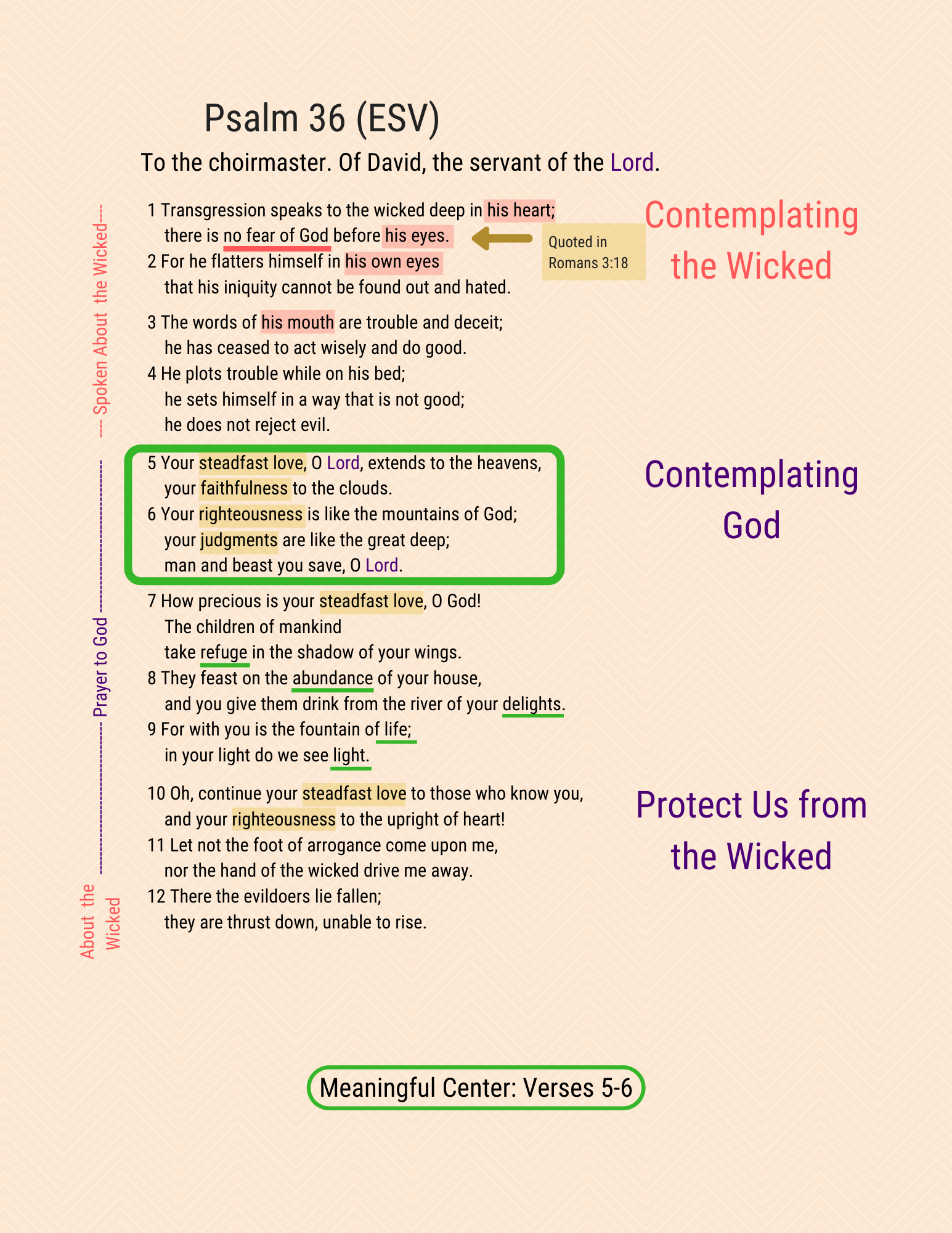
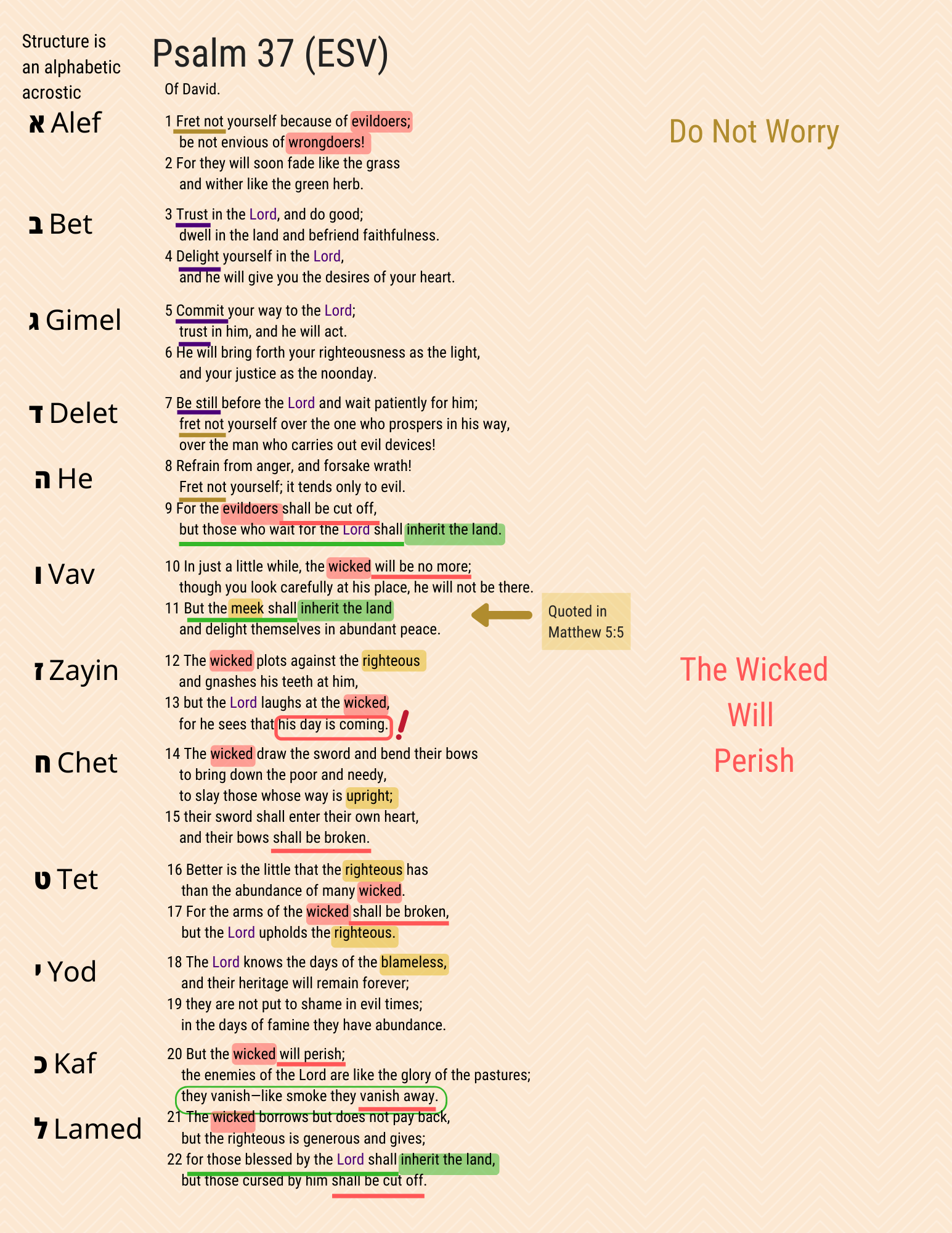
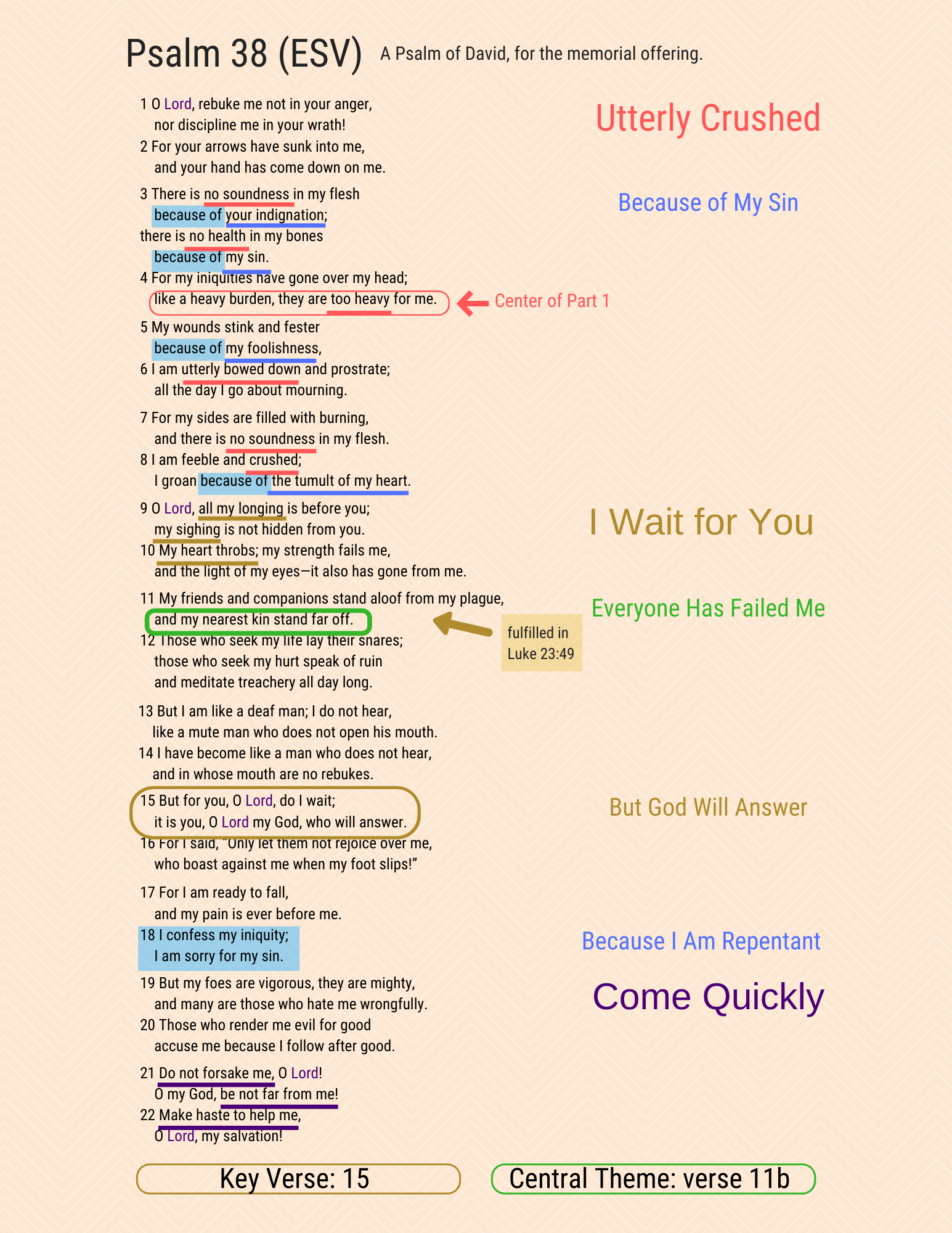
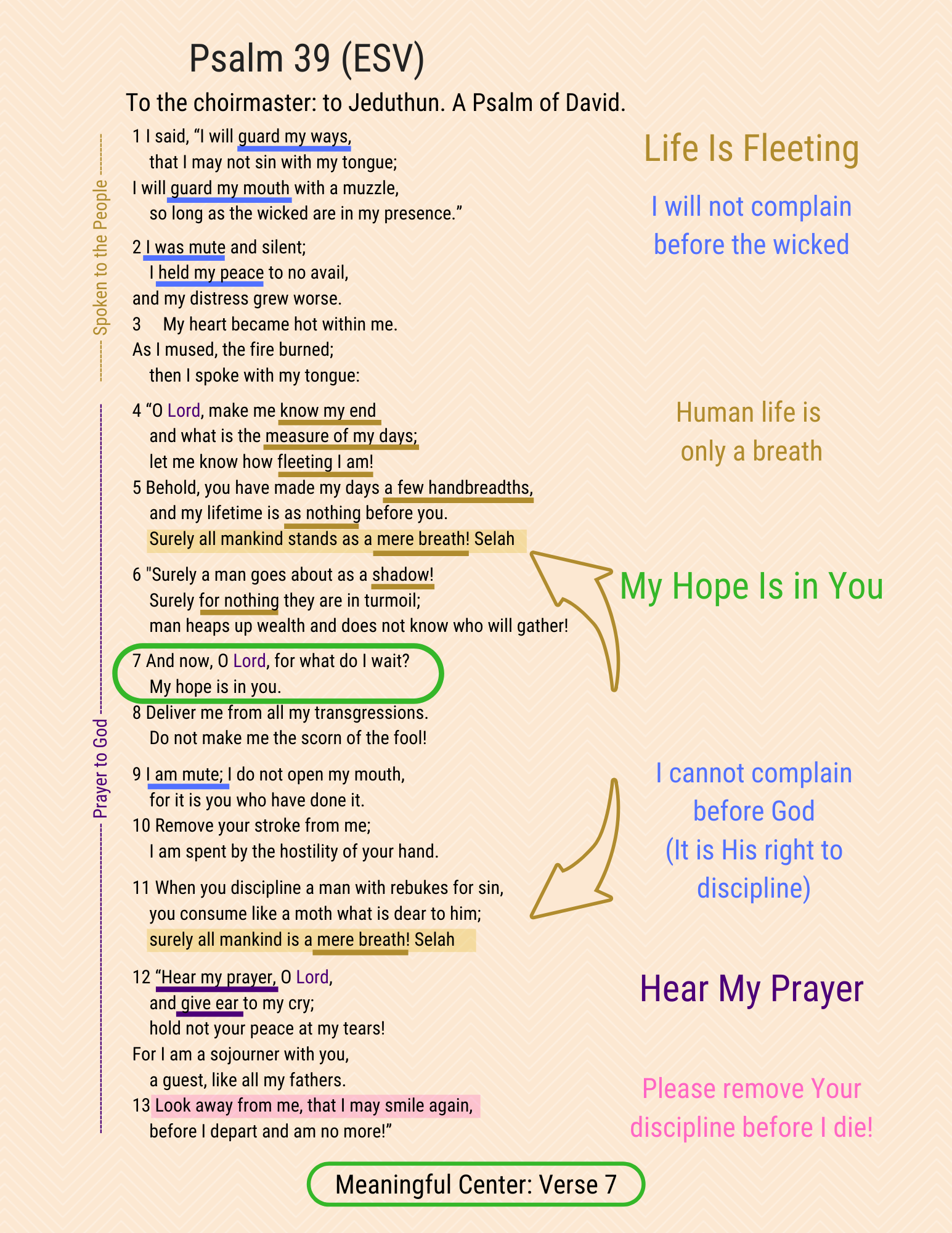
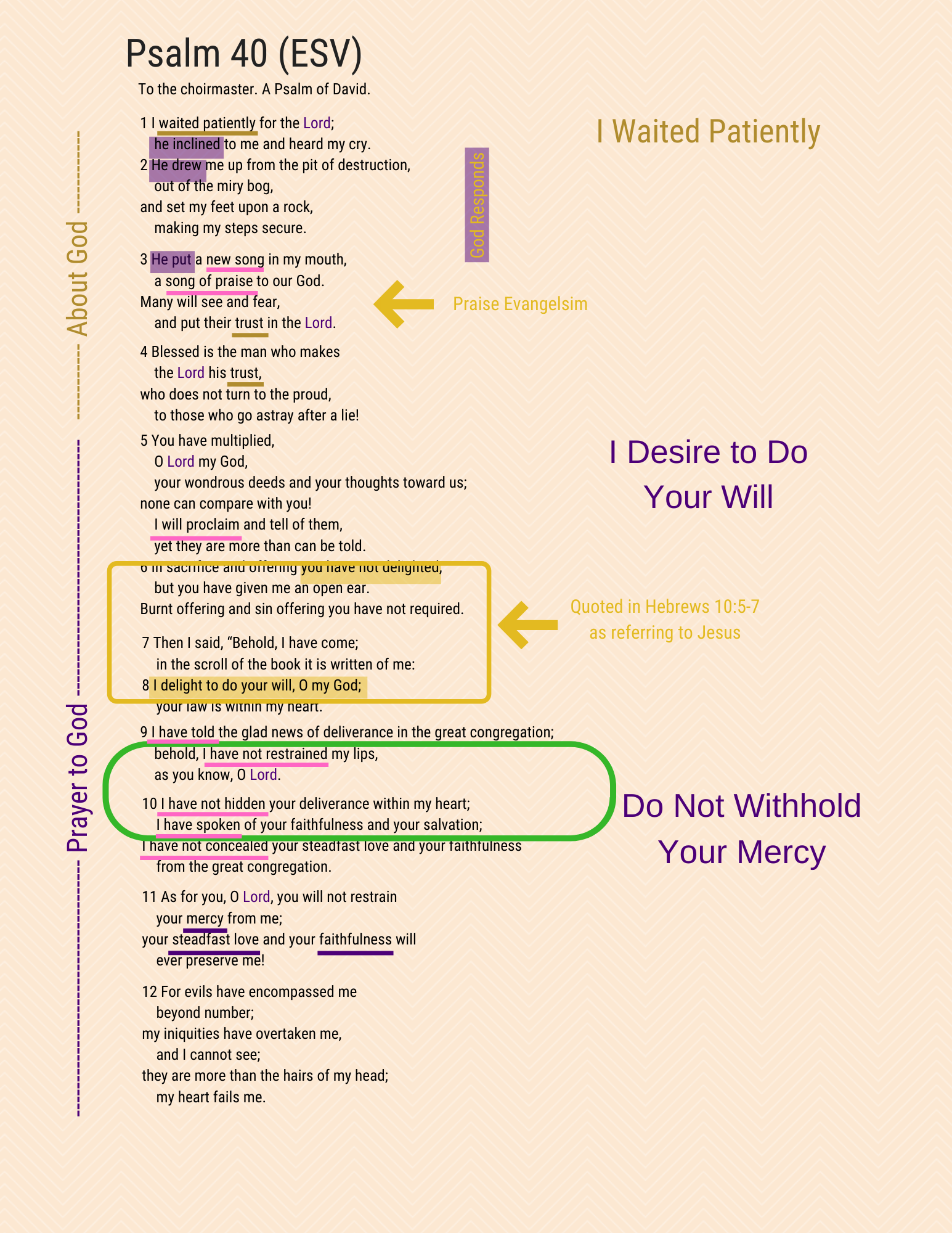
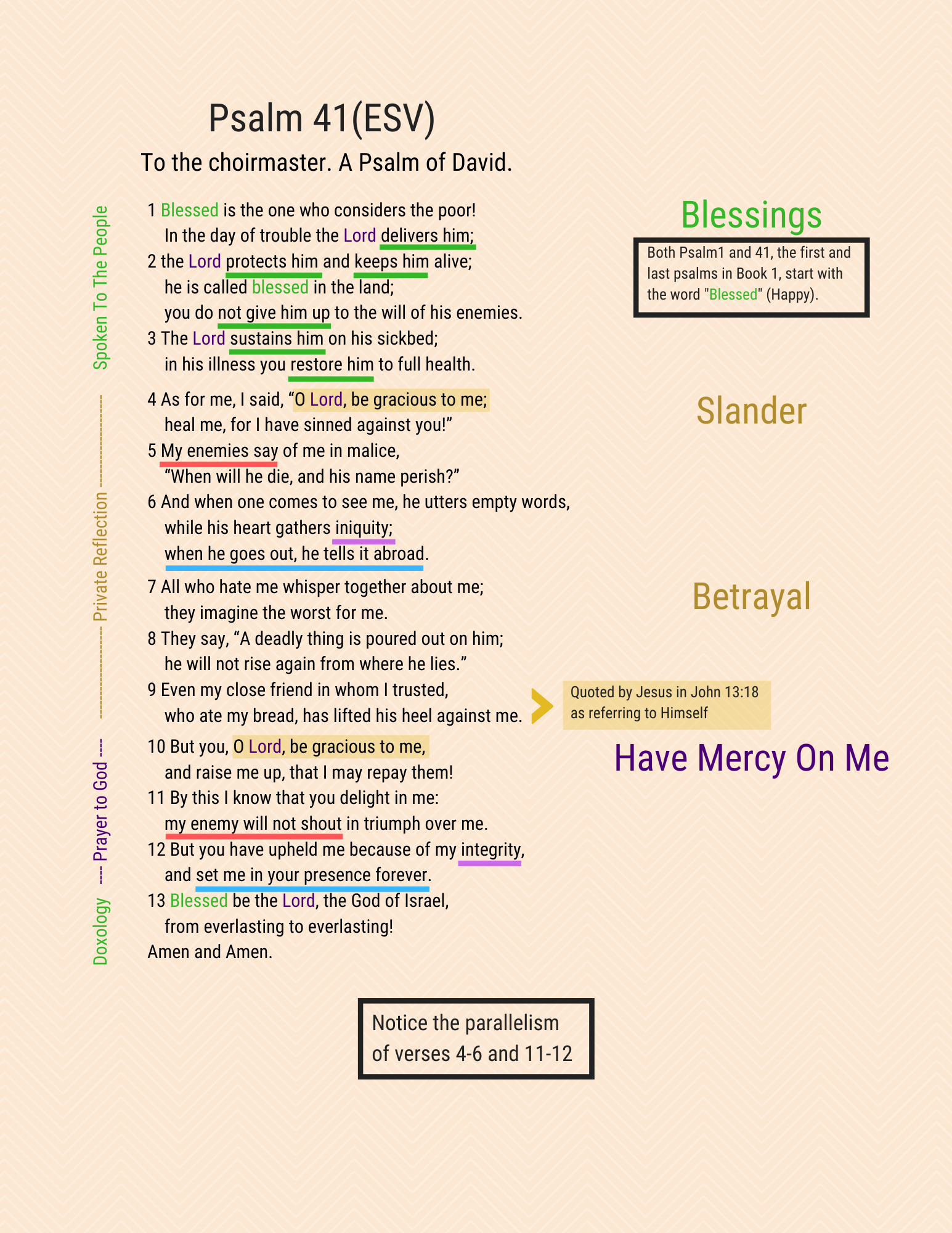
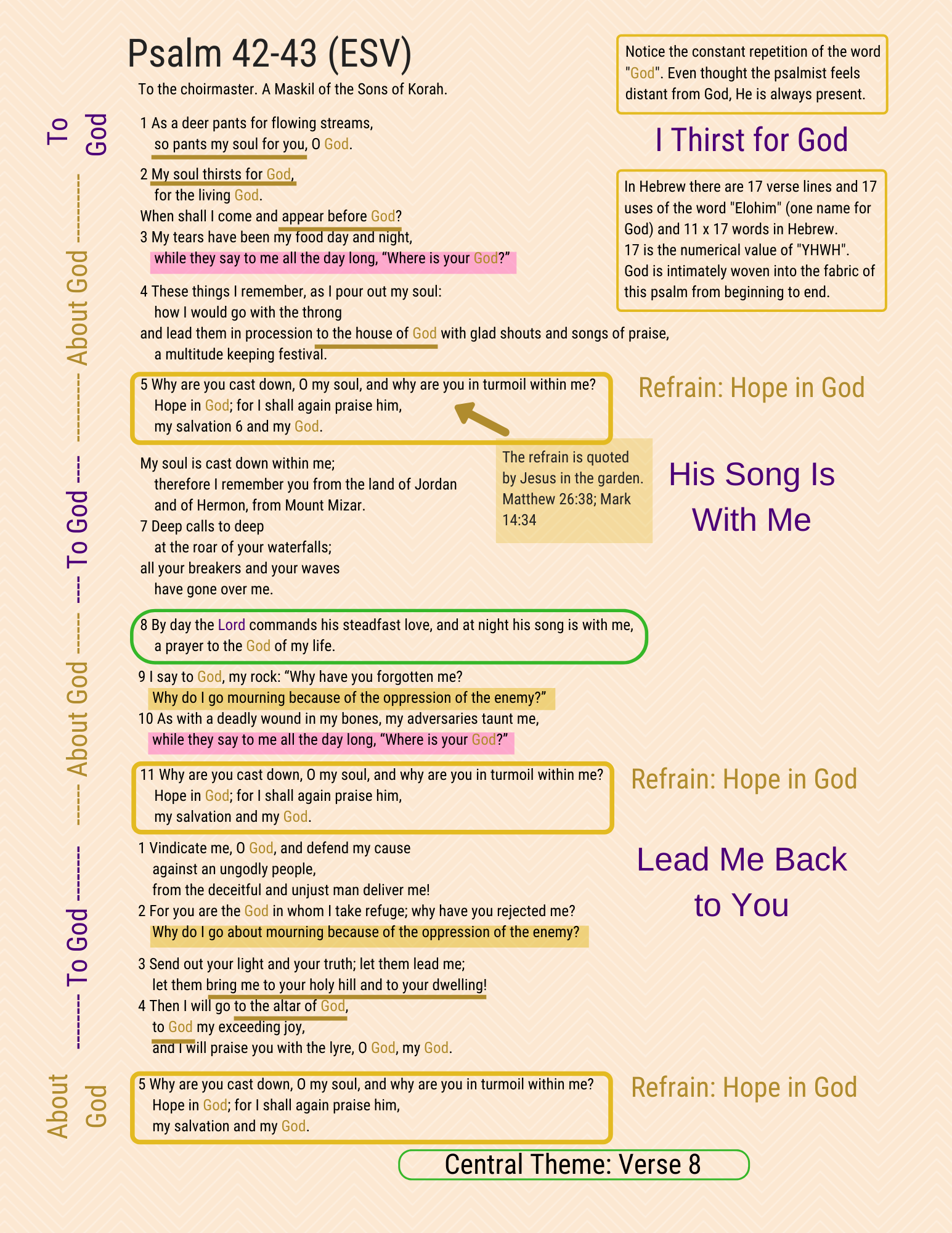
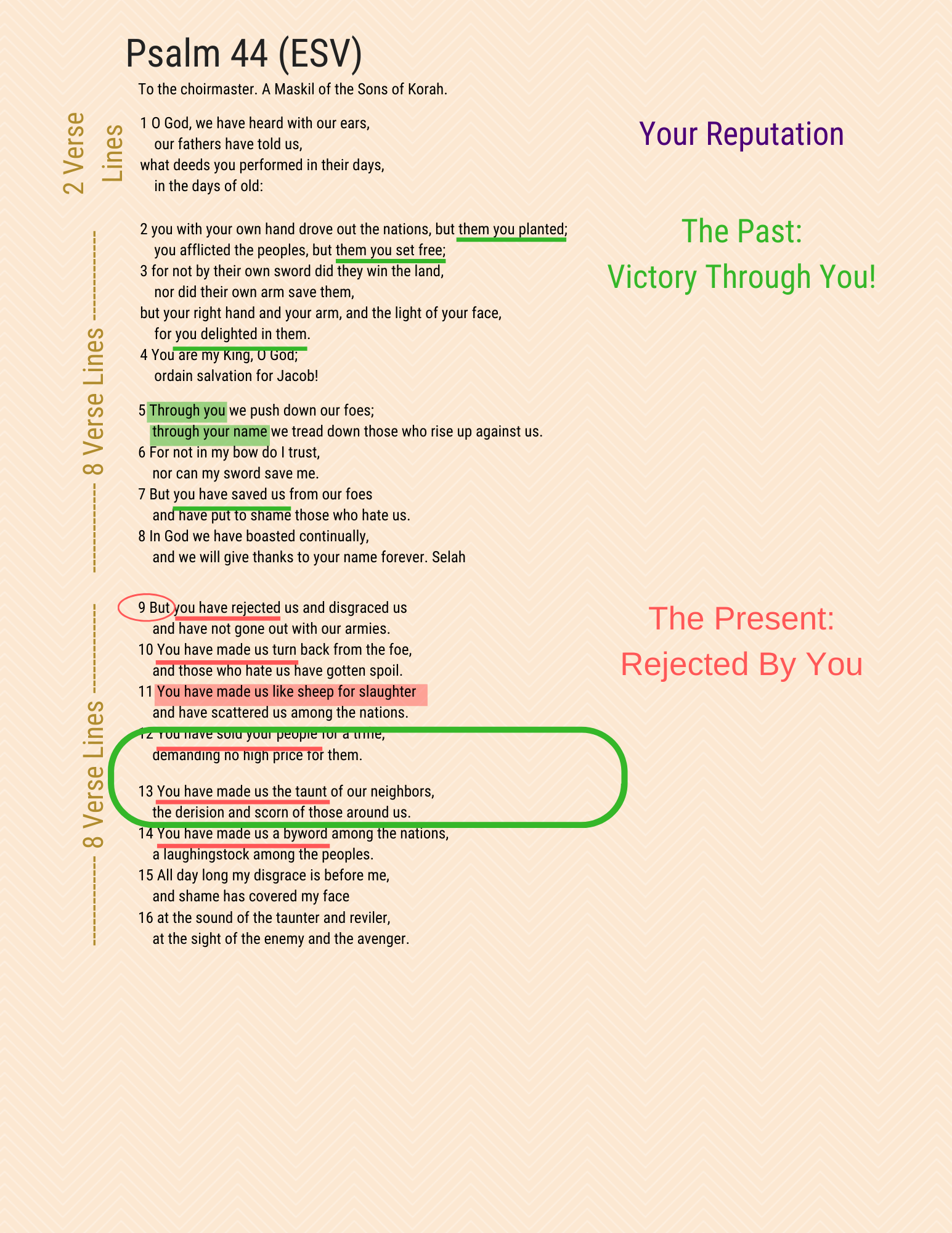
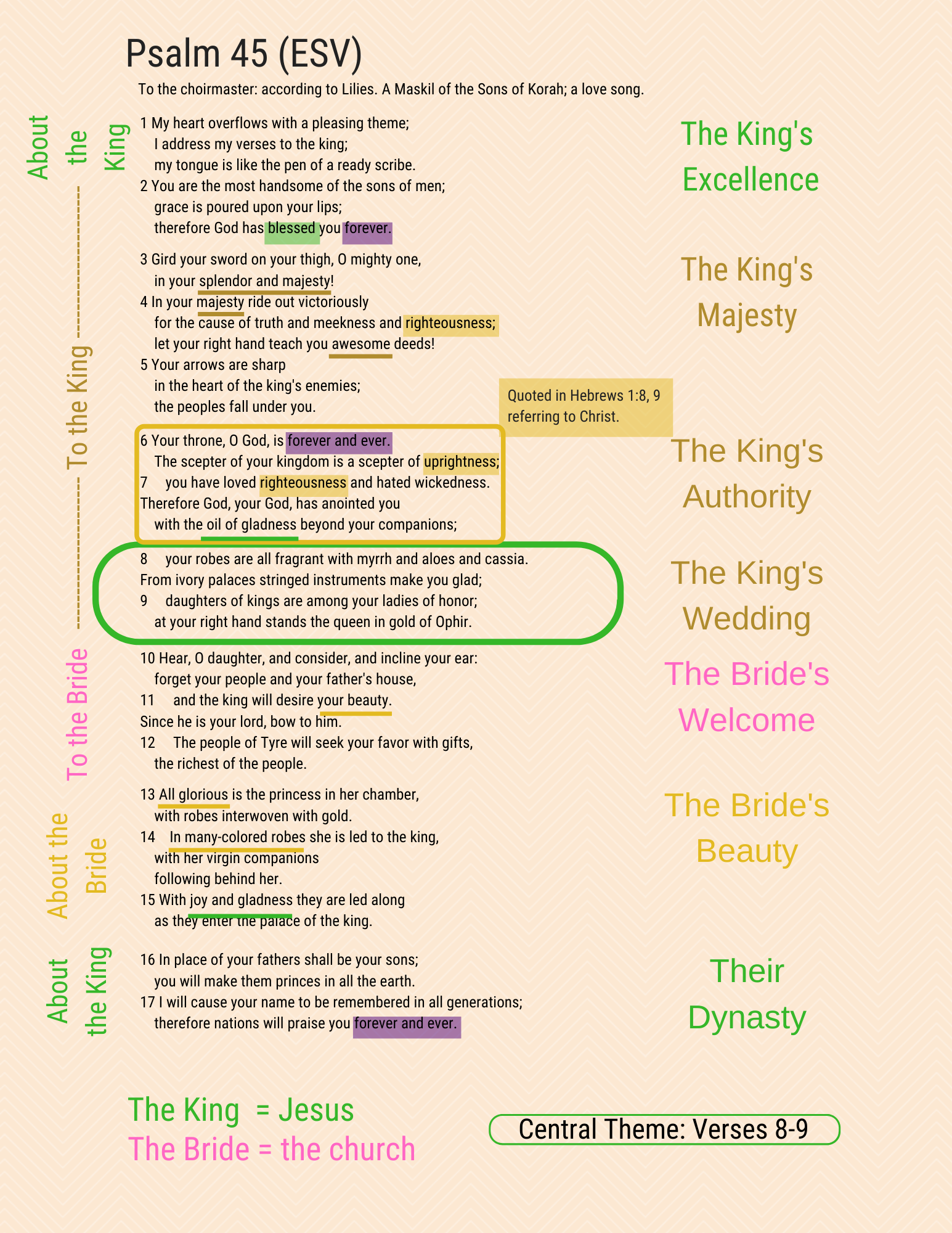
There are various structural devices that can be used to better understand and categorize psalms.
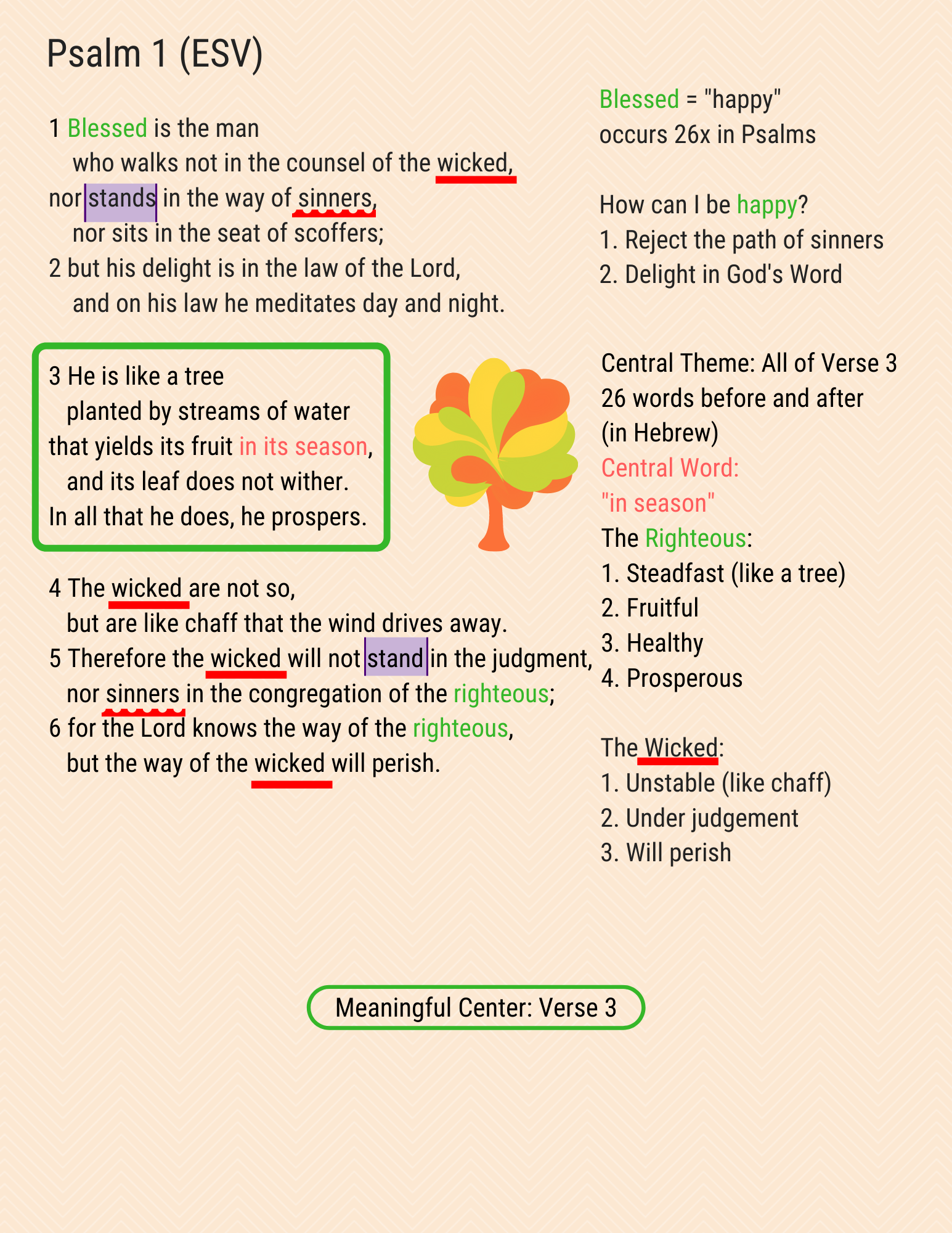
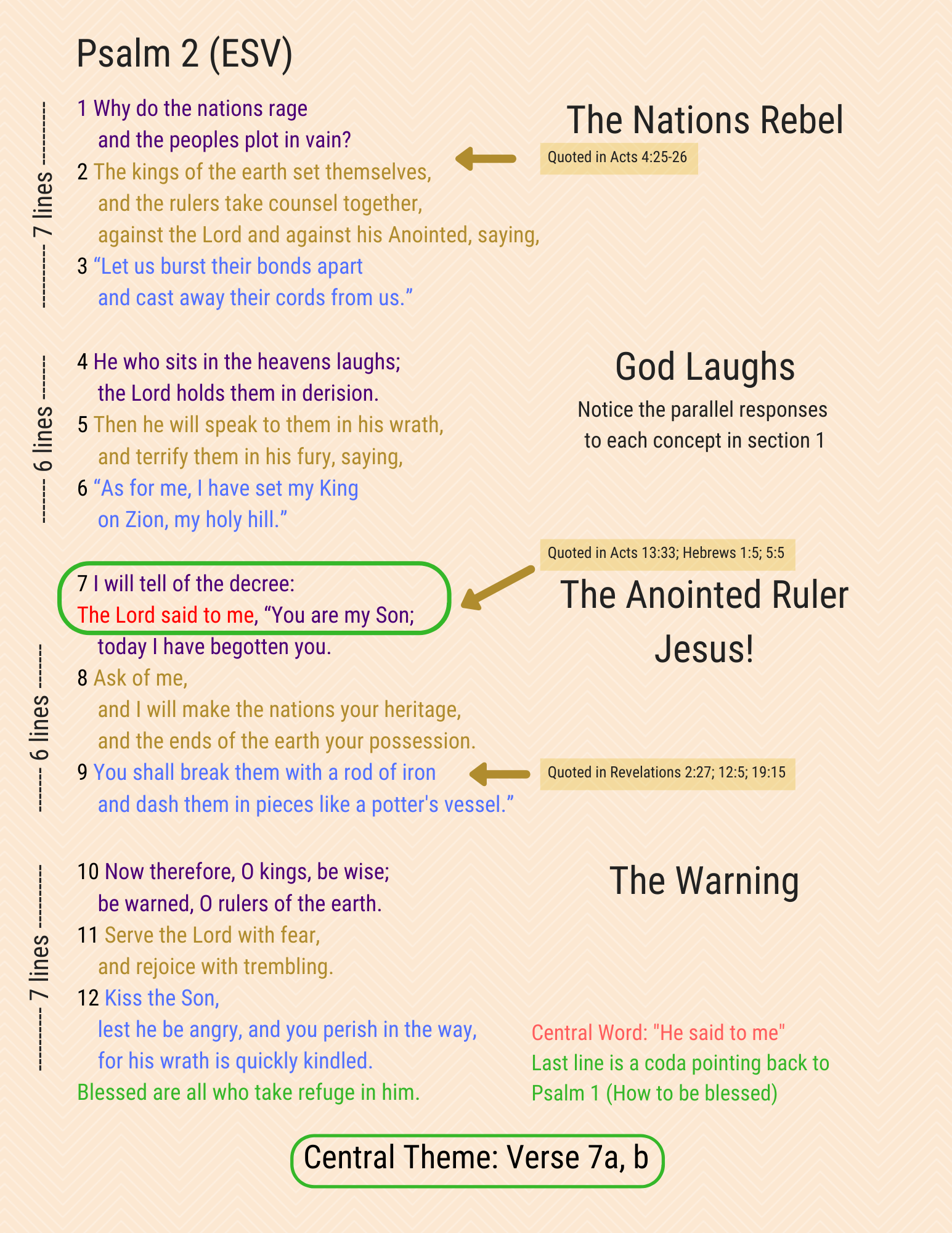
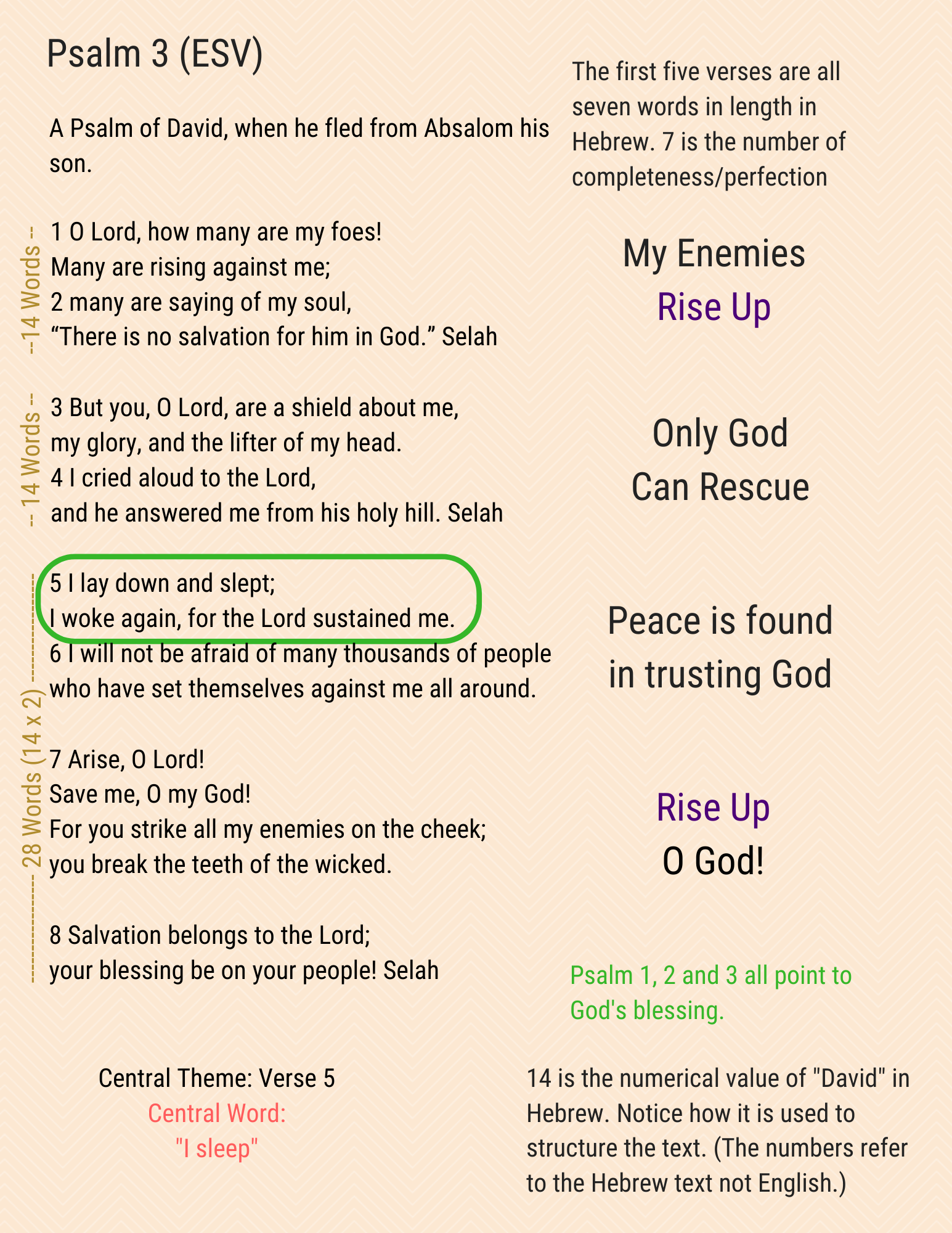
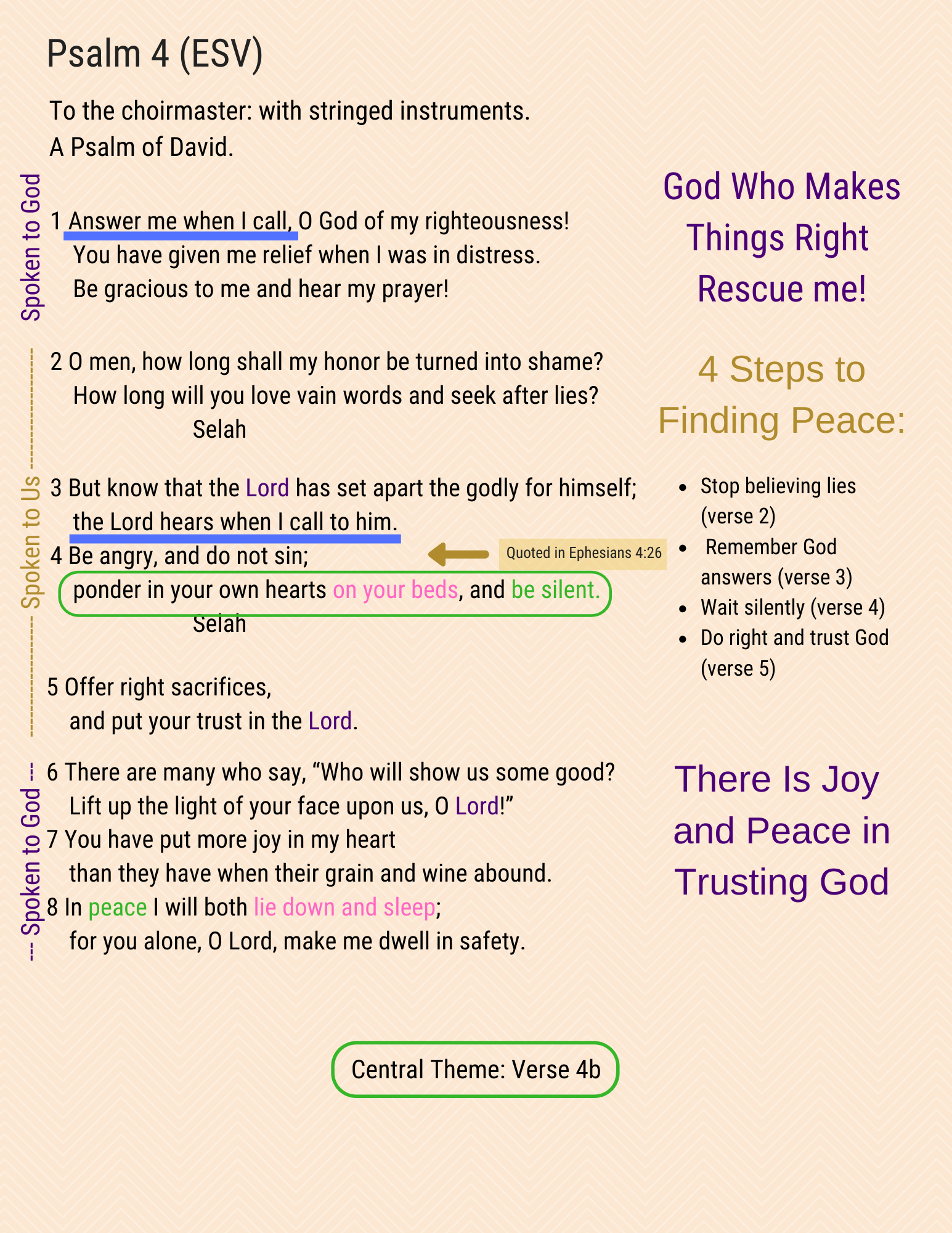
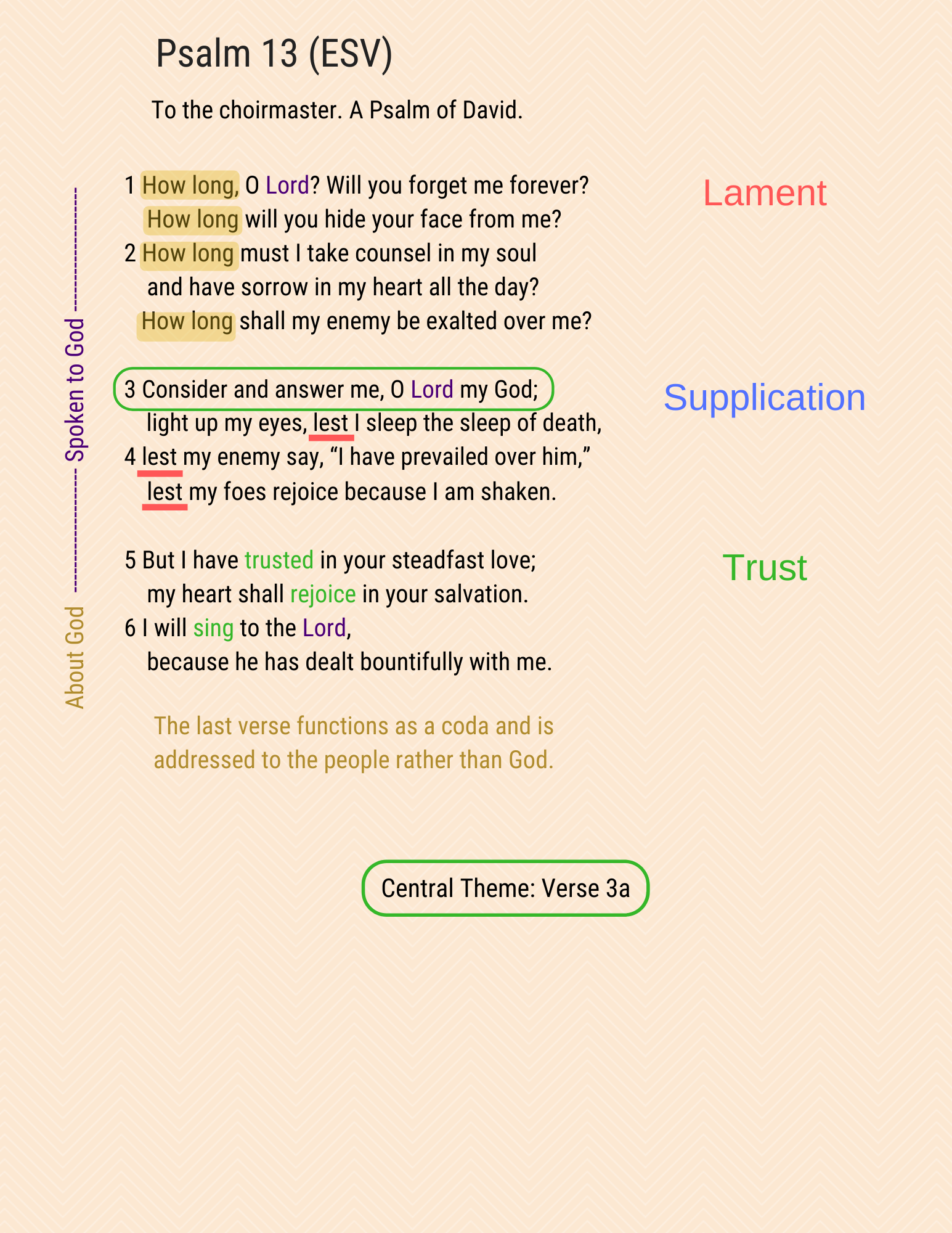
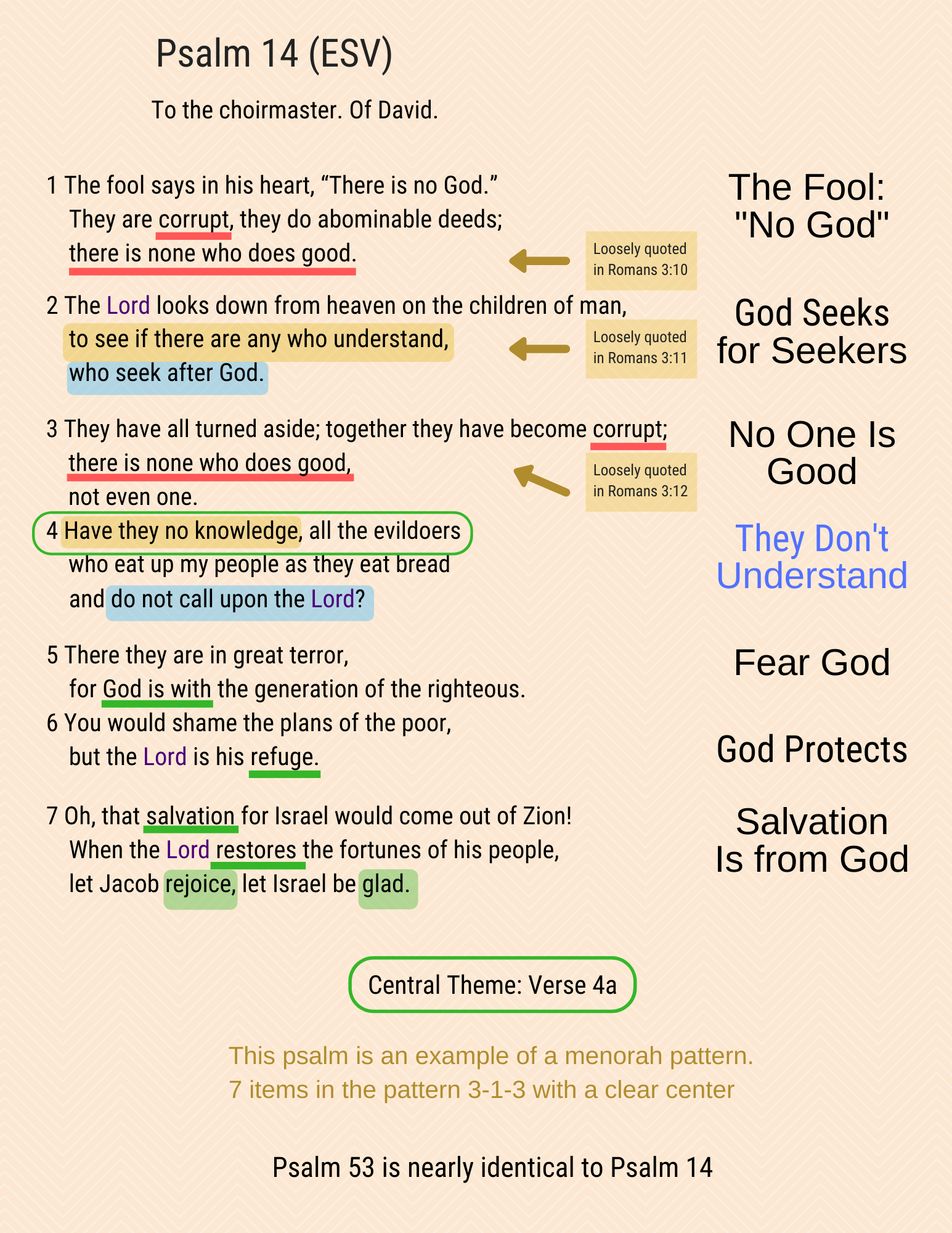
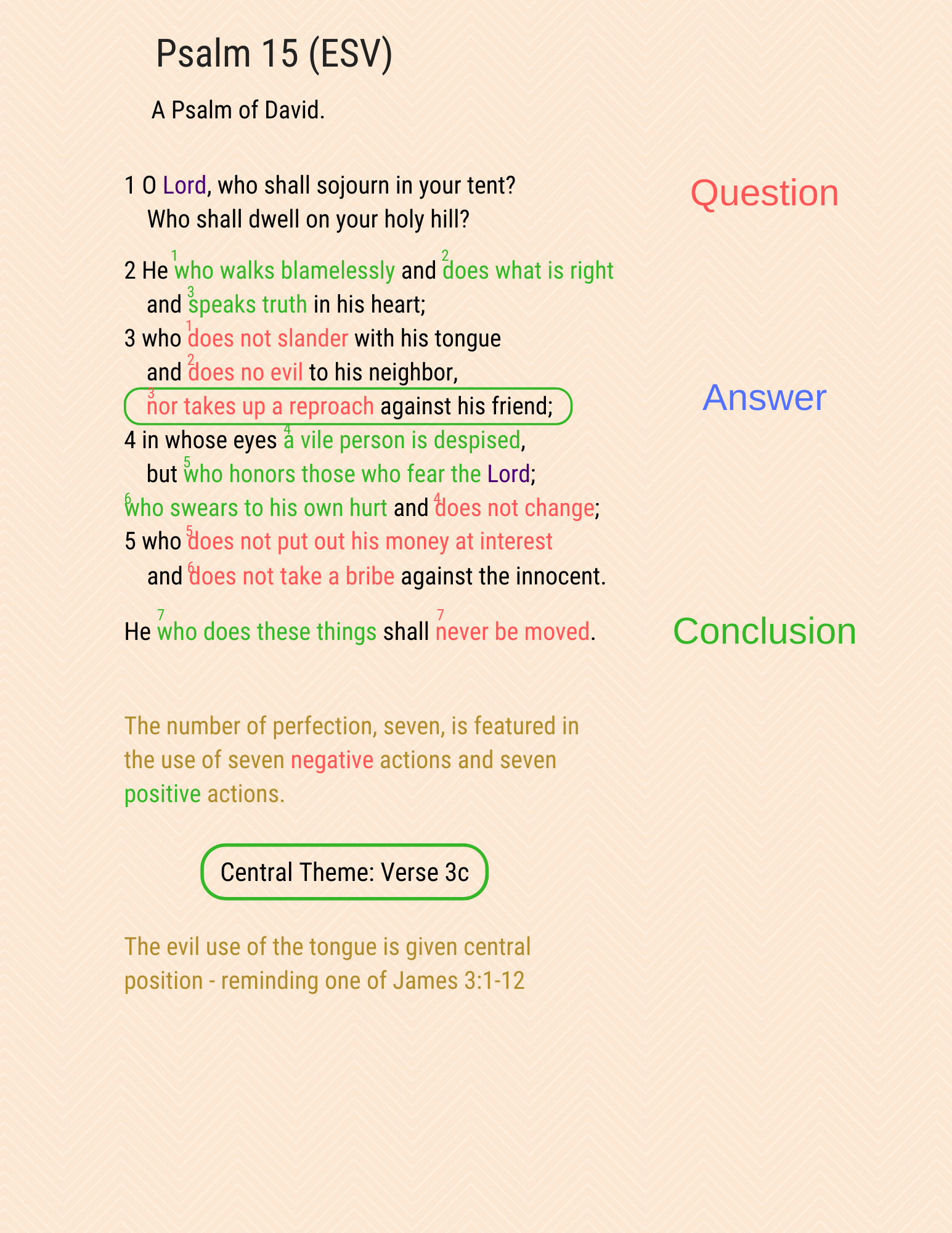
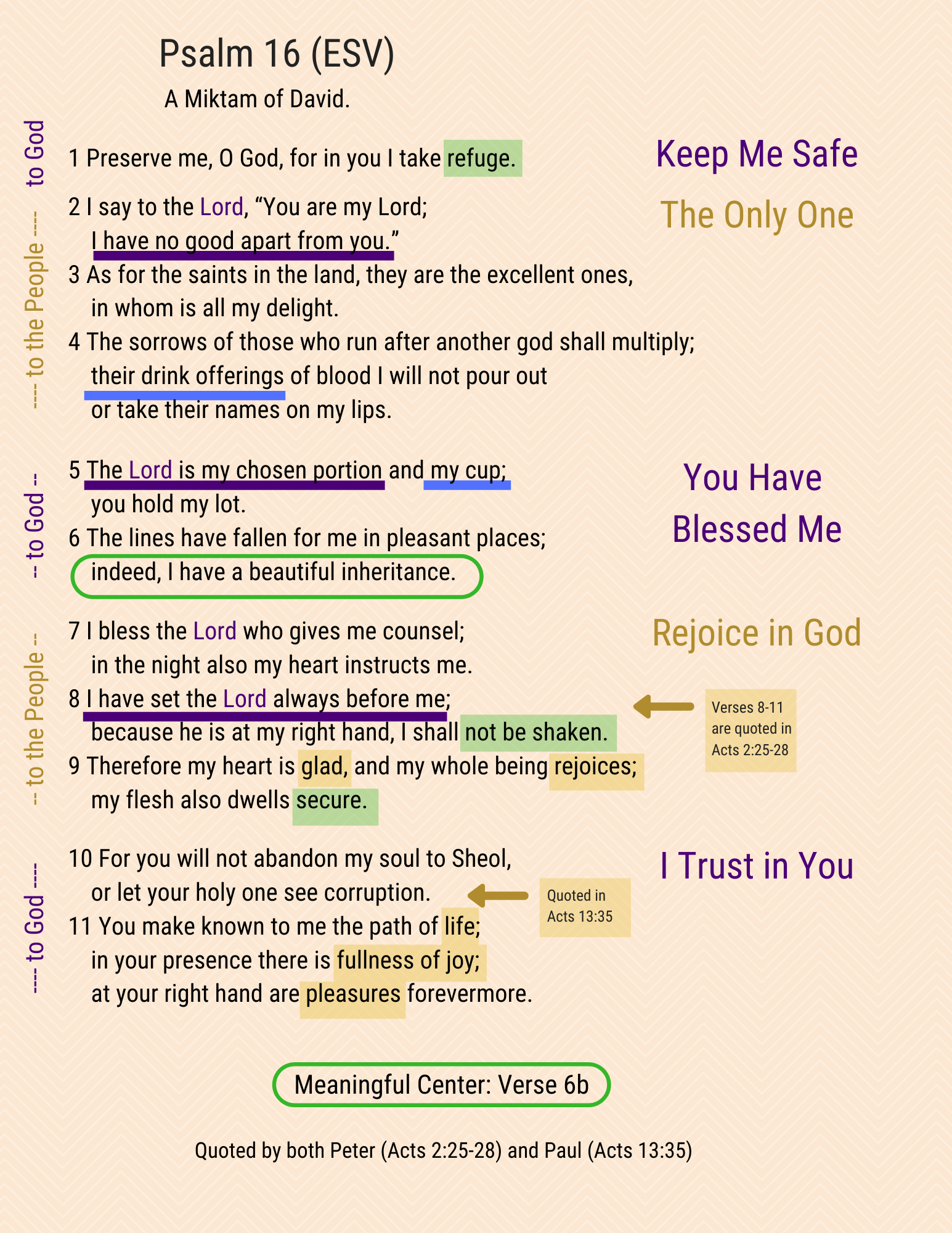
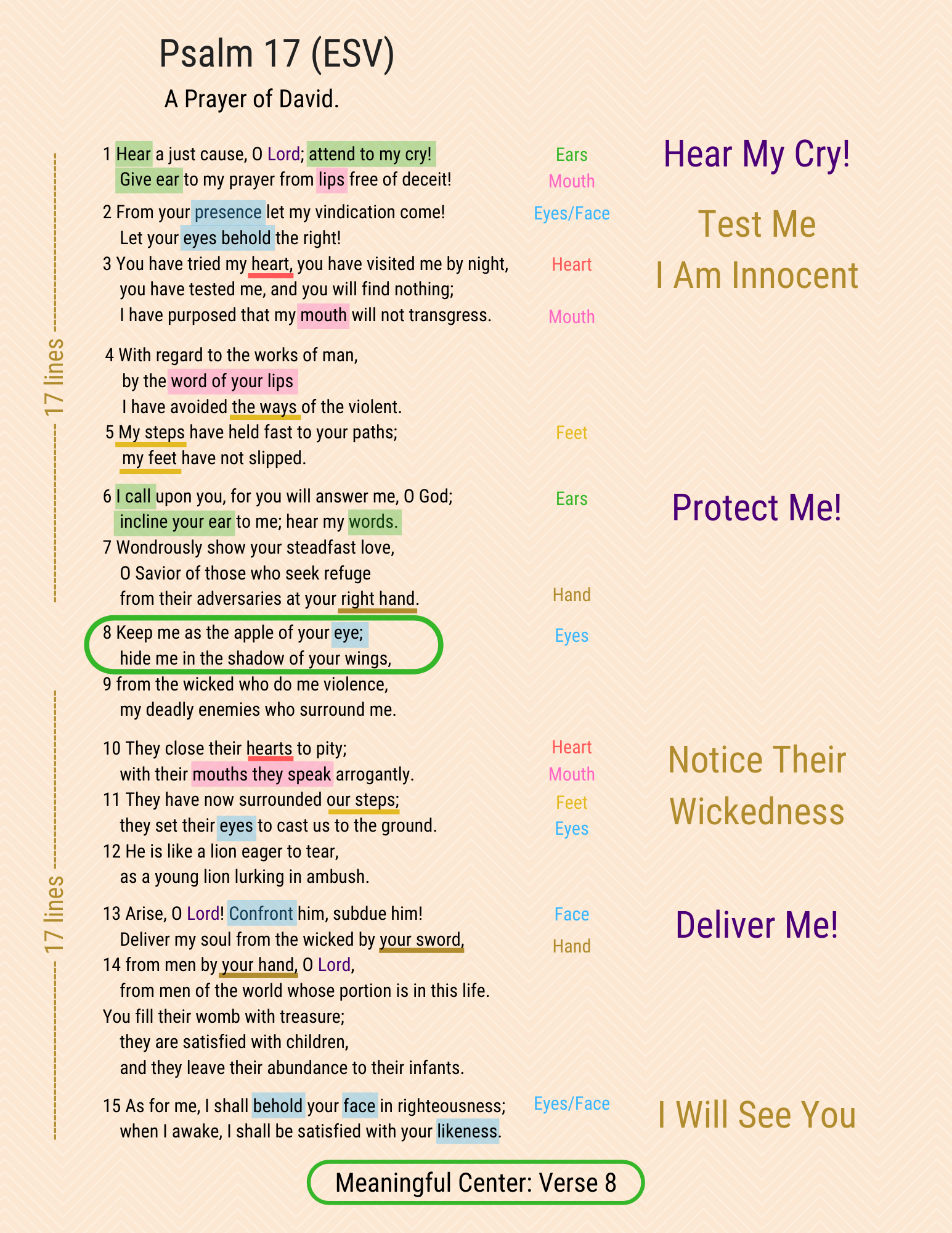
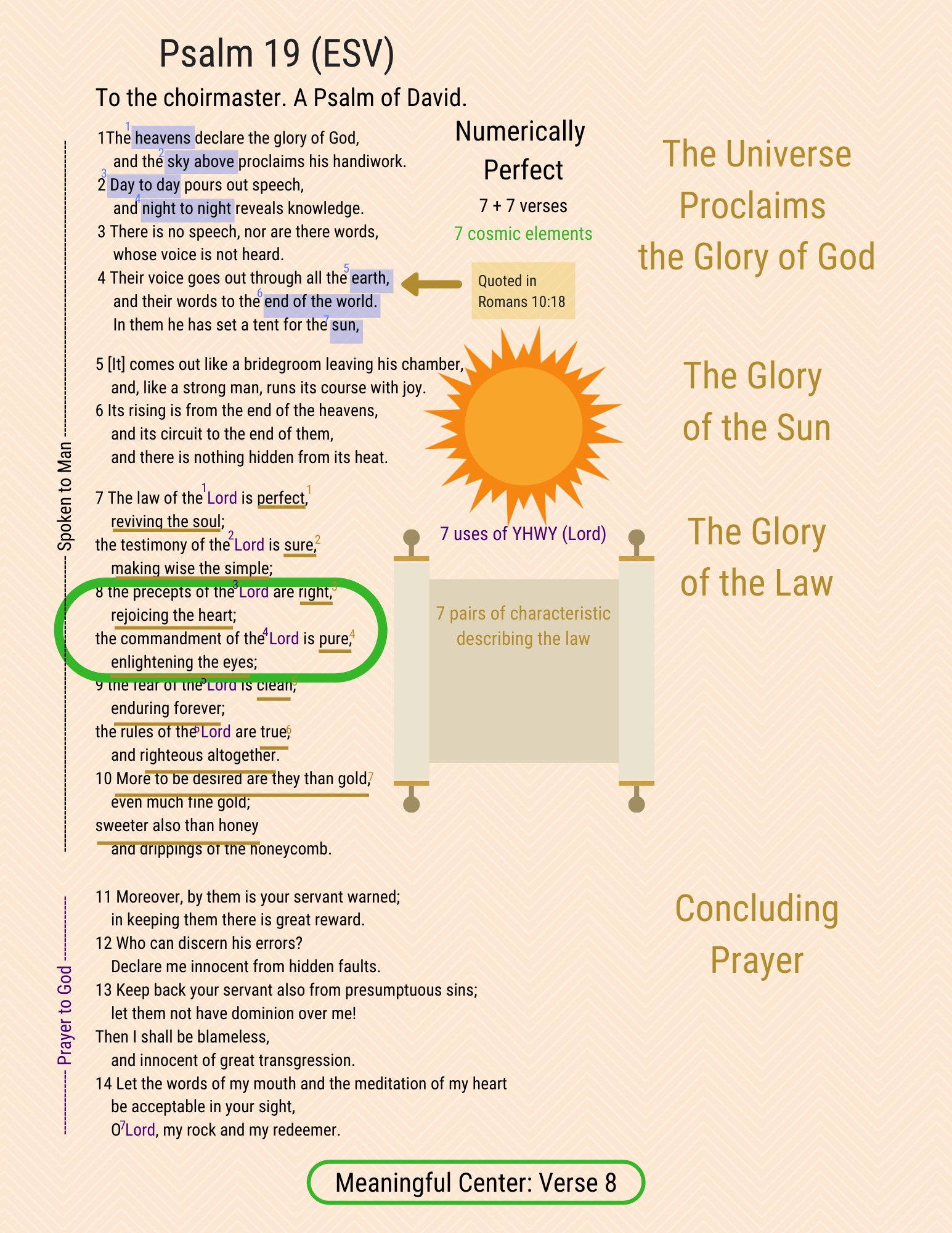
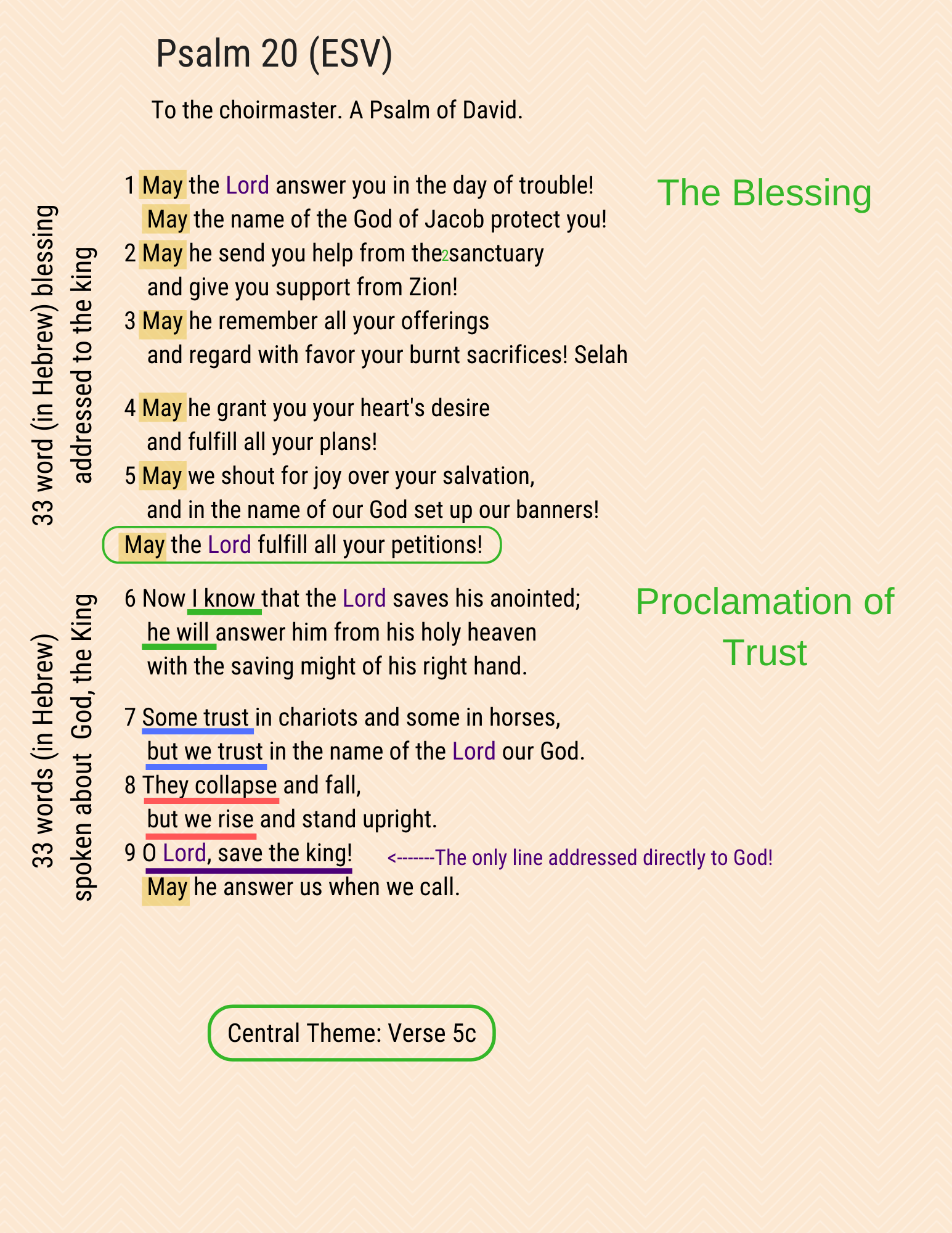
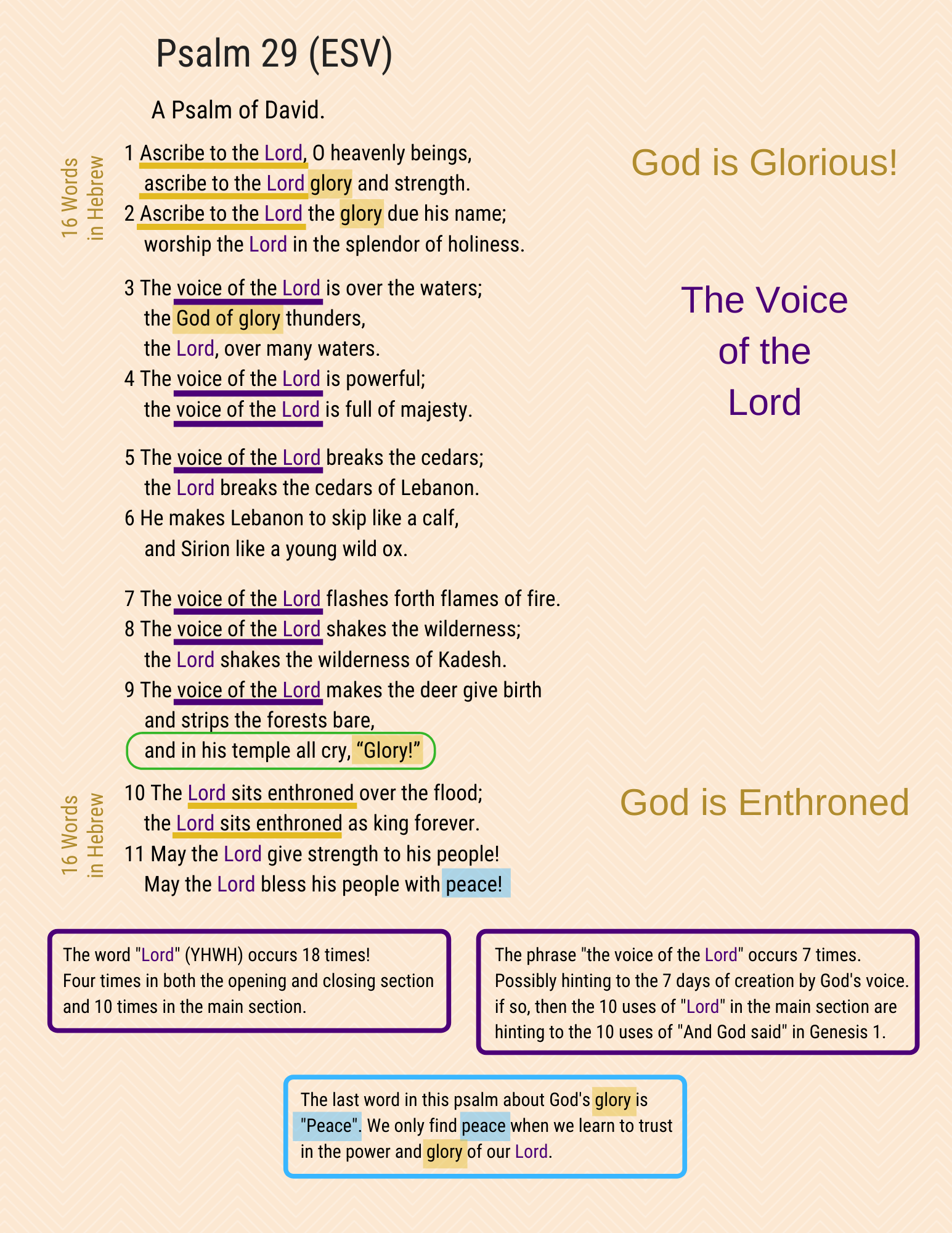
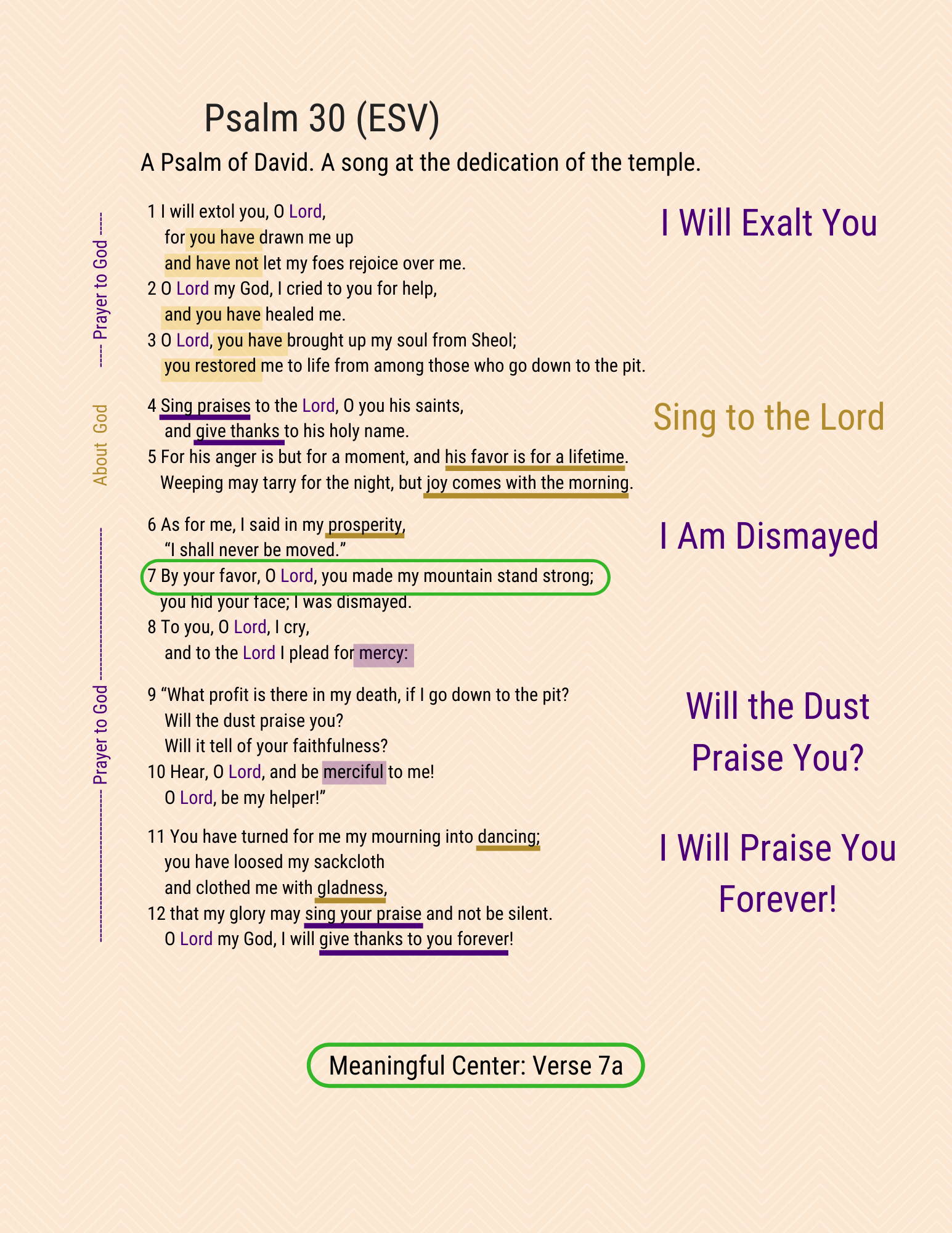
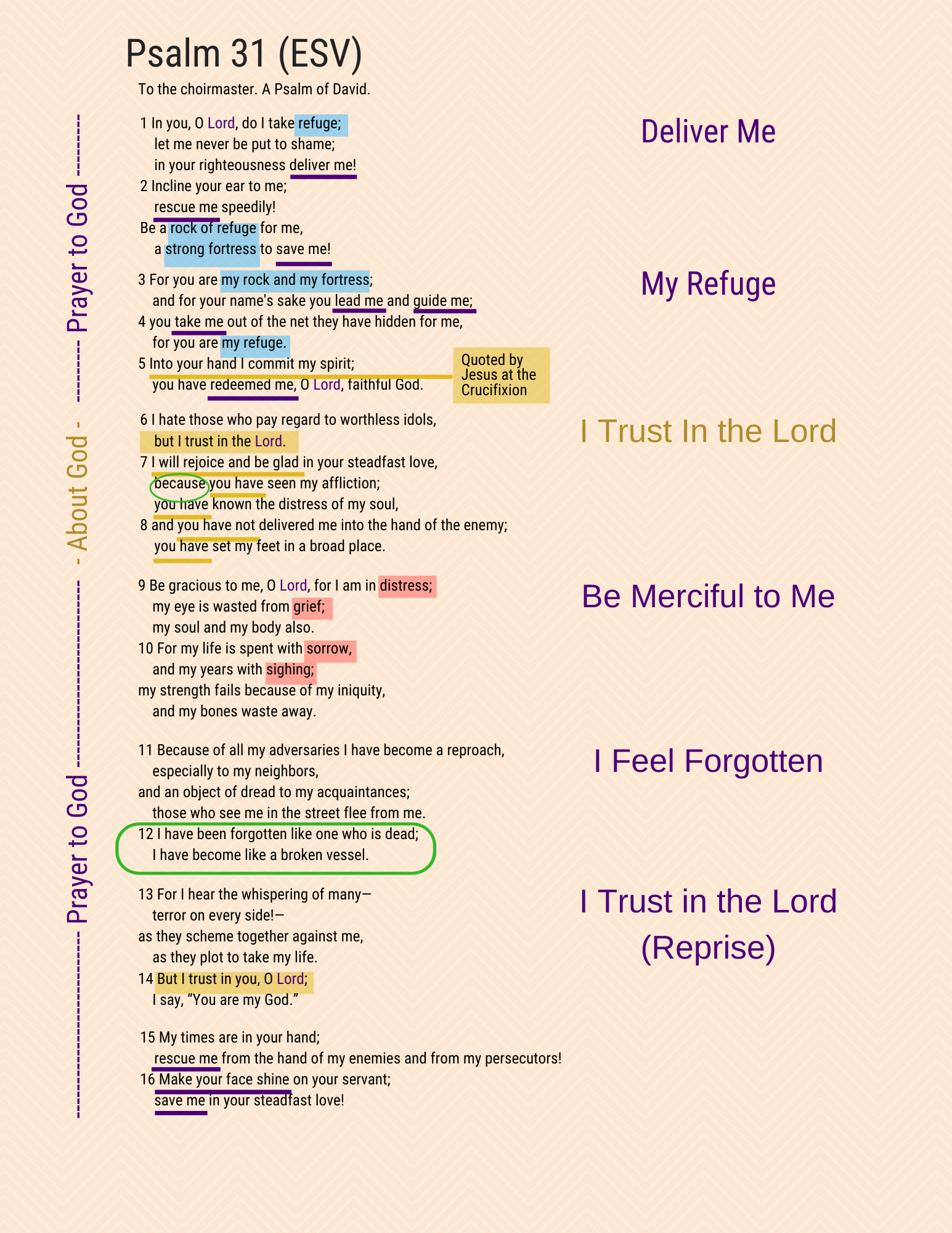
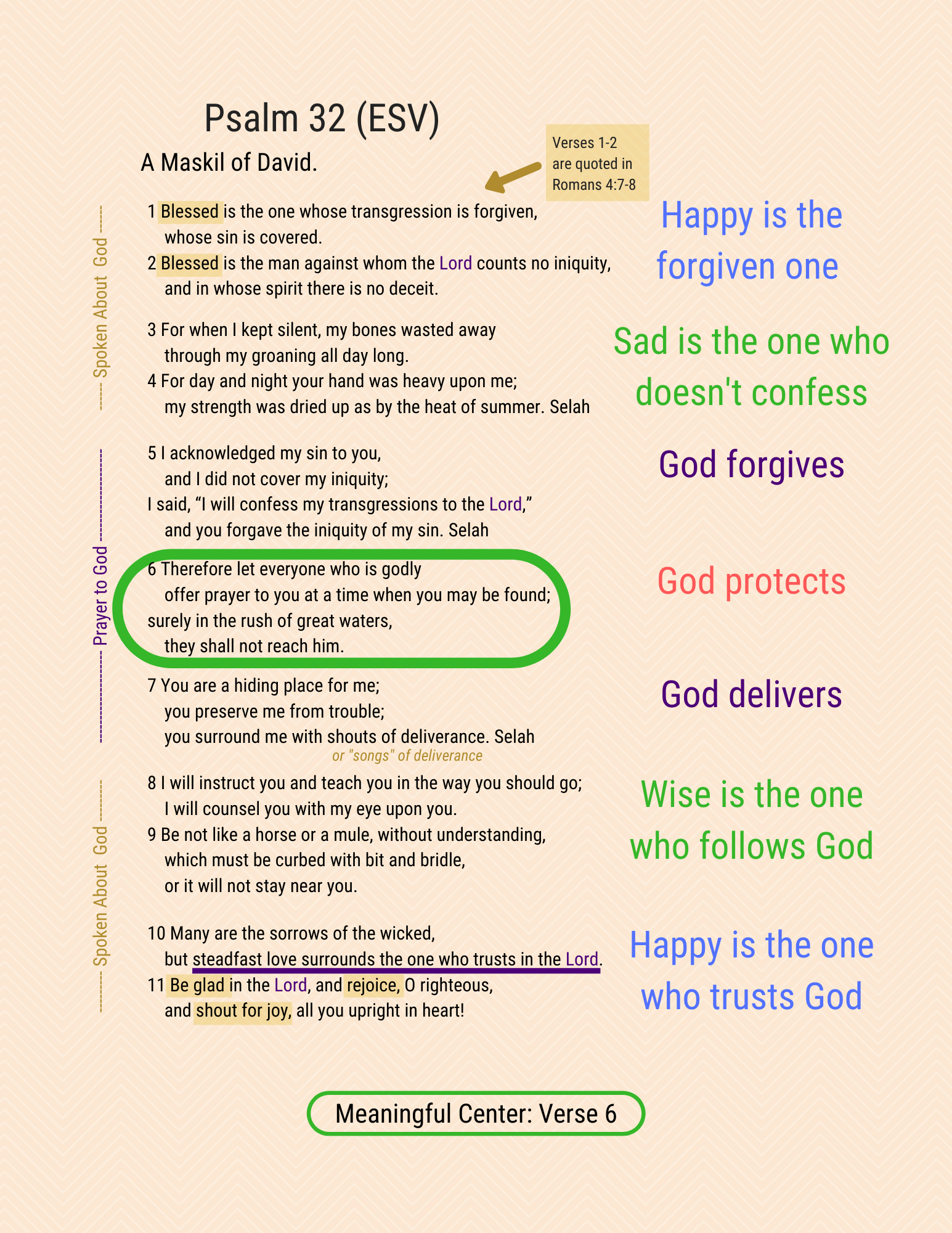
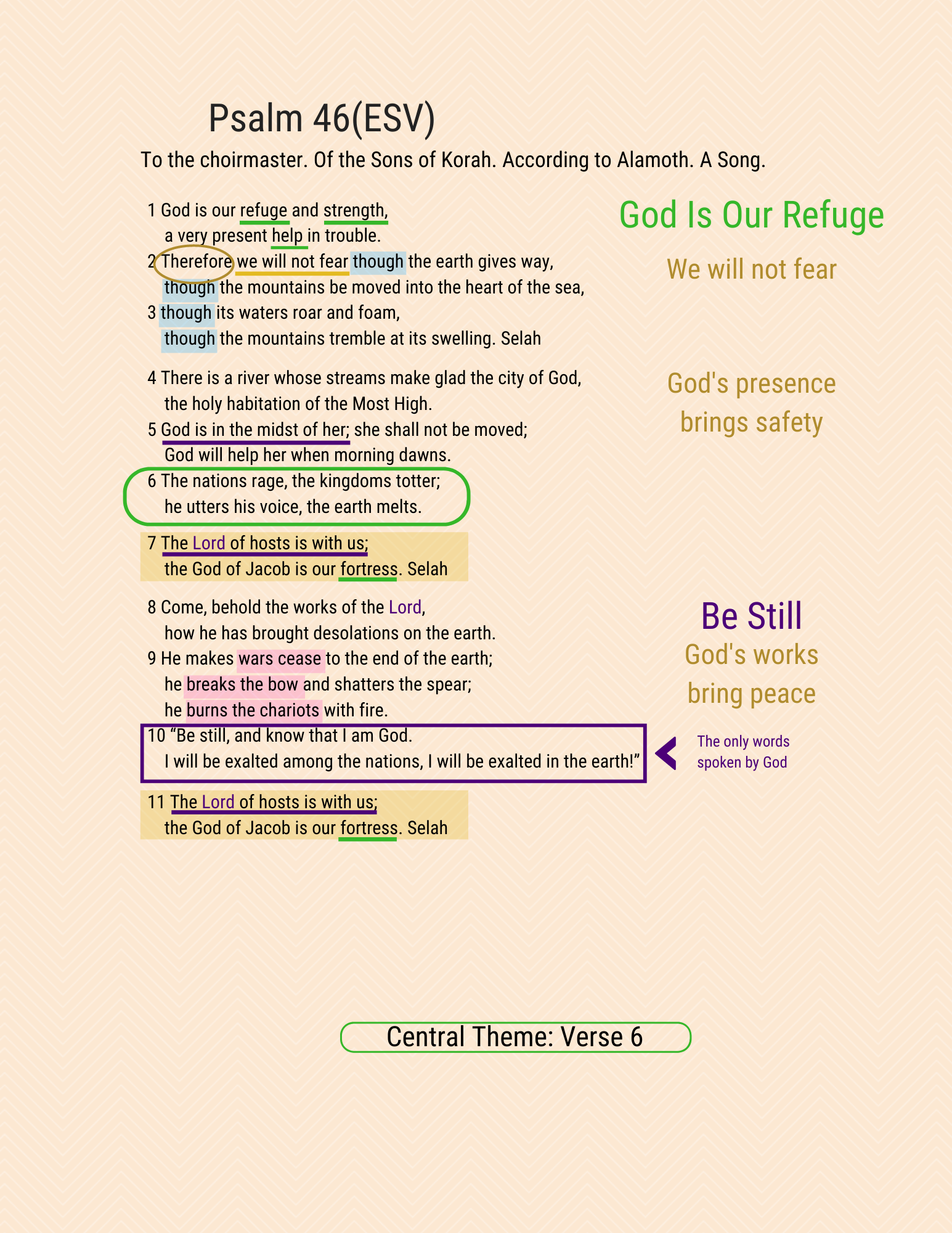
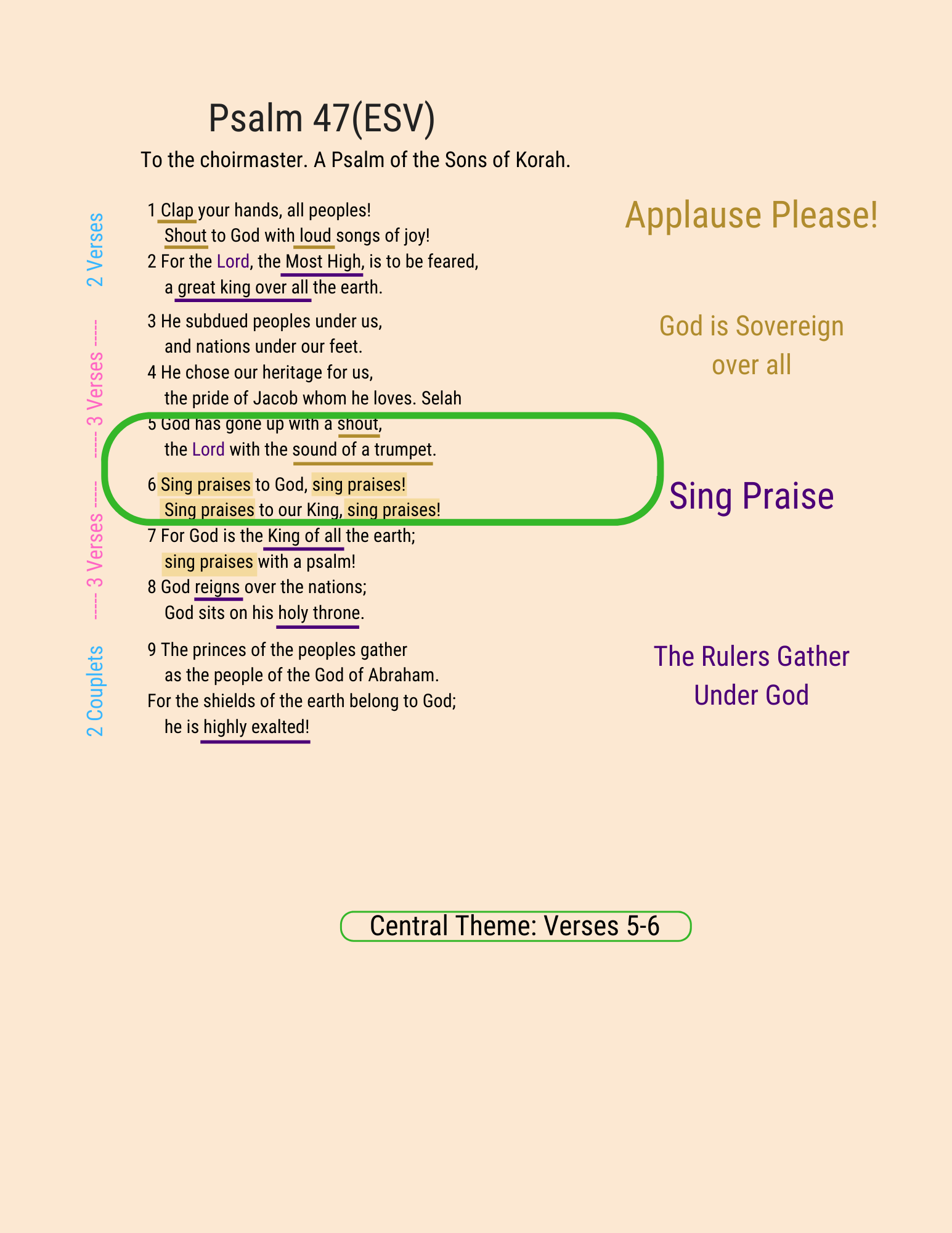
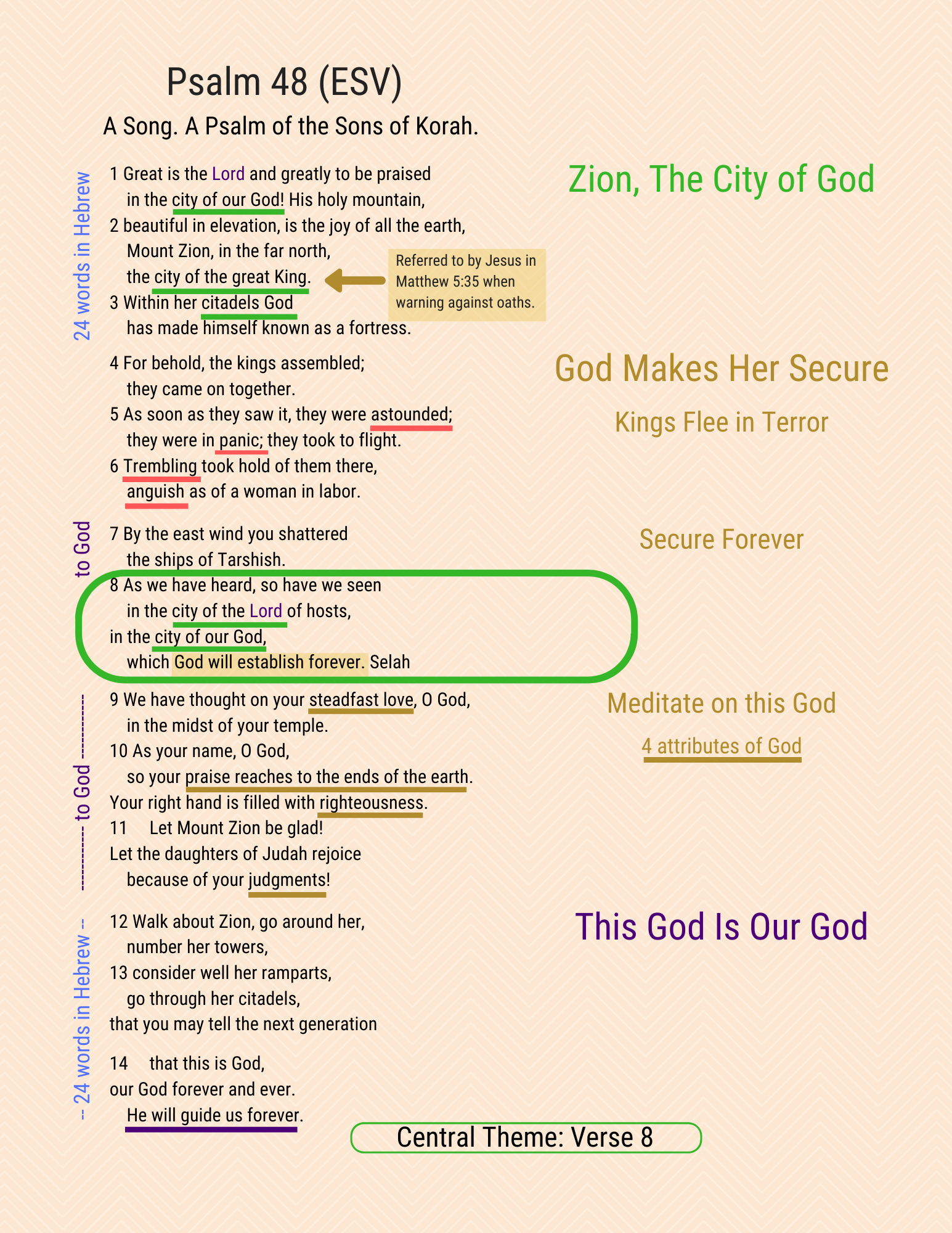
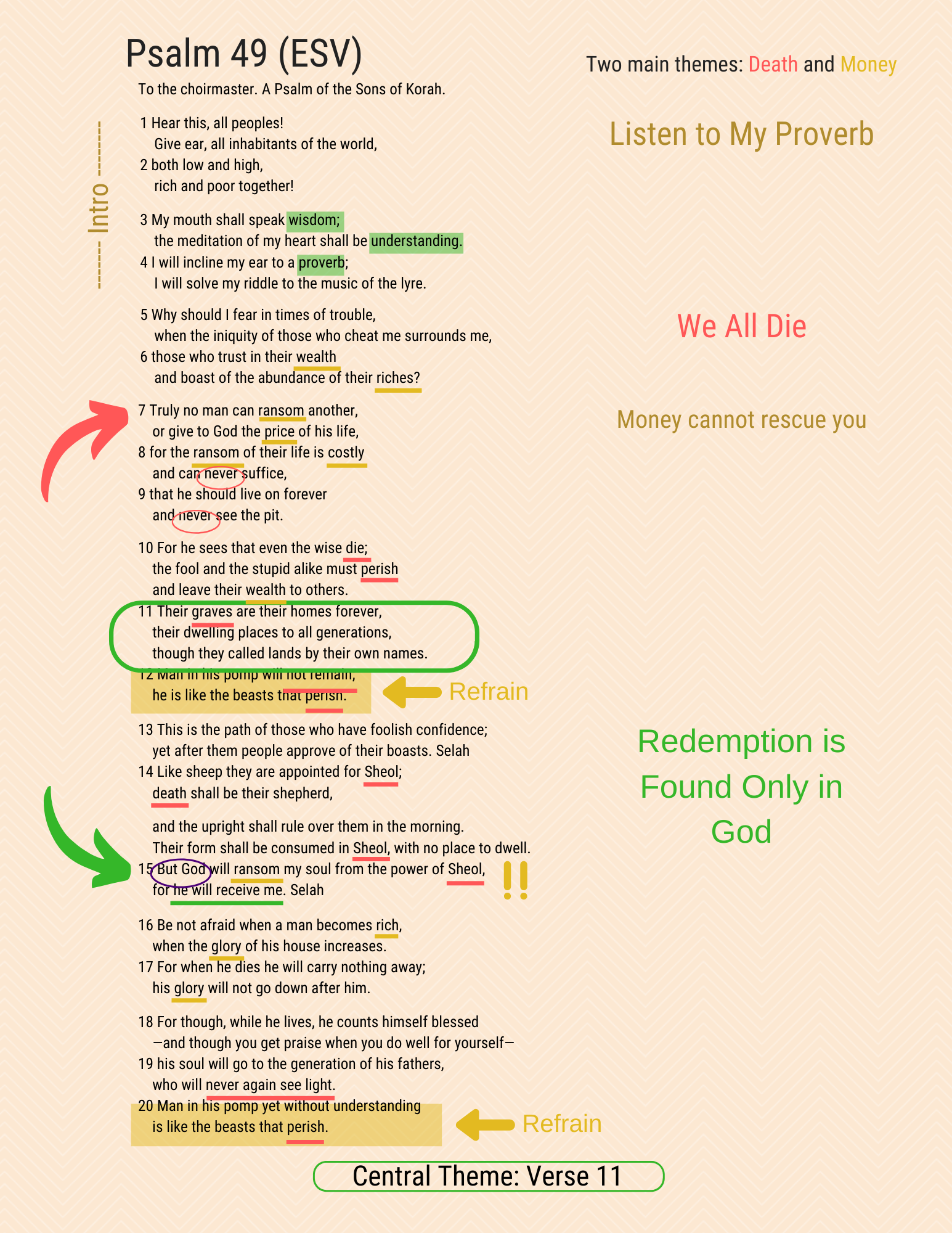
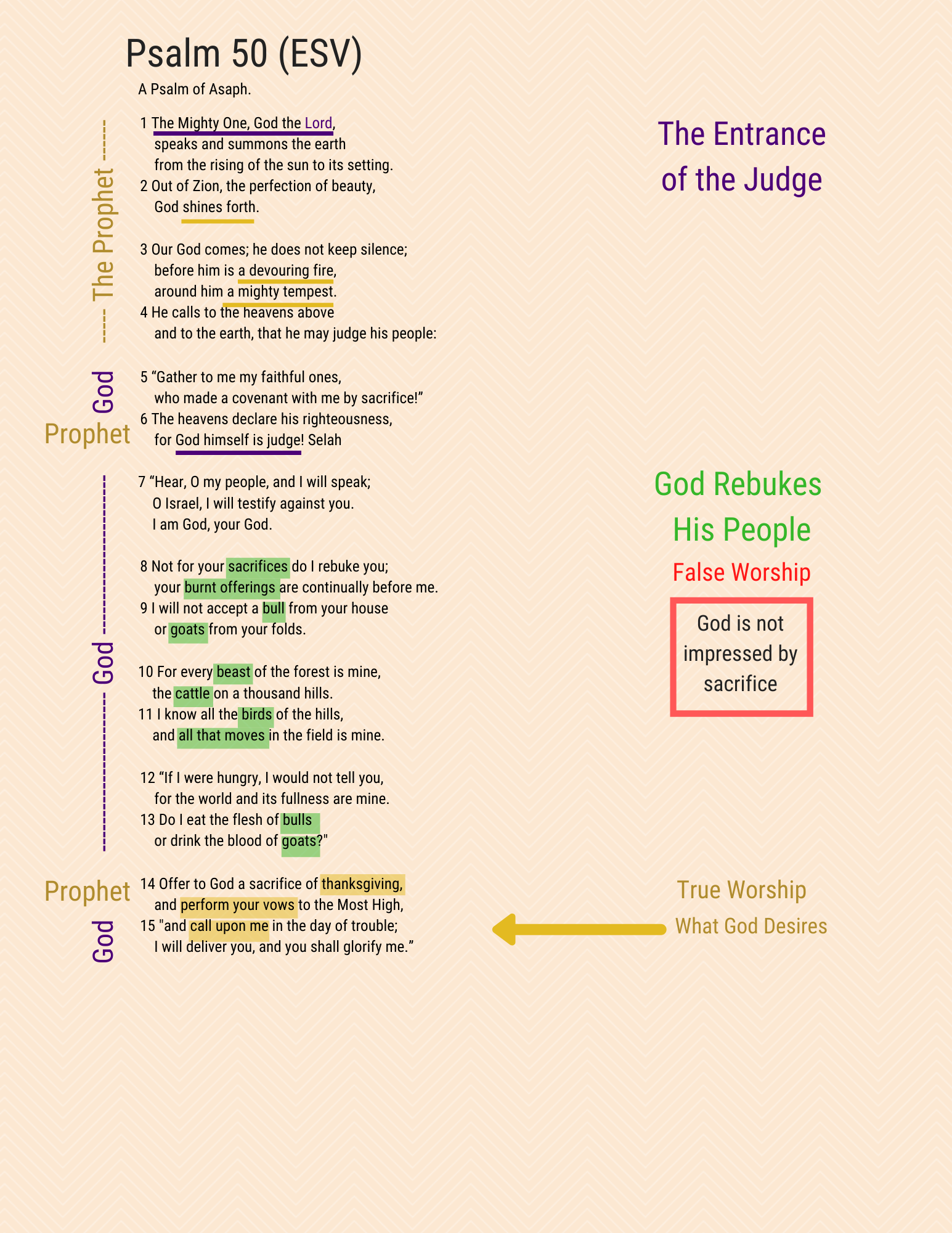
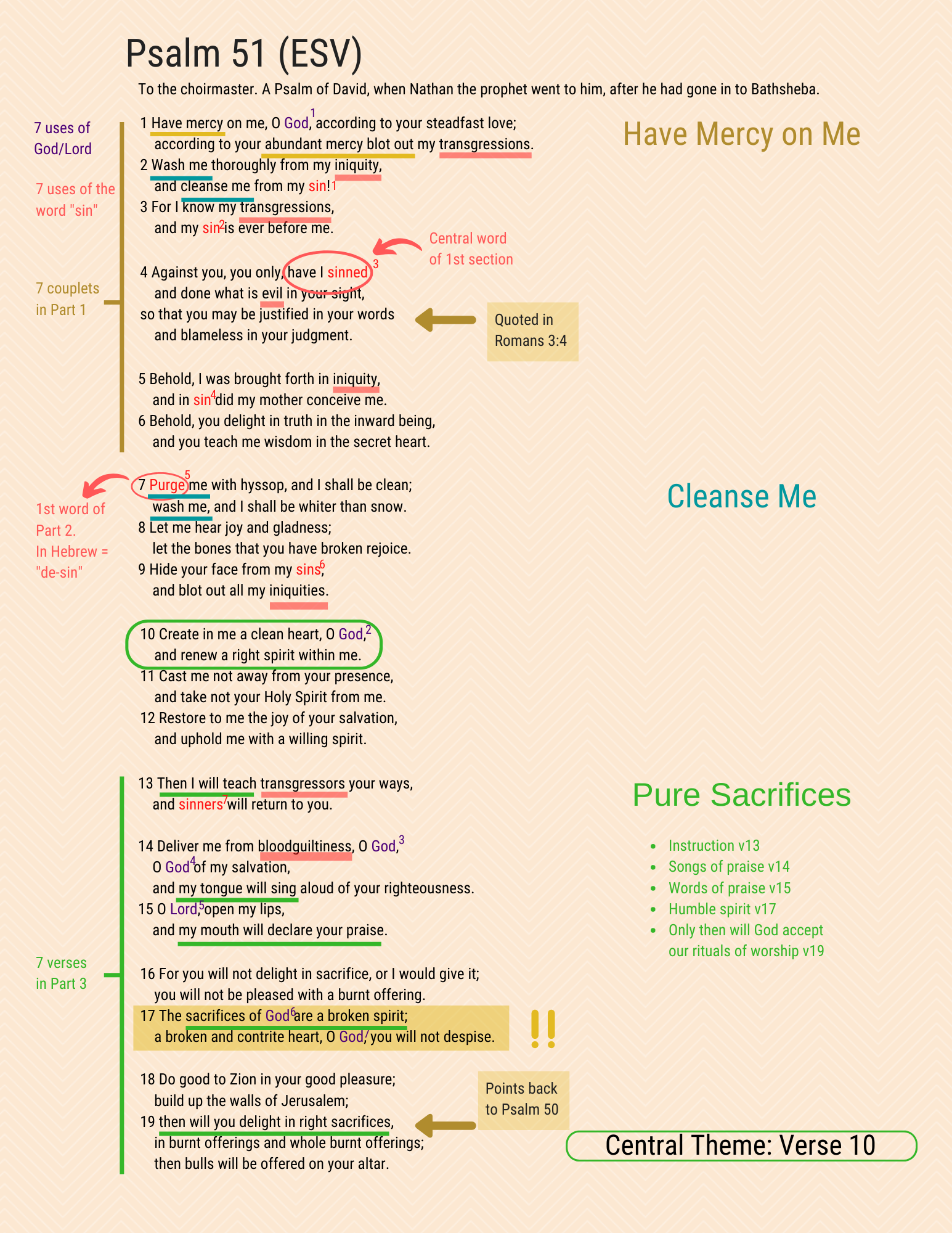
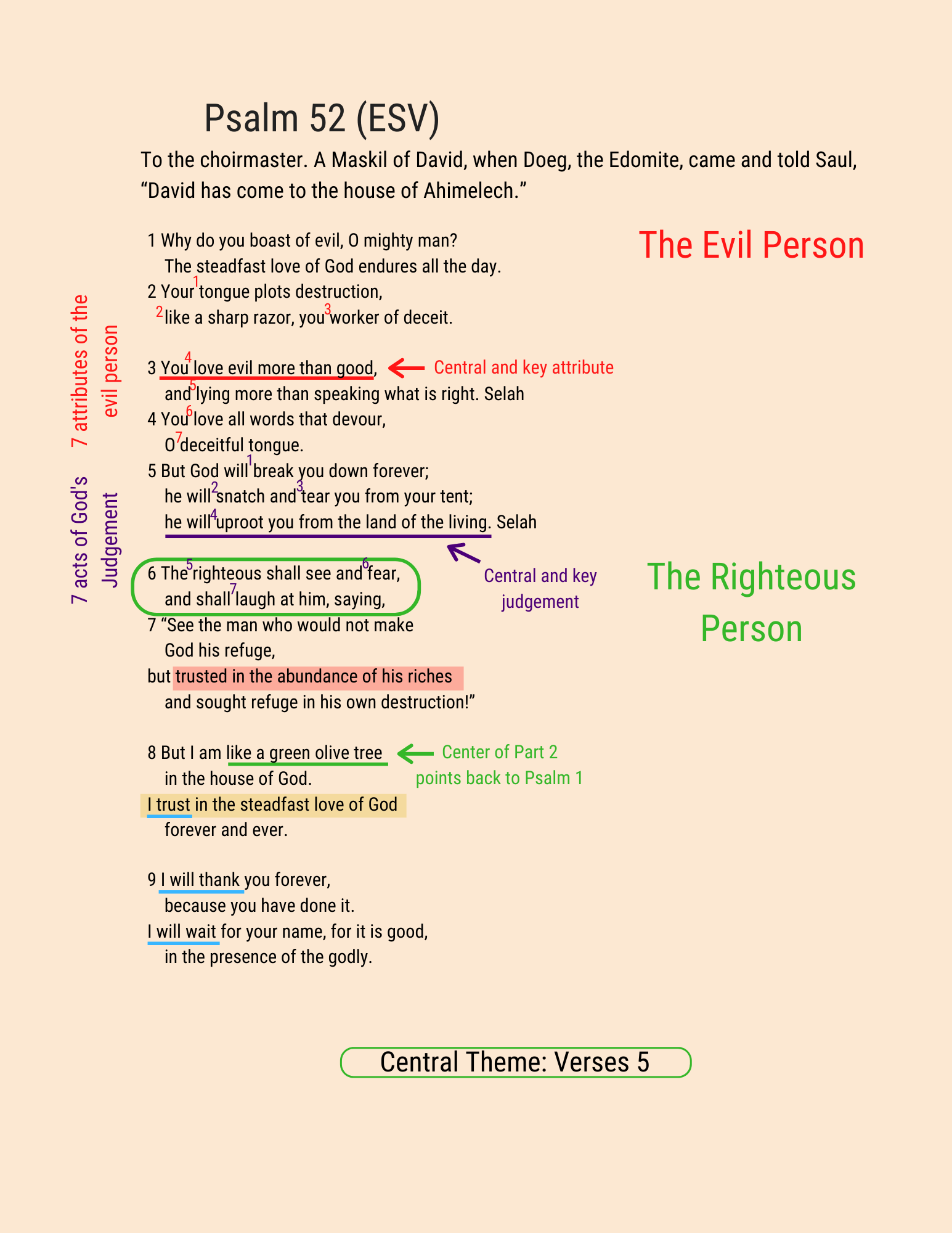
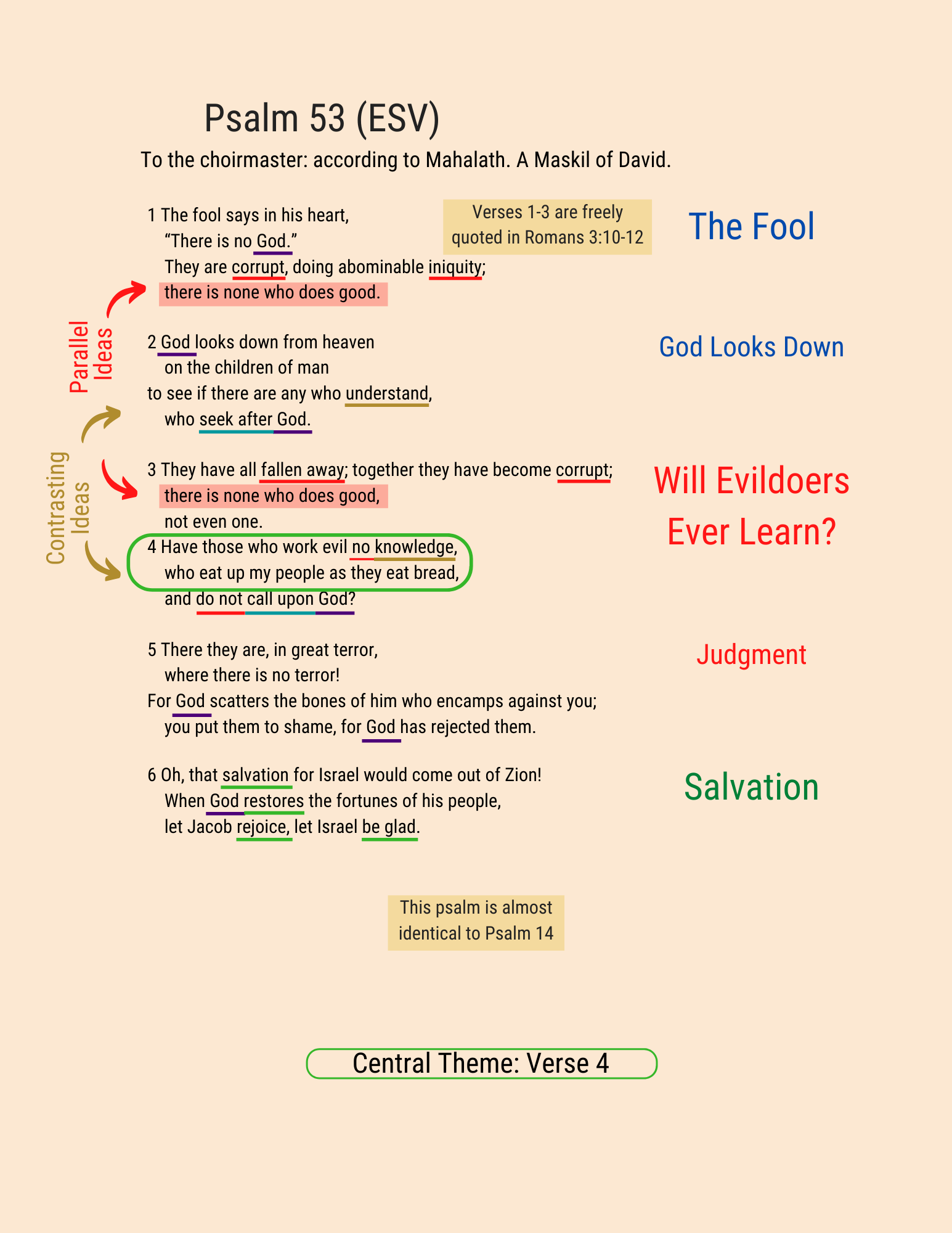
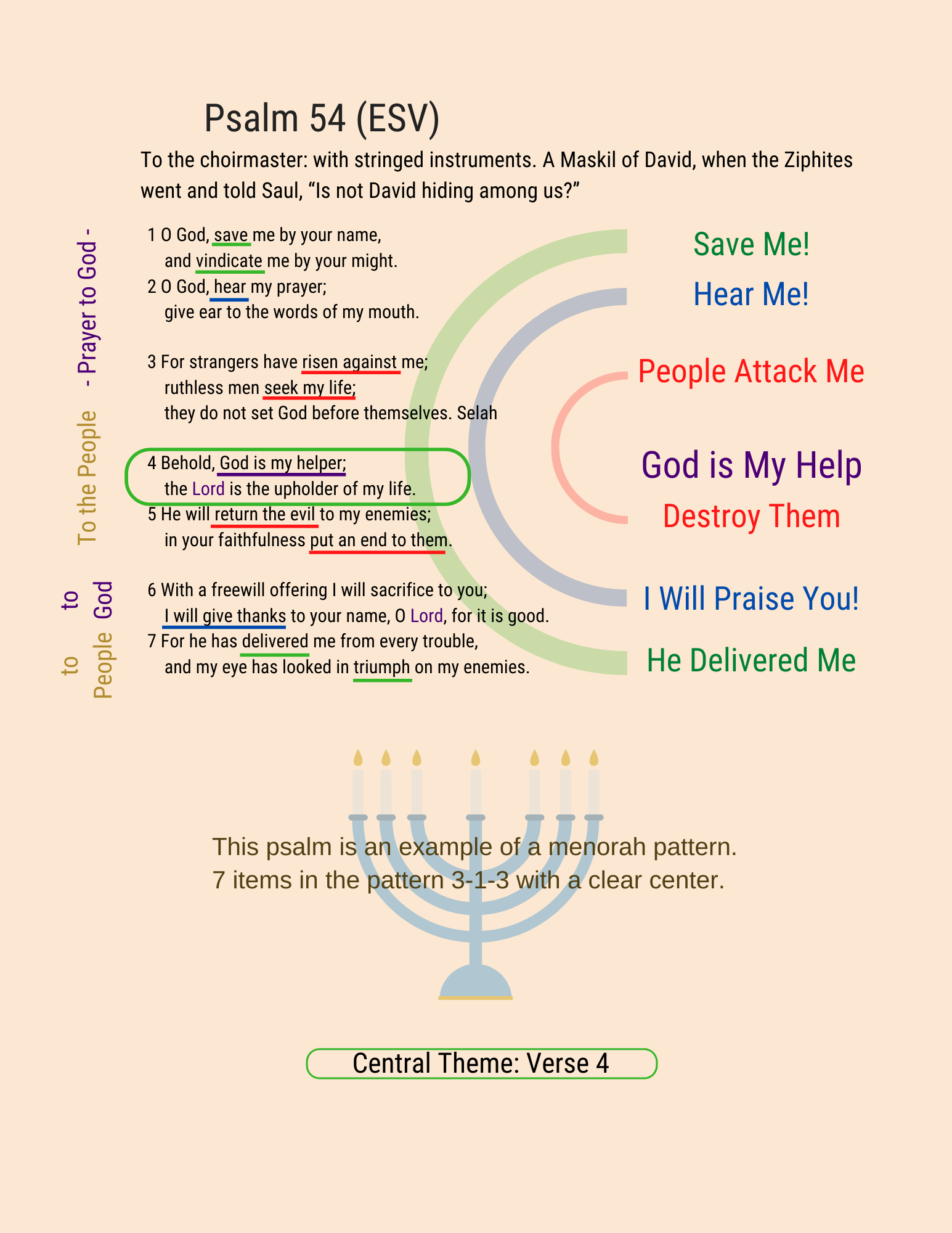
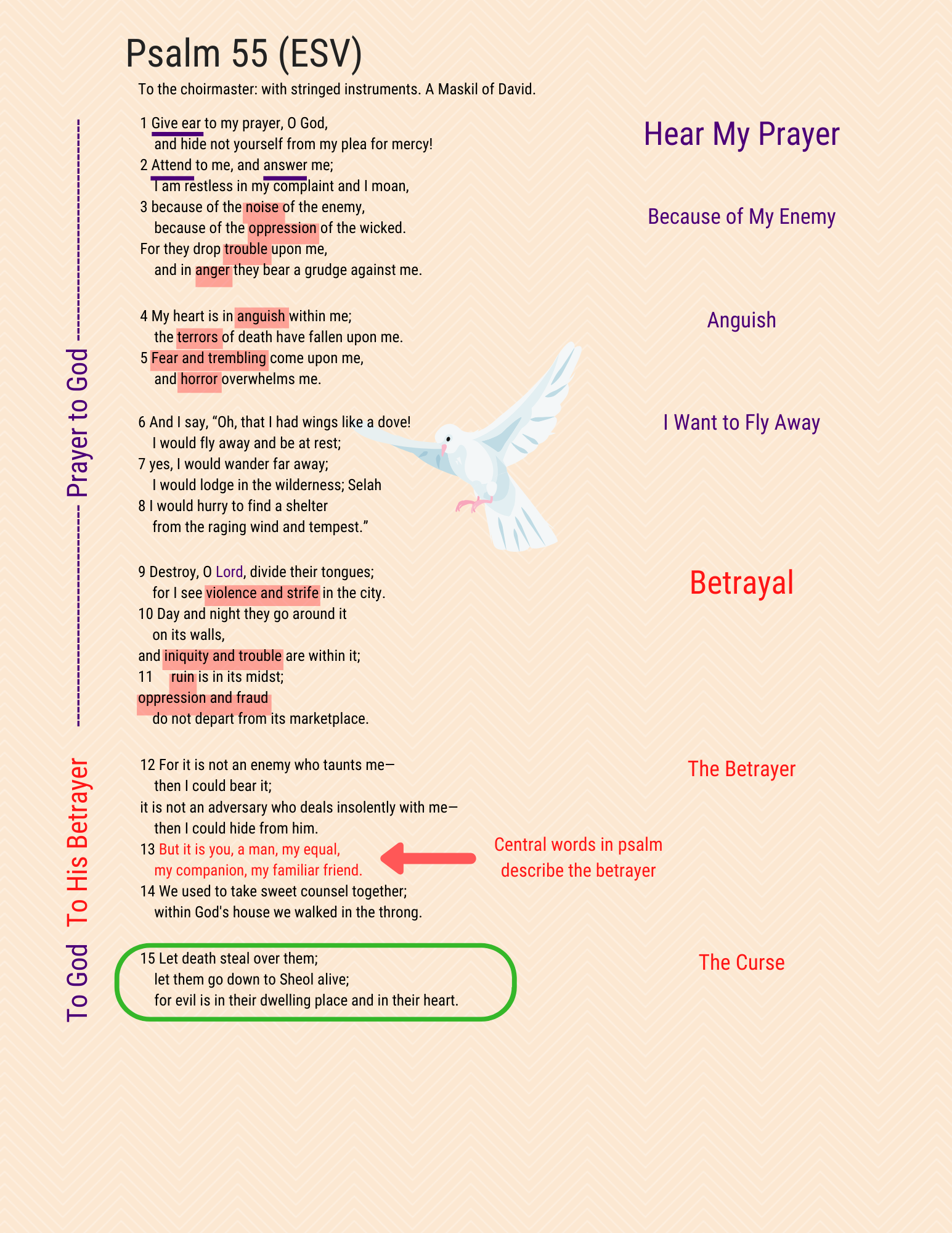
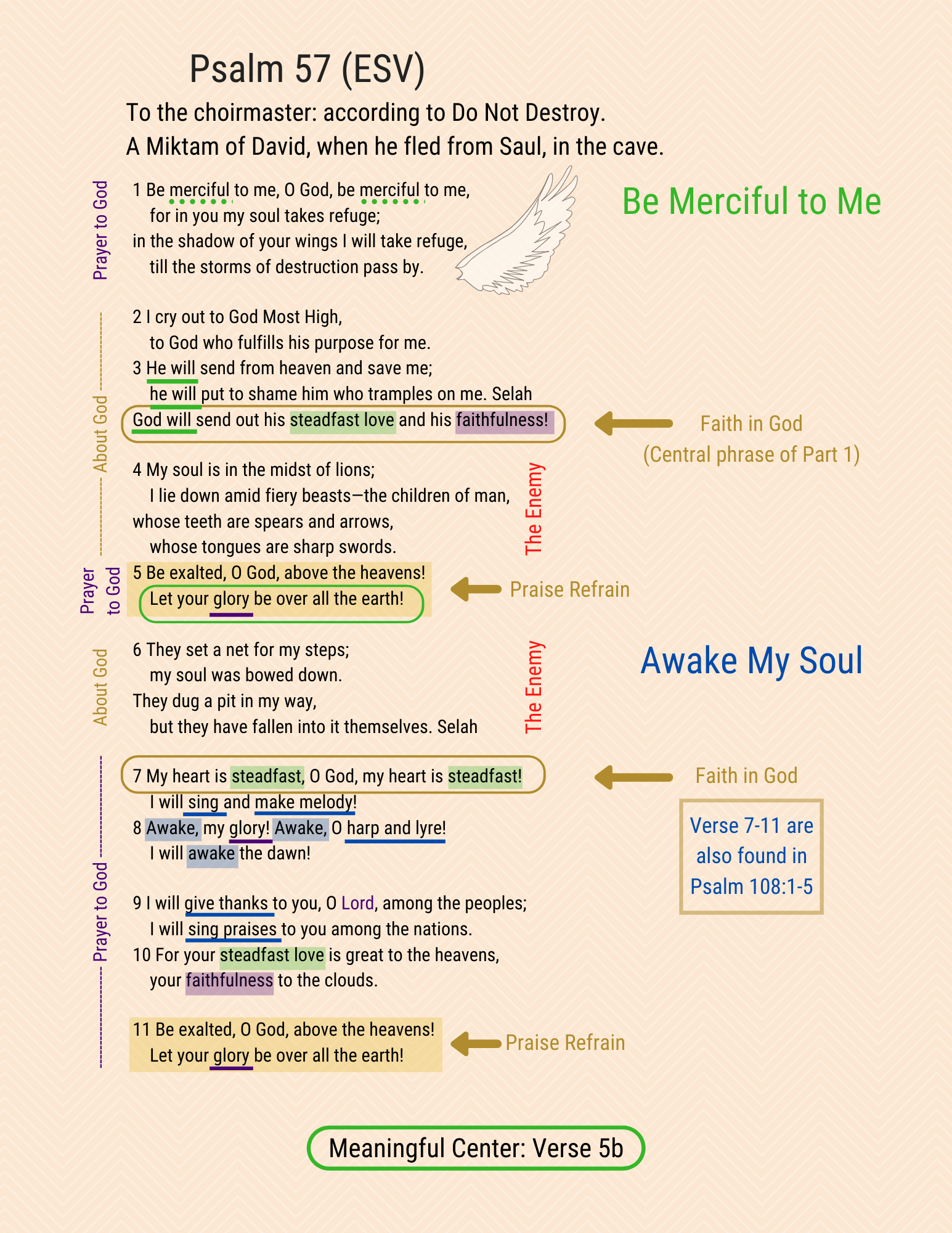
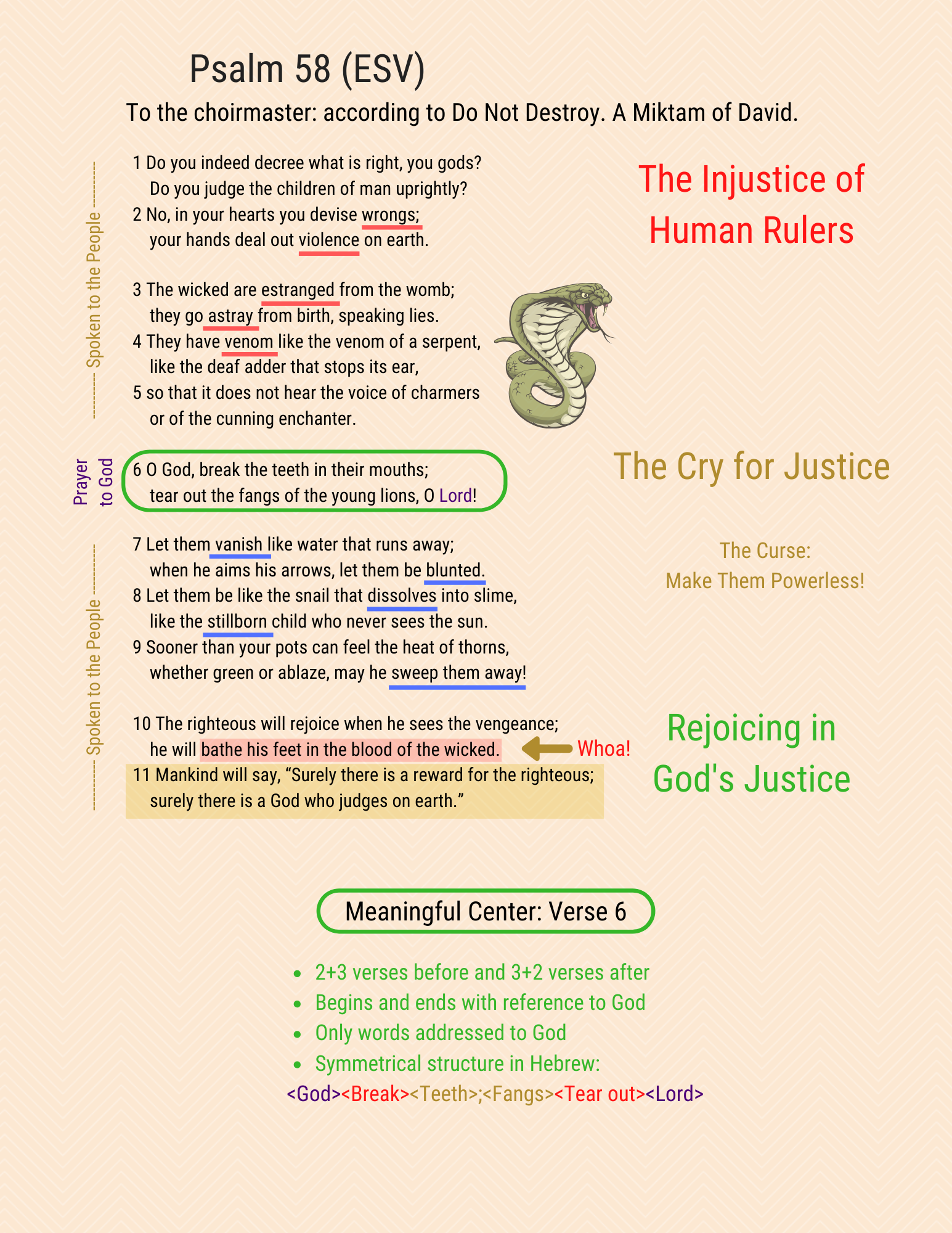
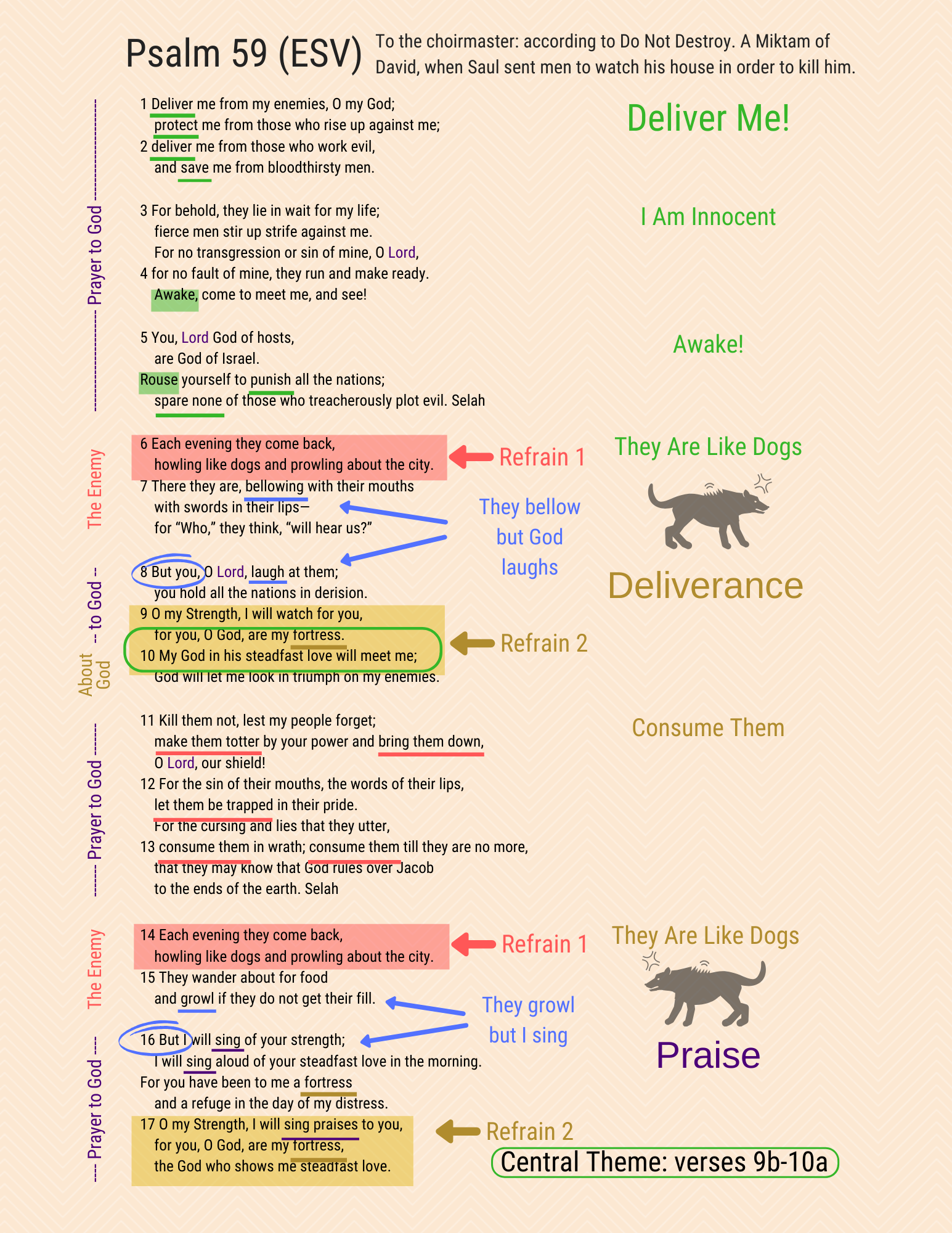
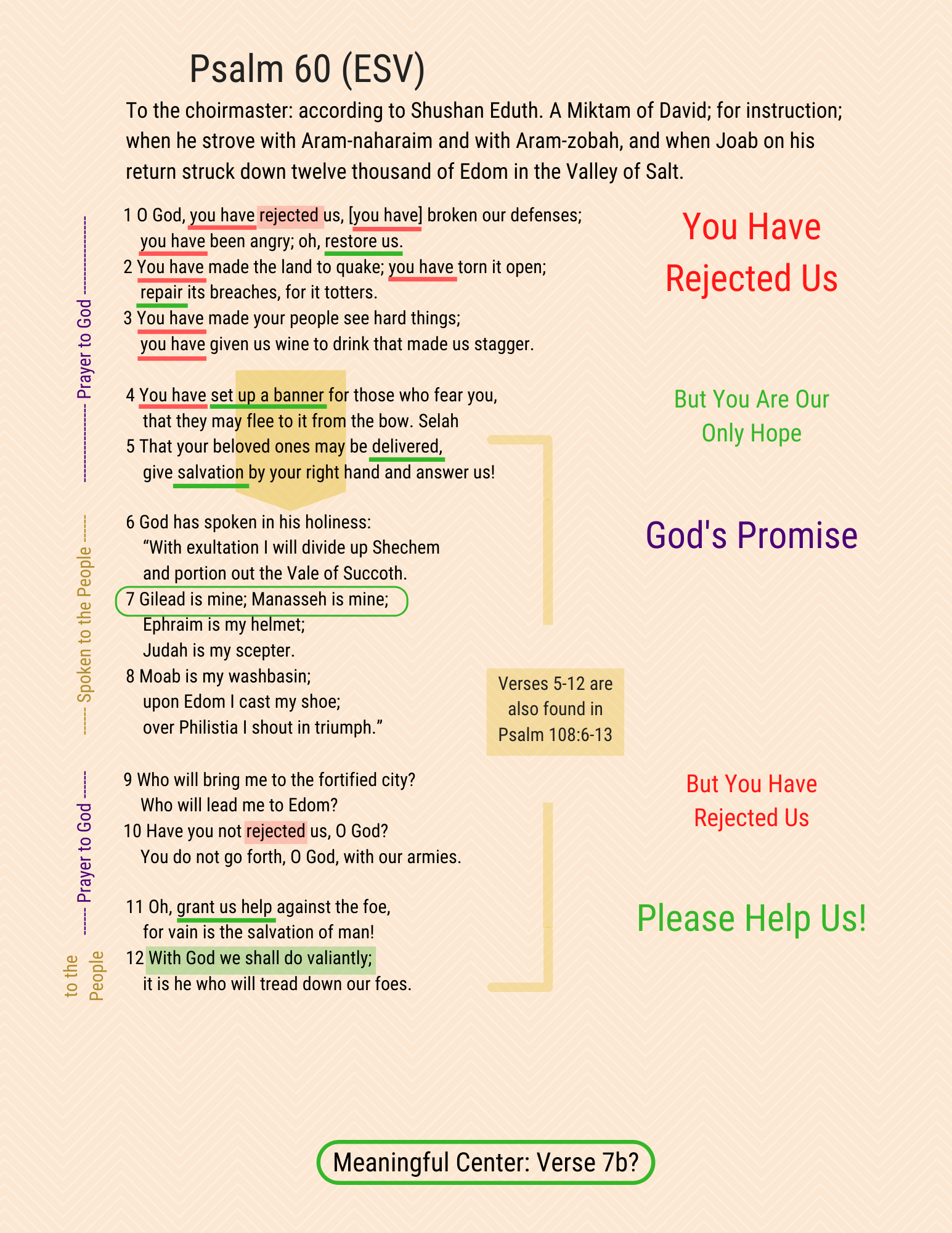
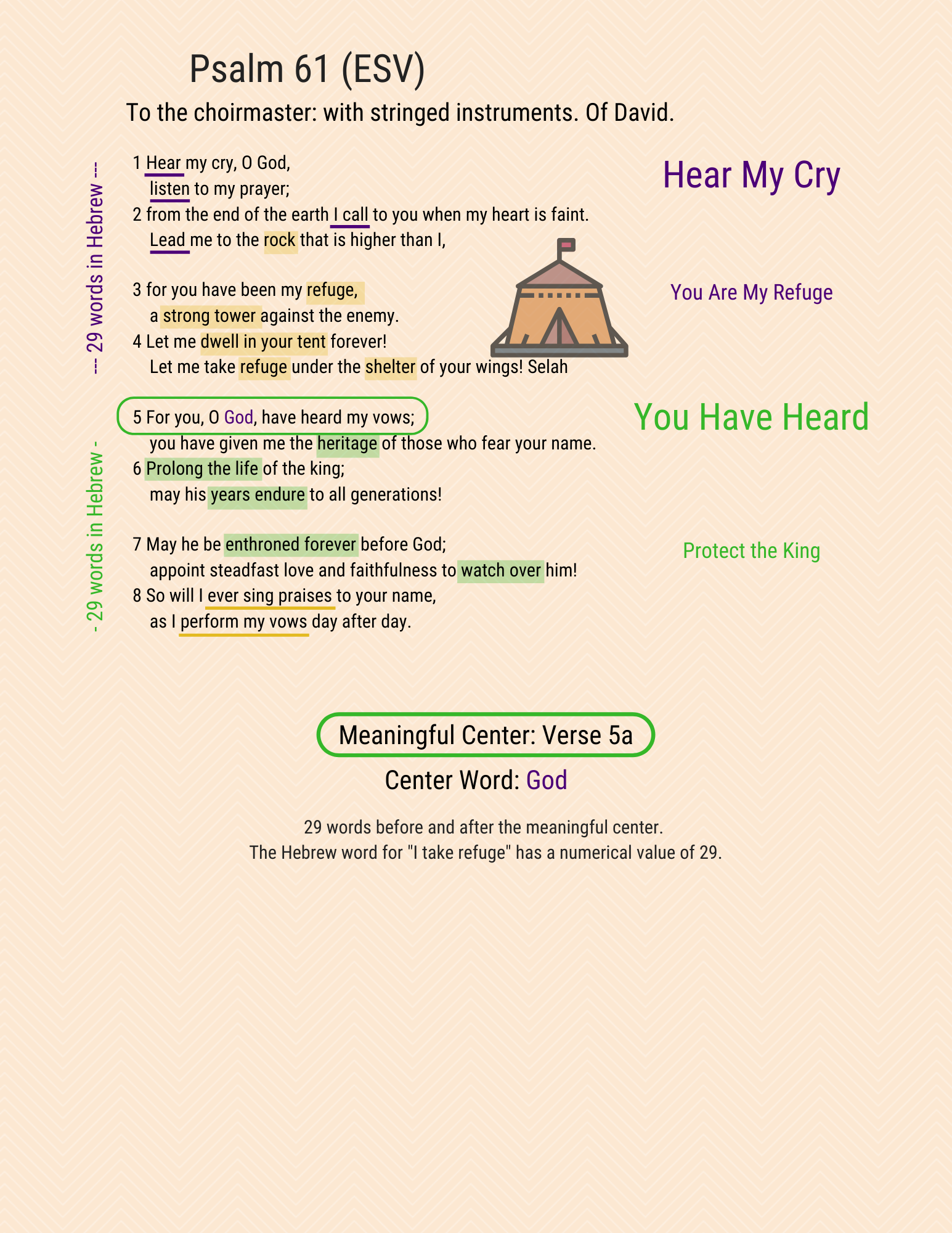
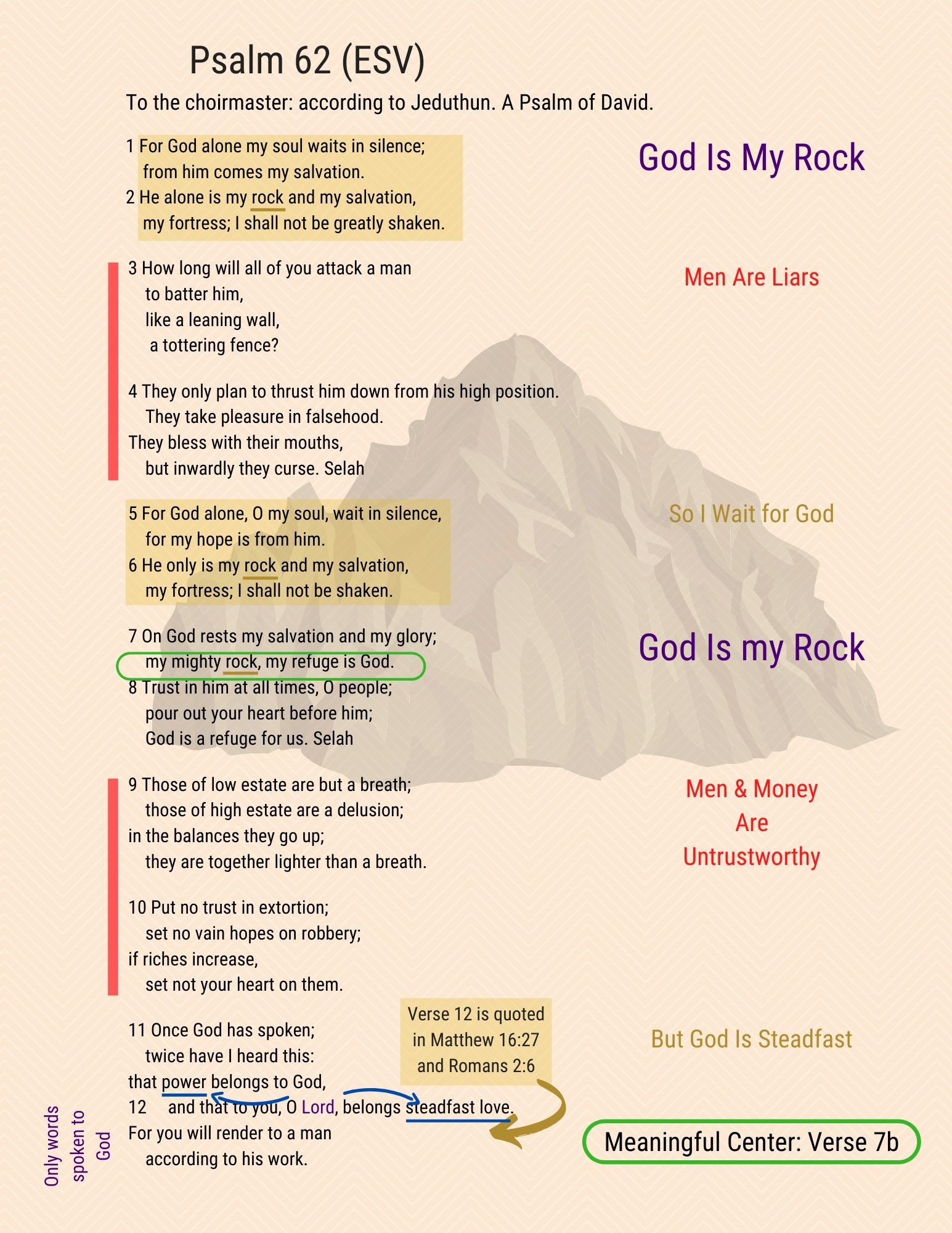
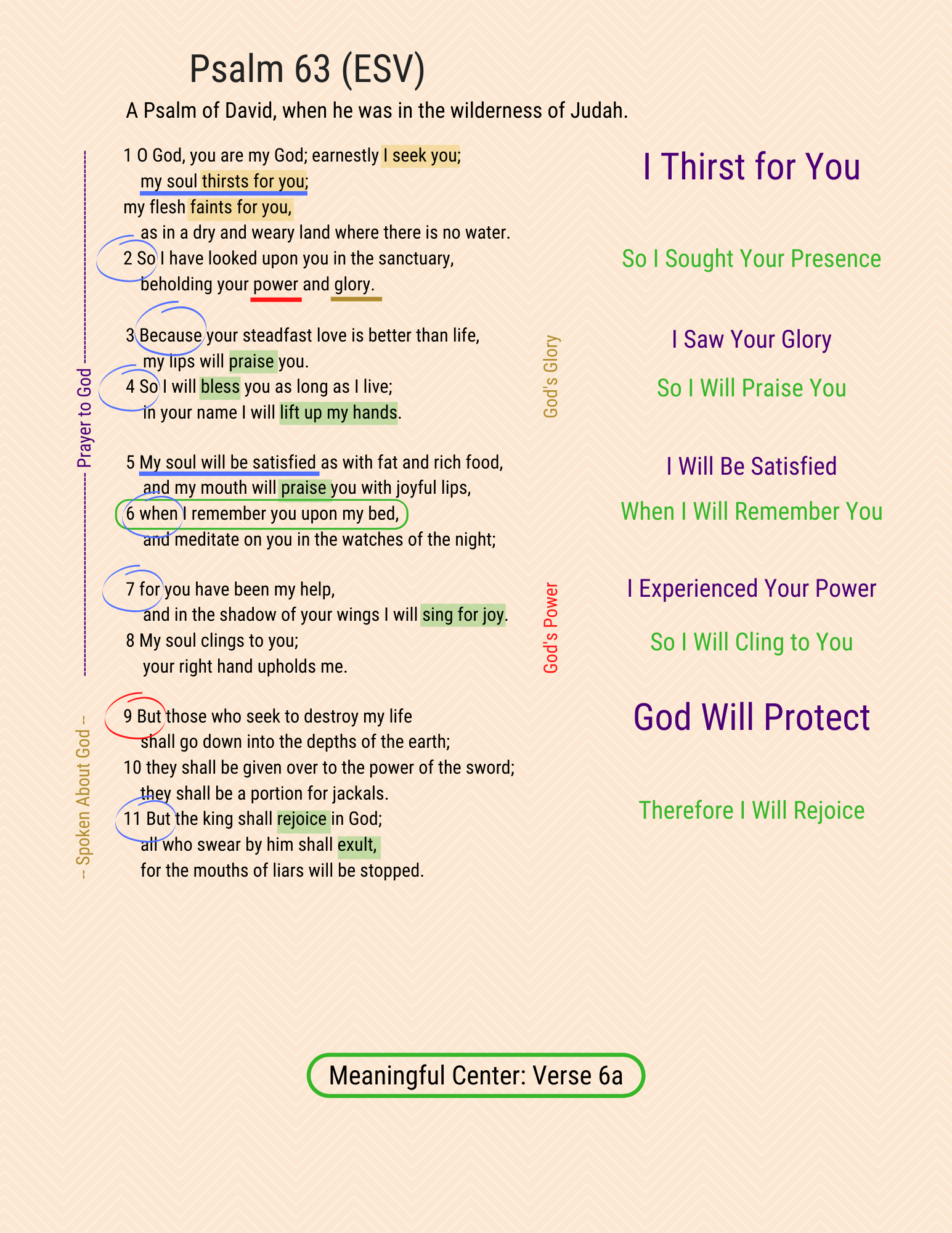
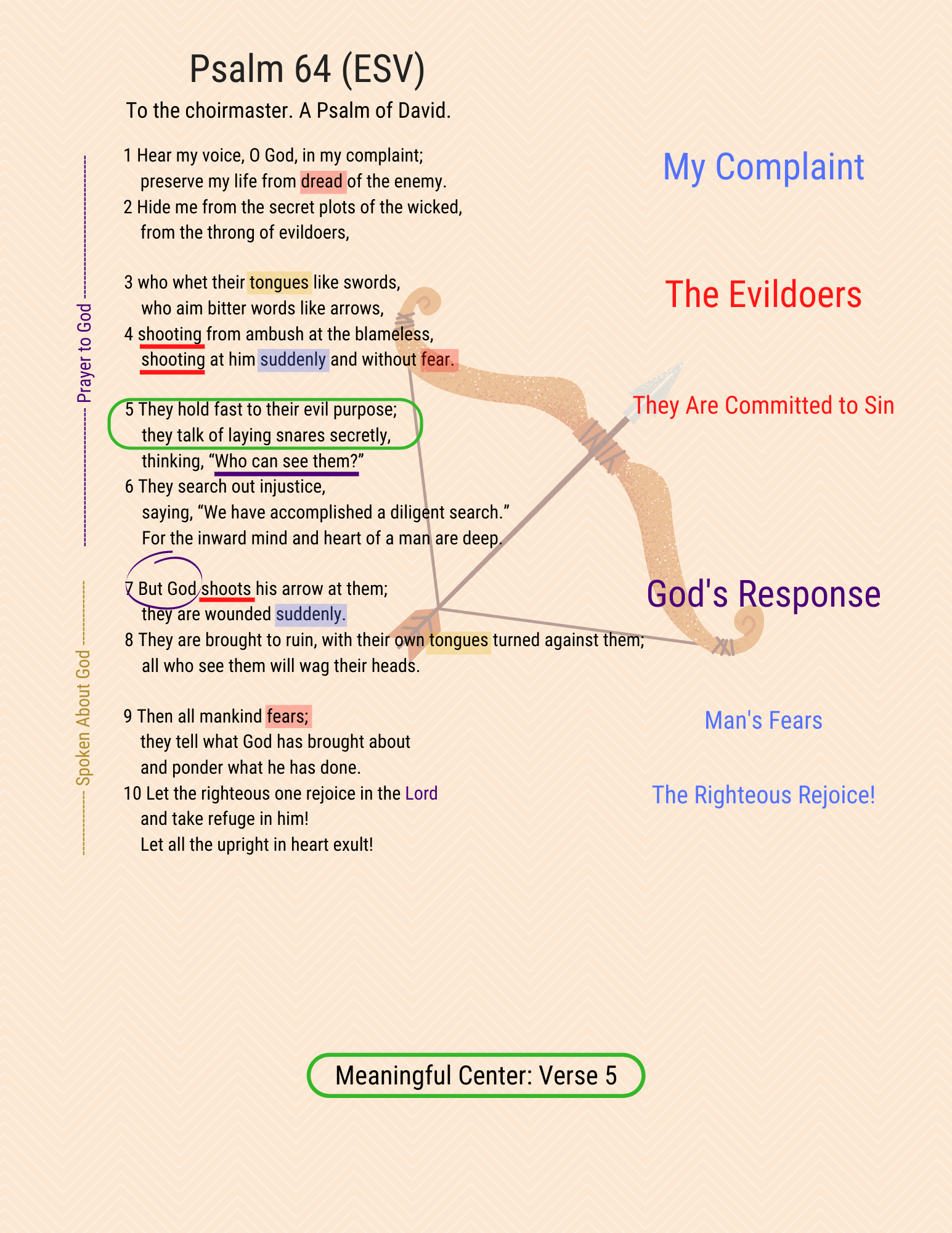
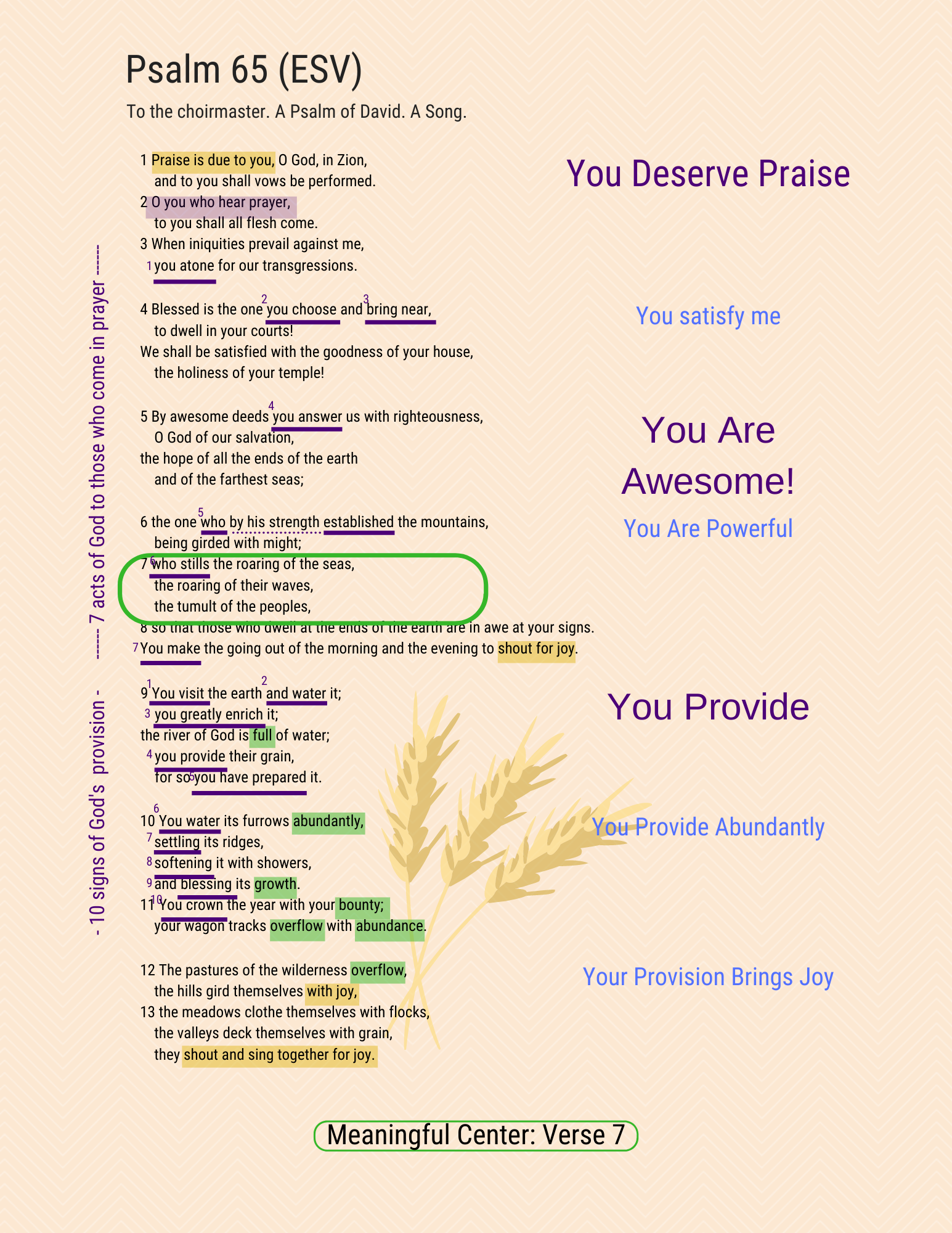
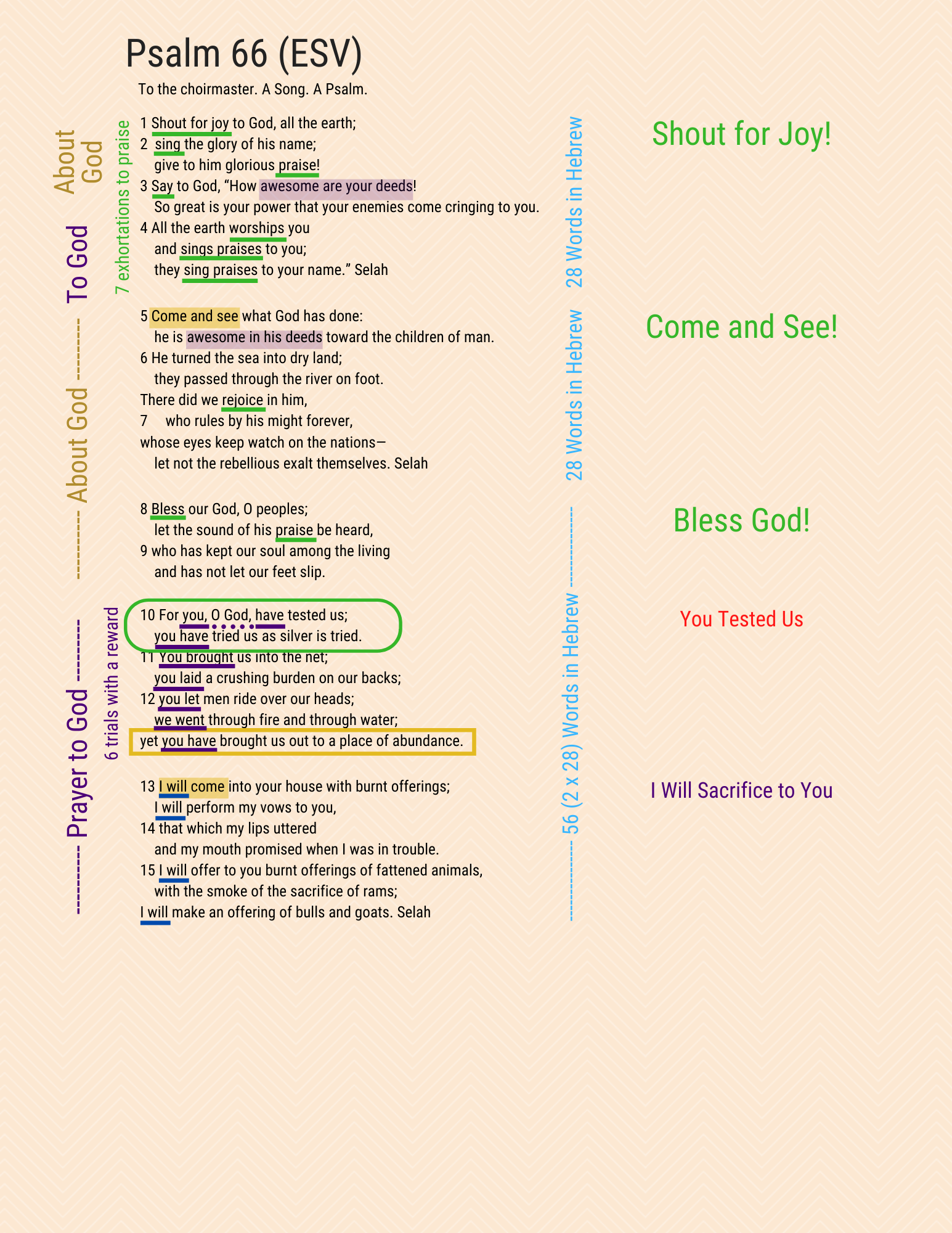
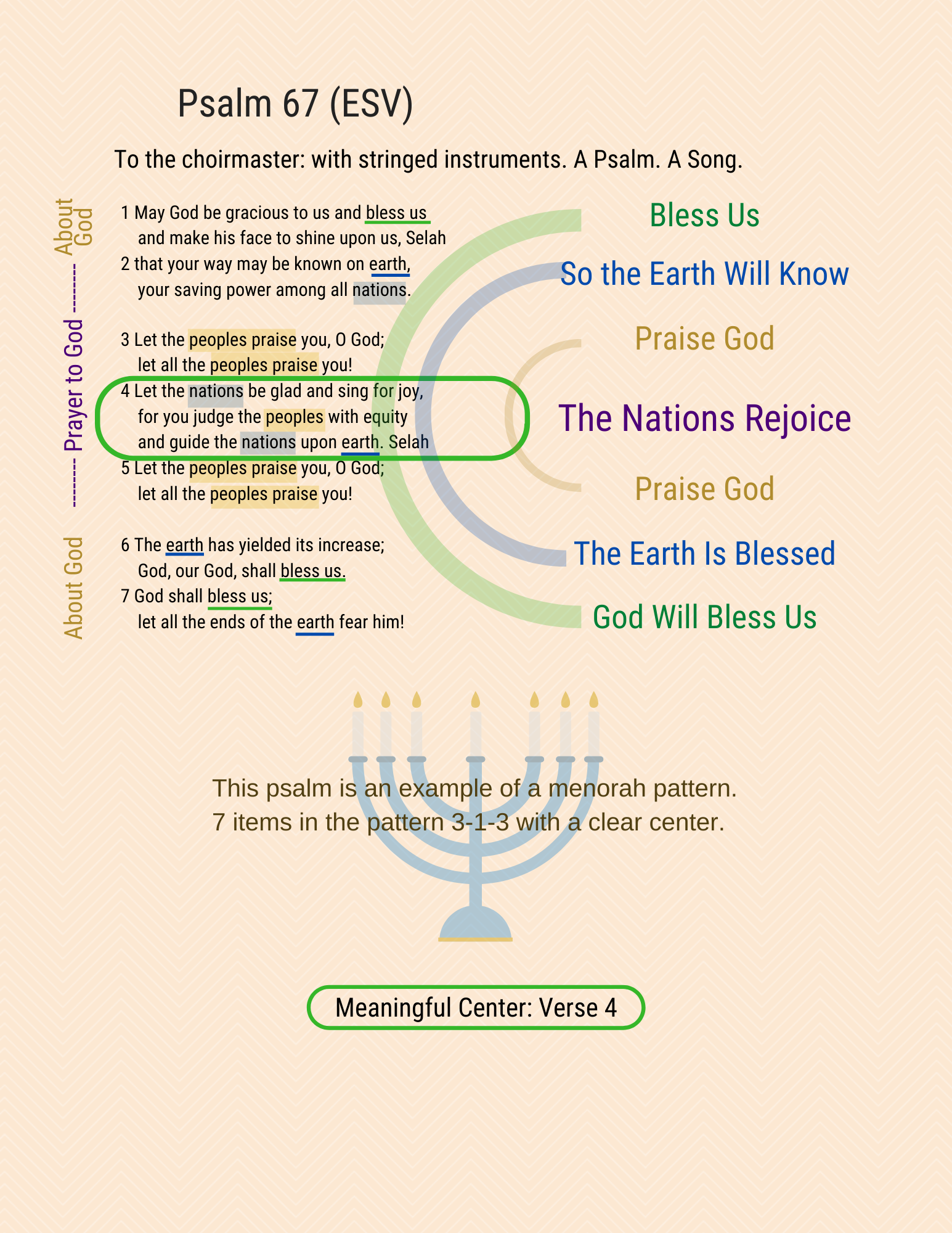
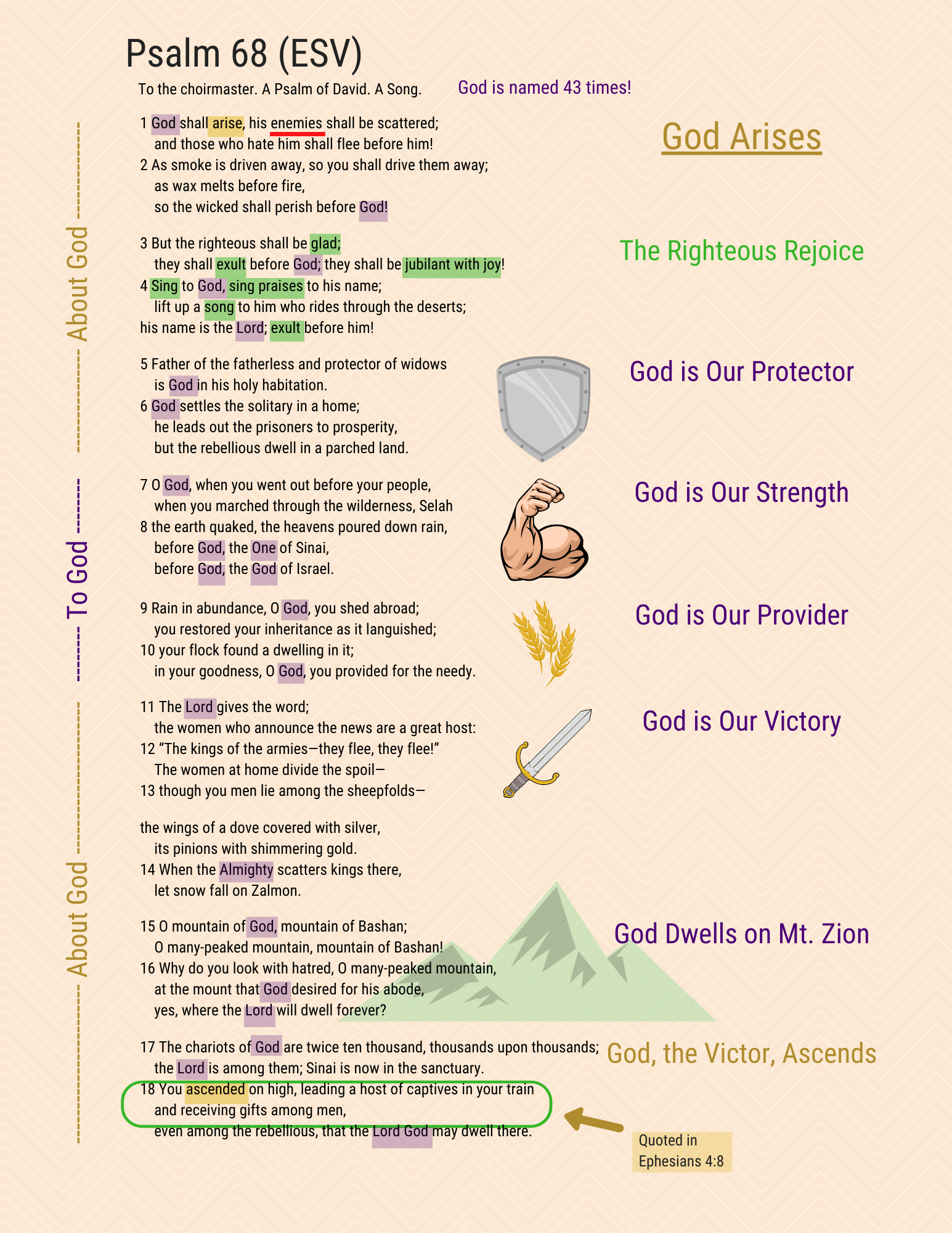
The meaningful center is an important key structural device in many of the songs. The center word, phrase or verse is often a summary of the overall theme of the poem.
There are two common compositional devices the authors use to structure the songs:
- Alphabetic Acrostic
- Menorah Pattern – poems using 7 items in a 3-1-3 pattern in imitation of the Jewish menorah used in the temple.
Although not accepted by most biblical scholars, some scholars have also argued, quite persuasively, that many of the psalms are organized based upon a very carefully designed numerical structure. Casper Labuschagne’s
General Introduction to Logotechnical Analysis gives a rather detailed description of the use of numbers to structure the Old Testament content.
The editors of the Psalms divided it into five books, each of which closes with a doxology. There is no agreed upon reason for the number of divisions or why certain psalms are in each book. Commentators traditionally have drawn parallels between the 5 books of Moses and the 5 books of the psalms. Dr. Ernest Martin also argues for a parallel with a five-fold division of the Old Testament called the Megillot. You can read his complete description
here.
Salvation History and
Psalms of Trust are forms of thanksgiving.
Another way scholars group the psalms are by topic rather than form. The most common topics are:
- Liturgical,
- Royal,
- Covenant,
- Songs of Zion,
- Wisdom,
- Poems of the Law and
- Messianic
Dennis Bratcher has made a
table showing many of the genres of psalms.
| Psalms |
Law |
Megillot |
Season |
| Book 1 |
Genesis |
Song of Songs |
Passover |
| Book 2 |
Exodus |
Ruth |
Pentecost |
| Book 3 |
Leviticus |
Lamentations |
9th/10th of Ab |
| Book 4 |
Numbers |
Ecclesiastes |
Tabernacles |
| Book 5 |
Deuteronomy |
Esther |
Purim |